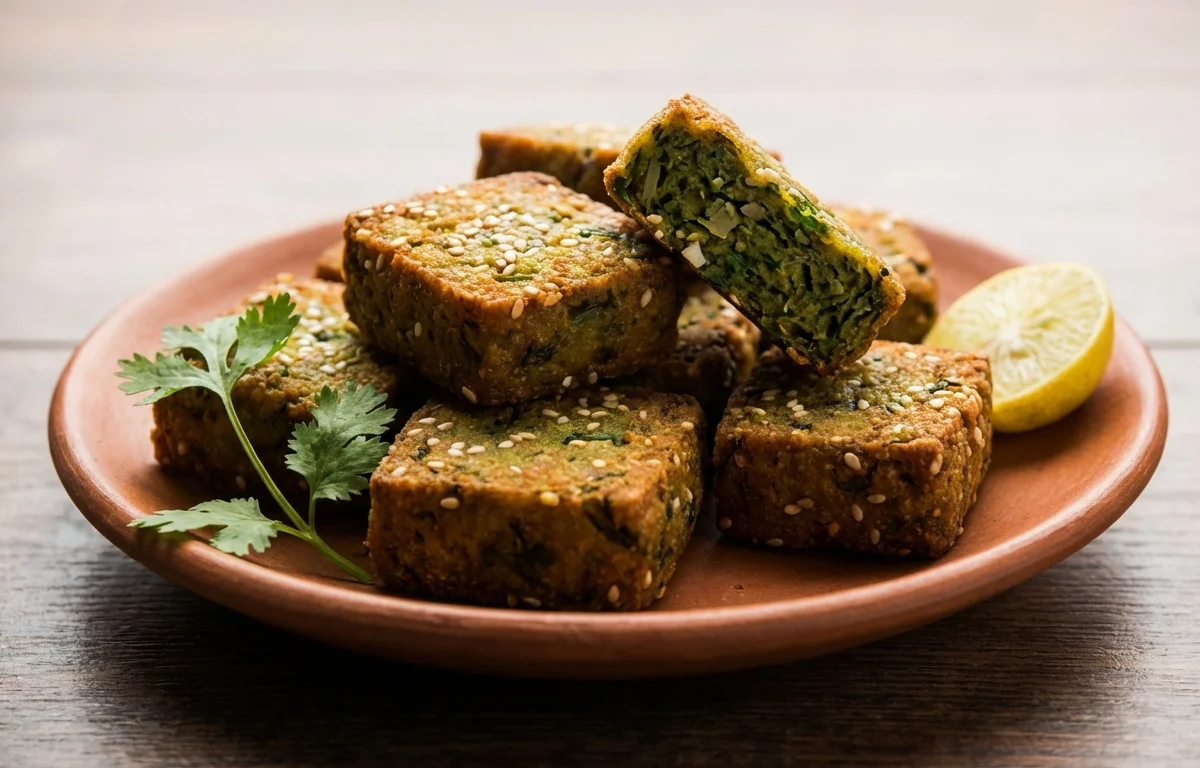
Kothimbir Vadi
These savory coriander cakes are a much-loved Maharashtrian snack with a fresh herbal flavor, gentle heat, and nutty besan base. Steamed first and then lightly pan-fried, they turn firm inside with crisp golden edges.
For 8 servings
- prep · ~8 min
Prepare the coriander and aromatics.
1.Wash the coriander leaves well and shake off excess water.2.Finely chop the coriander leaves along with the tender stems.3.Finely chop the green chili and grate the ginger. - mix · ~7 min
Make a thick vadi batter.
1.Add coriander leaves, chickpea flour, rice flour, green chili, ginger, sesame seeds, cumin seeds, turmeric powder, red chili powder, asafoetida, sugar, lemon juice, and salt to a mixing bowl.2.Mix everything well so the coriander is evenly coated with the flour.3.Add water little by little and mix into a thick, spreadable batter without lumps.TIPKeep the batter thick so the vadis hold shape after steaming. - steam · ~20 min
Steam the batter until firm.
1.Lightly grease a plate or shallow steaming tray with a little oil.2.Spread the batter evenly to about 1 inch thickness.3.Place it in a steamer and steam on medium heat until firm and cooked through.TIPA knife inserted in the center should come out clean. - rest · ~10 min
Cool the steamed slab completely.
Remove the tray from the steamer and let it cool until easy to handle. This helps the slices stay neat and prevents crumbling while cutting.
- prep · ~3 min
Cut the slab into pieces.
Loosen the edges, lift out the steamed slab, and cut it into 8 equal diamond or square pieces.
- fry · ~10 min
Shallow-fry the vadis until golden.
1.Heat the remaining oil in a flat pan over medium heat.2.Place the pieces in a single layer and fry until the bottom turns crisp and golden.3.Turn gently and fry the other side until golden at the edges.TIPFry on medium heat so the crust colors evenly without turning hard. - serve
Serve the Kothimbir Vadi hot or warm.
What to keep in mind.
7 tips from the recipe — small details that make a real difference to the final dish.
- 1Squeeze or air-dry the washed coriander well; extra moisture can make the batter loose and the vadis dense.
- 2Mix in water gradually only after the coriander releases some moisture, so you do not overshoot the thick, spreadable consistency.
- 3Spread the batter to an even thickness in the steaming plate so the center cooks through at the same rate as the edges.
- 4Cool the steamed slab completely before cutting; warm vadi tends to crumble and stick to the knife.
- 5Use a lightly oiled knife to get cleaner diamond cuts without dragging the besan mixture.
- 6Shallow-fry on medium heat and flip only after a proper crust forms, otherwise the pieces can break.
- 7These can be steamed a day ahead and refrigerated; pan-fry just before serving to bring back the crisp edges.
Adapt it for your goals.
Low-oil
Steam as written, then brush lightly with oil and air-fry or bake until golden for a lighter finish with less pan-frying.
spicierSpicier
Increase green chili and red chili powder for a sharper heat that suits chai-time snacking.
no onion no garlic fasting styleNo-onion-no-garlic fasting-style
This recipe is already free of onion and garlic; just ensure your asafoetida is pure if serving to strict dietary preferences.
temperedTempered
After frying, toss the vadis in a quick tempering of mustard seeds, sesame, curry leaves, and a pinch of chili for extra Maharashtrian-style aroma.
Why this is on our healthy list.
Herb-Rich Snack
A large amount of coriander leaves gives this vadi fresh herbal flavor along with plant compounds and leafy-green goodness.
Plant-Based Protein
Chickpea flour adds satisfying plant protein and makes the snack more filling than many flour-based fried snacks.
Better Satiety
Besan, sesame seeds, and coriander together provide fiber and texture that can help this snack feel substantial.
Frequently asked questions
The batter was likely too dry, the slab was under-steamed, or it was cut while still warm. It should be thick but spreadable, fully firm after steaming, and completely cooled before slicing.



.webp)