
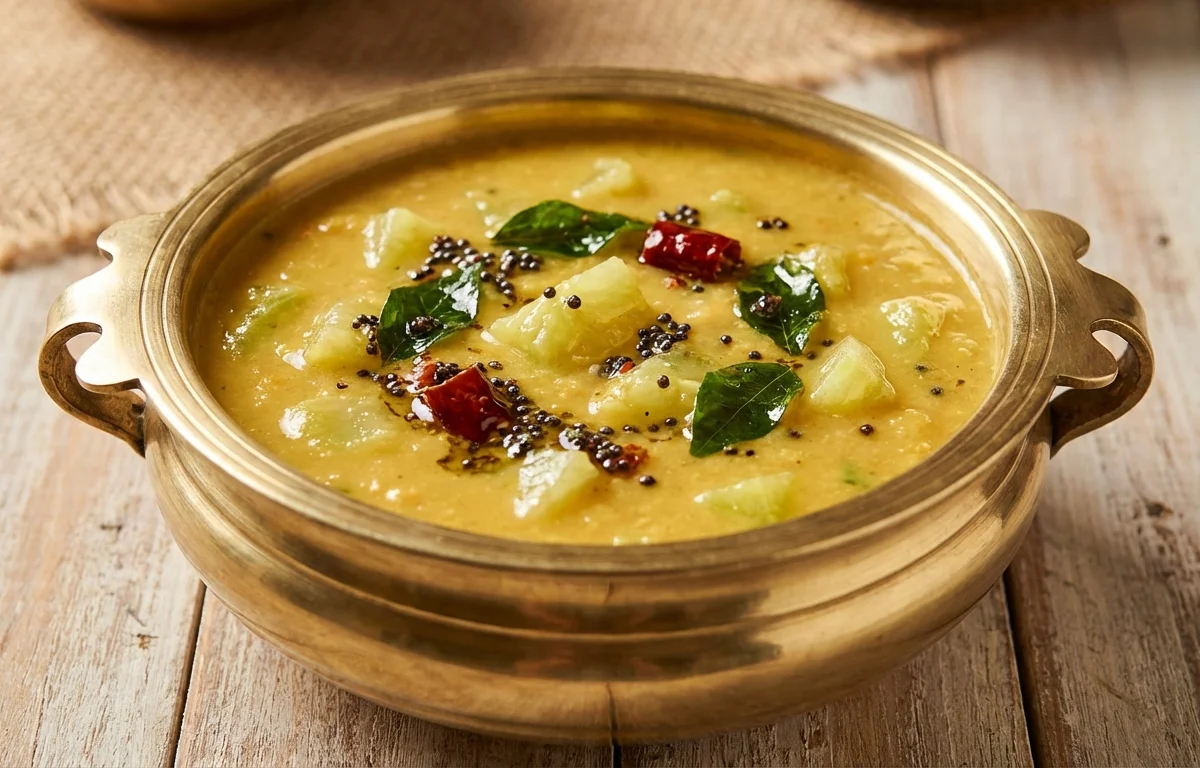
Kudla Southekai Koddel
A soulful Mangalorean curry where tender chunks of yellow cucumber are simmered in a creamy coconut and roasted spice gravy. A gentle tempering of mustard seeds, curry leaves, and dried red chilies lifts the whole dish, giving it a smoky-sweet aroma that pairs beautifully with hot rice.
For 4 servings
- prep · ~10 min
Cook the cucumber.
1.Add cubed yellow cucumber to a pot with 1 cup water, turmeric powder, and a pinch of salt.2.Bring to a boil, then simmer until just tender but still holding shape (8-10 min).3.Drain and set aside. - roast · ~3 min
Roast the spices for the masala paste.
1.In a small dry pan over medium-low heat, roast 4 dried red chilies until slightly darkened and crisp (30-40 sec).2.Add coriander seeds, cumin seeds, and fenugreek seeds. Roast until fragrant (1-2 min).3.Transfer to a plate and let cool completely.TIPRoasting fenugreek too much makes the dish bitter, so stop when the spices turn aromatic. - mix · ~3 min
Grind the coconut masala.
1.In a blender jar, add grated coconut, roasted spices, and tamarind.2.Pour in just enough fresh water to get the blades moving (about ¼ cup).3.Grind to a very smooth, thick paste. - simmer · ~5 min
Simmer the curry base.
1.Pour the ground coconut masala into a clean pot. Use ¼ cup water to rinse the blender jar and add to the pot.2.Stir in jaggery and the remaining salt. Bring to a gentle simmer over low heat.3.Add the cooked cucumber pieces and let them simmer in the gravy for 4-5 minutes. Turn off the heat.TIPDo not let the gravy boil vigorously after adding the coconut paste; a low simmer preserves the fresh coconut taste. - temper · ~2 min
Make the tempering.
1.Heat coconut oil in a small tadka pan over medium heat.2.Add mustard seeds and let them crackle and pop.3.Add urad dal and fry until golden (20 sec).4.Toss in curry leaves and broken dried red chilies, then immediately pour the sizzling tempering over the curry. - rest · ~5 min
Rest the curry before serving.
Cover the pot and let it rest for 5 minutes so the flavors soak into the cucumber.
TIPKoddel tastes even better after an hour as the tangy, spicy notes deepen. - serve
Serve Kudla Southekai Koddel hot.
Serve with steamed rice, a drizzle of raw coconut oil on top, and a side of crispy papad.
What to keep in mind.
6 tips from the recipe — small details that make a real difference to the final dish.
- 1Use fresh or frozen grated coconut for the creamiest texture; dried coconut will not yield the same richness.
- 2Drain the cooked cucumber well to prevent excess water from thinning the gravy.
- 3Let the roasted spices cool completely before grinding to ensure a smooth paste.
- 4Always simmer the curry on low heat after adding the coconut paste to avoid curdling.
- 5For an extra layer of flavor, drizzle a teaspoon of raw coconut oil over the finished curry just before serving.
- 6This curry thickens slightly on standing; add a splash of warm water while reheating if needed.
Adapt it for your goals.
Low-oil
Skip the tempering and lightly sauté the cooked cucumber in 1 teaspoon of oil with mustard seeds and curry leaves before adding the masala, reducing total oil use while retaining the essential flavors.
high proteinHigh-protein
Add 1/2 cup of cooked chana dal (split chickpeas) or firm tofu cubes along with the cucumber for a protein-rich twist that still respects the Mangalorean character.
veganVegan
The recipe is naturally vegan; just ensure the jaggery is certified vegan and substitute coconut oil for any ghee in the tempering.
subtle heatSubtle-heat
Use 2 Byadagi chilies in the masala instead of 4 Kashmiri chilies for a milder, more aromatic gravy that lets the sweet cucumber shine.
Why this is on our healthy list.
Low-Calorie Base
Yellow cucumber is mostly water and very low in calories, making this curry a light yet satisfying accompaniment to rice.
Rich in Healthy Fats
Fresh coconut provides medium-chain triglycerides (MCTs) that support energy and metabolism without raising bad cholesterol.
Digestion-Friendly Spices
Fenugreek, cumin, and coriander seeds in the masala aid digestion and help reduce bloating.
Natural Sweetener
Jaggery, used in small amounts, is a minimally processed sweetener containing trace minerals like iron and magnesium.
Frequently asked questions
Yes, but use a firm variety like English cucumber and reduce cooking time to just 3-4 minutes, as regular cucumber is more watery and turns mushy quickly.



.webp)

.webp)