
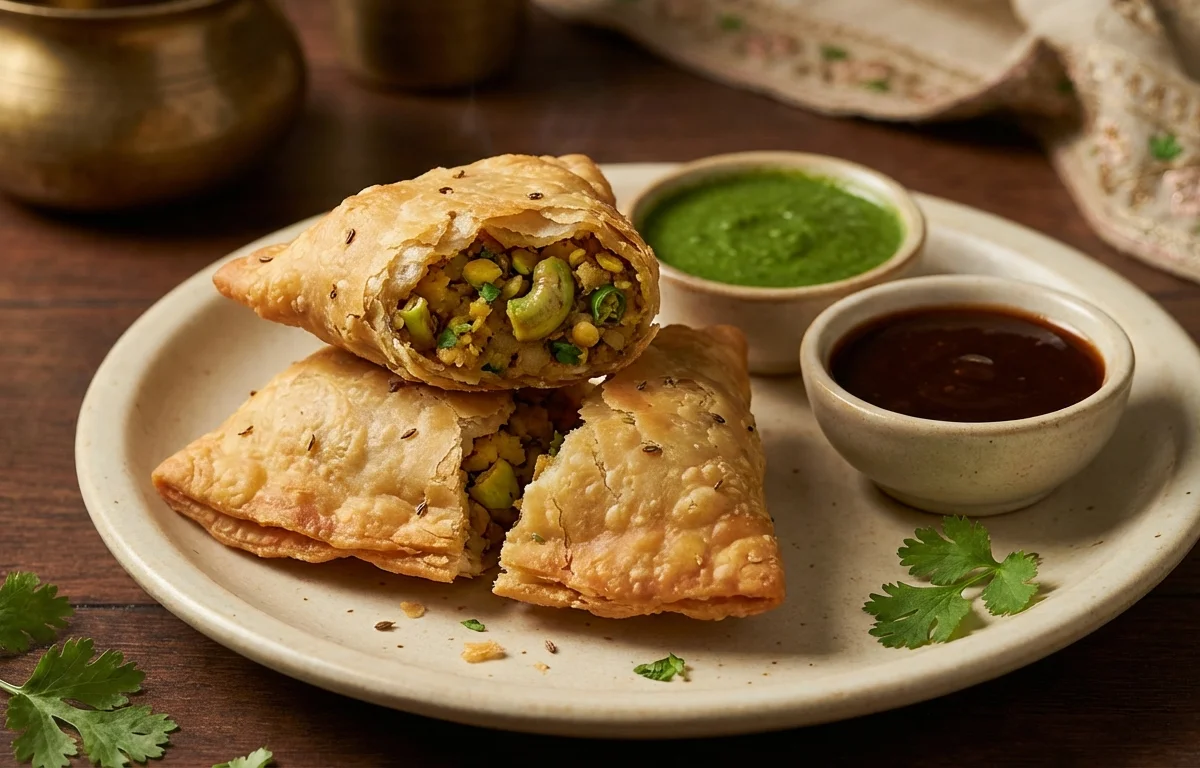
Lucknowi Samosa
Delicate, flaky pastry triangles stuffed with a spiced mutton-and-onion filling, then fried until golden. A Lucknowi specialty where the minced meat is cooked with warm whole spices and a hint of saffron-infused milk for that signature Awadhi richness.
For 4 servings
- prep
Soak the saffron.
Warm 1 tablespoon milk slightly and soak the saffron strands. Set aside to let the colour and aroma infuse.
- knead · ~30 min
Make the dough.
1.Put maida, salt and melted ghee in a bowl. Rub the ghee into the flour with your fingers until it looks like breadcrumbs.2.Gradually add water, a little at a time, and knead into a firm, smooth dough.3.Cover with a damp cloth and rest for 30 minutes.TIPThe dough should be firmer than roti dough. Resting helps the gluten relax, giving flaky samosas. - saute · ~12 min
Cook the mutton filling.
1.Heat a pan over medium flame. Add the double-minced mutton and dry sauté for 3-4 minutes until it releases water and changes colour.2.Add chopped onion and continue cooking until the moisture dries up and onion softens (4-5 minutes).3.Add ginger-garlic paste, green chili, cumin seeds and sauté until raw aroma disappears (1-2 minutes).4.Stir in turmeric powder, red chili powder, coriander powder and salt. Cook for 2 minutes.5.Turn off the heat. Add garam masala, saffron milk, chopped cilantro and lemon juice. Mix well and cool completely.TIPDouble-mincing the mutton gives the authentic Lucknowi texture — the filling should be crumbly, not chunky. - prep · ~10 min
Shape the samosas.
1.Divide the dough into 4 equal balls. Roll each ball into an oval about 6 inches long.2.Cut each oval in half to make a semi-circle. Take one semi-circle, apply water along the straight edge.3.Fold the straight edge together to form a cone, pressing the wet edge to seal tightly.4.Fill the cone with about 2 tablespoons of the cooled mutton mixture. Do not overfill.5.Apply water on the open upper edge and pinch firmly to seal. Repeat for all 8 samosas.TIPWhile filling one samosa, keep the remaining dough balls covered. Seal the cones completely, otherwise oil will seep in during frying. - fry · ~12 min
Fry the samosas.
1.Heat oil in a heavy-bottomed kadhai on low-medium flame. The oil should be moderately hot, not smoking.2.Gently slide 2-3 samosas into the oil. Do not crowd the kadhai.3.Fry gently on low heat for 10-12 minutes, turning occasionally, until crisp and deep golden-brown.4.Drain on paper towels. Repeat with remaining samosas.TIPLow and slow frying is the secret. High heat will brown the outside fast, leaving the dough shell undercooked and soft, not flaky. - serve
Serve hot with mint chutney.
Arrange samosas on a plate and serve immediately while crisp and piping hot, paired with fresh mint-coriander chutney.
What to keep in mind.
7 tips from the recipe — small details that make a real difference to the final dish.
- 1Double-mince the mutton yourself or ask your butcher; the finer texture ensures a crumbly, authentic Lucknowi filling.
- 2Rest the dough for a full 30 minutes under a damp cloth — this relaxes the gluten and guarantees flaky, tender pastry.
- 3Cool the filling completely before stuffing the cones, or the steam will soften the dough and cause breakage during frying.
- 4Seal the samosa cones with a dab of water, pressing firmly along the entire edge to prevent oil from seeping in.
- 5Fry on low heat (not medium) for 10-12 minutes; this cooks the inner dough layers fully while turning the shell deep golden and crisp.
- 6Keep uncooked samosas covered with a damp towel while shaping to prevent the dough from drying out and cracking.
- 7For make-ahead convenience, shape the raw samosas and freeze them on a tray, then store in a zip-lock bag; fry directly from frozen, adding 2-3 minutes.
Adapt it for your goals.
Low-oil
Bake the shaped samosas at 200°C (400°F) for 18-20 minutes, brushing with a little oil, for a lighter version that still delivers a crisp shell.
high proteinHigh-protein
Swap half the mutton with finely chopped paneer or tofu for a higher protein, lower fat filling that still holds the spices well.
jainJain
Replace mutton with mashed boiled potatoes and skip ginger-garlic paste; add a pinch of asafoetida to mimic the umami, making it suitable for Jain diets.
veganVegan
Use a vegan butter block instead of ghee, plant-based meat crumbles or lentils for the filling, and skip the saffron milk; the technique remains the same.
Why this is on our healthy list.
Rich in Iron & B12
Mutton is an excellent source of heme iron and vitamin B12, which support oxygen transport and nerve health. One samosa provides a notable portion of your daily iron needs.
Saffron’s Antioxidant Boost
Saffron contains crocin and safranal, powerful antioxidants that may help reduce oxidative stress and support mood regulation.
Balanced Protein & Fat
Ground goat meat offers lean protein with a moderate fat content, providing sustained energy when eaten in moderation.
Digestive Spice Blend
Cumin, ginger, and coriander in the filling are traditional digestives that can aid digestion, counterbalancing the richness of deep-frying.
Frequently asked questions
Most likely the ghee was not rubbed in thoroughly, or the dough wasn't rested long enough. Ensure you work the ghee into the flour until it resembles breadcrumbs, and rest for exactly 30 minutes covered.


