Magge Koddel
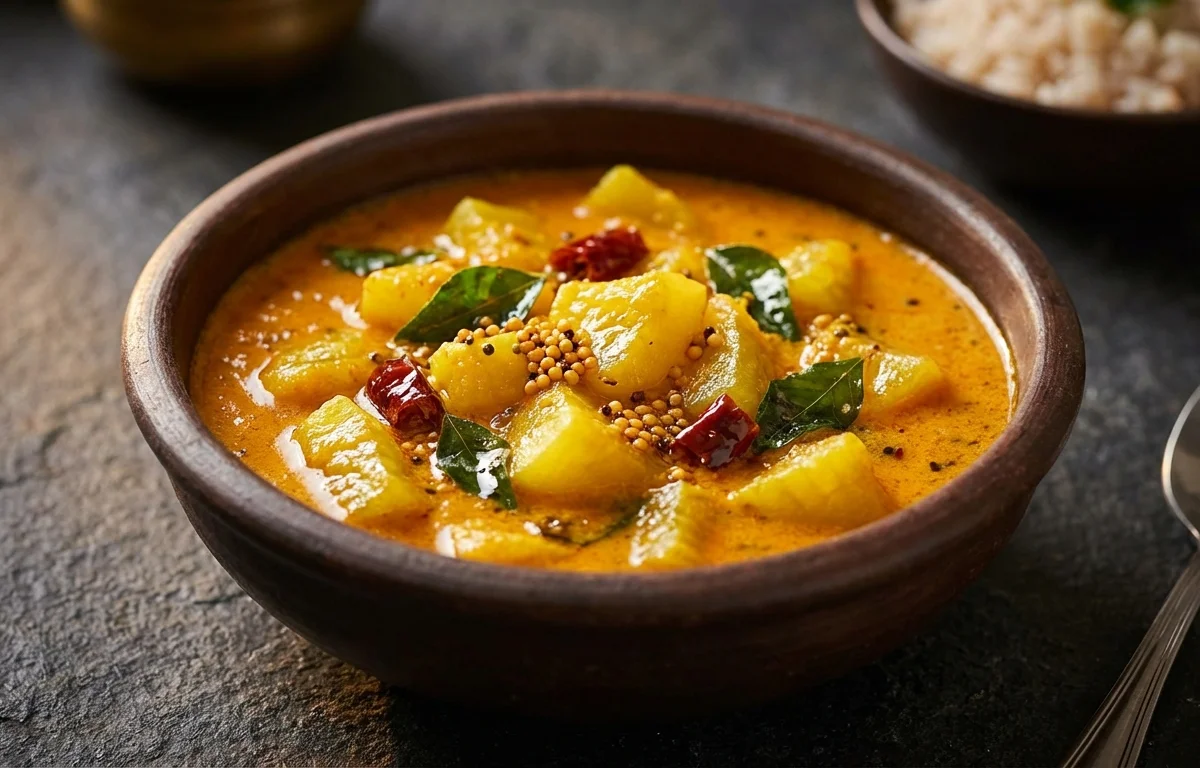
A homestyle Mangalorean-style curry made with tender magge fruit simmered in a coconut and red chili masala. It has a gentle sweetness, mild heat, and the comforting tang of tamarind that makes it lovely with rice.
For 4 servings
- prep · ~15 min
Prepare the magge and tamarind.
1.Peel the magge, remove the soft center and seeds if mature, and cut it into medium cubes.2.Soak the tamarind in a little warm water for 15 minutes.3.Measure the coconut, dried red chili, coriander seeds, cumin seeds, turmeric powder, jaggery, salt, and water. - boil · ~15 min
Cook the magge until tender.
Add the magge to a pot with 1.5 cups water and turmeric powder. Bring to a boil, then cook on medium heat until the pieces are tender but still holding shape.
TIPDo not overcook the magge or it will turn too soft once the masala is added. - mix · ~4 min
Grind the coconut masala.
1.Squeeze the soaked tamarind to extract the pulp.2.Add fresh coconut, dried red chili, coriander seeds, cumin seeds, tamarind pulp, and 0.5 cup water to a blender.3.Grind to a smooth masala. - simmer · ~10 min
Simmer the curry.
Pour the ground masala into the pot with the cooked magge. Add the remaining water, salt, and jaggery, then simmer gently until the raw smell fades and the curry comes together.
TIPKeep the heat low once the coconut masala goes in so the curry stays smooth and does not split. - temper · ~1 min
Make the tempering.
1.Heat coconut oil in a small pan over medium heat.2.Add mustard seeds and let them splutter.3.Add curry leaves and fry for a few seconds until fragrant. - assemble · ~1 min
Finish the koddel.
Pour the tempering over the simmering curry and mix gently. Cook for 1 more minute, then turn off the heat.
- serve
Serve the Magge Koddel warm.
What to keep in mind.
7 tips from the recipe — small details that make a real difference to the final dish.
- 1If the magge is mature, remove the spongy seeded core fully so the cubes cook evenly and the curry stays silky.
- 2Cook the magge only until a knife slips in with slight resistance; it should finish softening during the final simmer.
- 3Grind the coconut masala very smooth with enough water, or the koddel will taste coarse instead of mellow and rounded.
- 4Use Byadgi chilies for the traditional deep red color and gentle heat without making the curry too sharp.
- 5After adding the ground masala, keep the curry at a low simmer and stir occasionally to prevent the coconut from splitting.
- 6Taste before the final minute and balance tamarind and jaggery carefully; koddel should be tangy, lightly sweet, and not dessert-like.
- 7This curry tastes even better after resting 20 to 30 minutes, when the magge absorbs the coconut-tamarind flavors.
Adapt it for your goals.
Spicier
Add 1 to 2 more dried red chilies or a slightly hotter variety if you want a bolder koddel that still keeps its coconut base.
no jaggeryNo-jaggery
Skip the jaggery for a sharper, more tang-forward version if your magge is already naturally sweet.
shallot temperingShallot-tempering
Add a few sliced shallots to the coconut oil tempering for extra sweetness and savoriness without changing the dish too much.
vegetable mixVegetable-mix
Combine magge with ash gourd or a little pumpkin for a similar coastal-style curry with more texture variation.
Why this is on our healthy list.
Vegetable-Forward Curry
Magge makes this dish light yet satisfying, adding bulk and nourishment while keeping the curry centered on a whole vegetable.
Contains Beneficial Spices
Coriander, cumin, turmeric, red chili, curry leaves, and mustard seeds add flavor along with plant compounds commonly valued in traditional cooking.
Naturally Dairy-Free
The richness comes from fresh coconut rather than cream or dairy, making it suitable for those avoiding milk-based curries.
Frequently asked questions
The cubes should be tender when pierced but still hold their shape. If they are mushy before the masala goes in, they may break apart in the final simmer.