Maharashtrian Kadhi
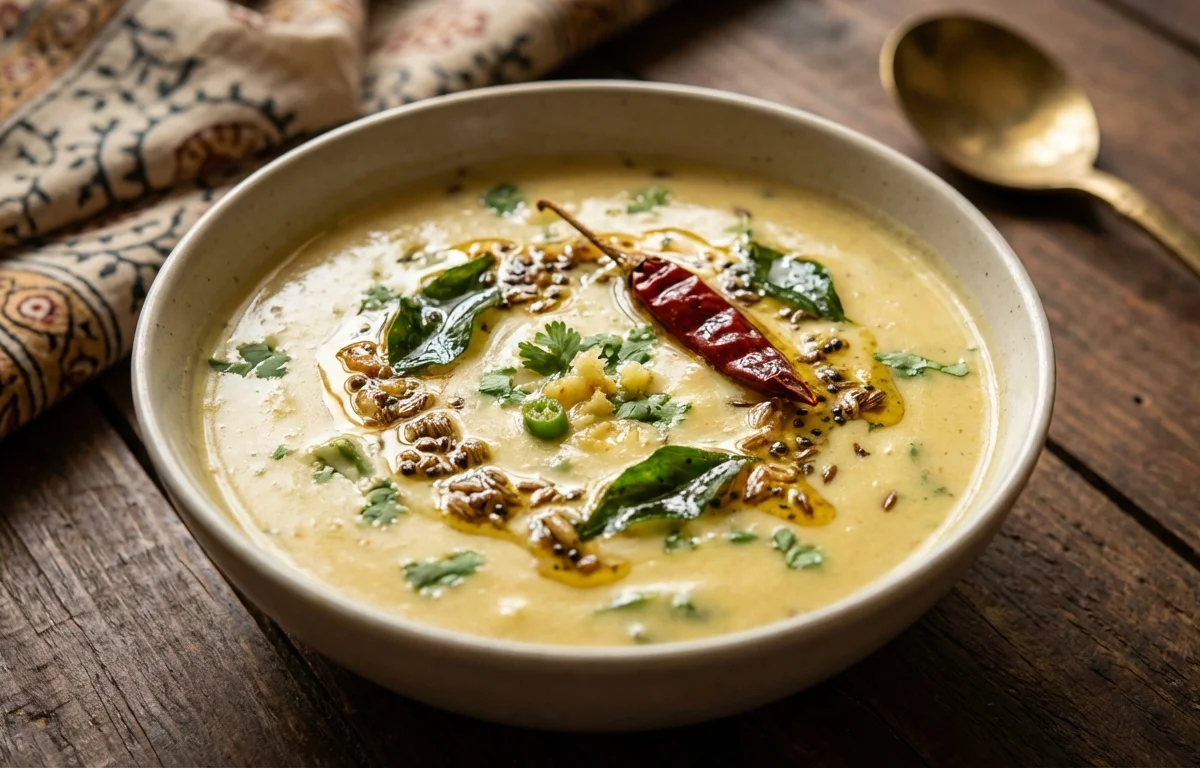
A silky, mildly spiced yogurt curry thickened with chickpea flour — a Maharashtrian comfort staple. Unlike its North Indian cousin, this kadhi skips the pakoras, relying on a fragrant tempering of mustard seeds, cumin, and fresh curry leaves in ghee for its signature aroma. Light, tangy, and ready in 25 minutes.
For 4 servings
- mix · ~2 min
Whisk the yogurt and chickpea flour.
In a large bowl, whisk together the yogurt and chickpea flour until completely smooth with no lumps. Gradually add water while whisking continuously to create a thin, even mixture. Stir in the turmeric powder and salt.
TIPRoom-temperature yogurt prevents curdling — pull it from the fridge 30 minutes before cooking. - simmer · ~18 min
Cook the kadhi base.
Pour the yogurt mixture into a heavy-bottomed saucepan. Place over medium-low heat and bring to a gentle simmer, stirring frequently. Cook for 15-18 minutes, stirring often to prevent scorching, until the raw taste of the chickpea flour disappears and the kadhi thickens slightly. Keep the heat low and avoid a rolling boil to prevent the yogurt from splitting.
TIPConstant stirring is key — the chickpea flour settles and can catch at the bottom. - temper · ~2 min
Make the tempering.
1.Heat ghee in a small tempering pan over medium heat until it shimmers.2.Add mustard seeds and let them crackle and pop completely (20-30 seconds).3.Add cumin seeds and let them sizzle until fragrant (10-15 seconds).4.Toss in curry leaves, slit green chilies, grated ginger, and asafoetida. Fry for 20-30 seconds until the curry leaves crisp up.TIPPour the tempering as soon as it's ready — the ghee should still be sizzling hot when it hits the kadhi. - mix · ~2 min
Temper the kadhi.
Immediately pour the hot sizzling tempering into the simmering kadhi. Stir well to combine. The kadhi will hiss and release a fragrant aroma. Continue simmering for 2 minutes so the flavors meld together.
- rest · ~3 min
Rest and garnish.
Turn off the heat and let the kadhi rest for 2-3 minutes. It will thicken slightly as it cools. Garnish with fresh chopped coriander leaves.
TIPKadhi always tastes better after 15-20 minutes of resting — all the flavors settle and deepen.
What to keep in mind.
6 tips from the recipe — small details that make a real difference to the final dish.
- 1Use room-temperature yogurt to prevent curdling when heating.
- 2Whisk the chickpea flour and yogurt until completely lump-free for a silky texture.
- 3Stir the kadhi frequently while simmering to prevent the flour from settling and scorching.
- 4Keep the heat at medium-low — a rolling boil will cause the yogurt to split.
- 5Let the ghee tempering sizzle and pop before pouring it over the kadhi for maximum aroma.
- 6Rest the kadhi for 15-20 minutes after cooking; the flavours deepen and meld beautifully.
Adapt it for your goals.
Garlic-ginger tempering
Add 1 teaspoon of finely chopped garlic along with the ginger in the tempering for a pungent, deeper flavour profile.
veganVegan
Replace yogurt with a thick, unsweetened plant-based yogurt (like coconut or soy) and use coconut oil instead of ghee for a dairy-free version.
with proteinWith protein
Add boiled chickpeas or paneer cubes to the simmering kadhi for a heartier, protein-rich meal.
low oilLow-oil
Reduce the ghee to 1 teaspoon and dry-toast the mustard seeds and cumin seeds in a pan before adding a splash of water to finish the tempering.
Why this is on our healthy list.
Probiotic-Rich Yogurt
Yogurt is naturally rich in live cultures that support gut health and digestion, giving this dish a probiotic boost.
High in Plant-Based Fiber
Chickpea flour provides a good source of soluble fiber, which helps maintain steady blood sugar levels and supports digestive regularity.
Anti-Inflammatory Spices
Turmeric and ginger are known for their anti-inflammatory compounds, which may help reduce joint discomfort and support overall wellness.
Digestive Aid with Asafoetida
A pinch of asafoetida (hing) acts as a natural digestive aid, helping to prevent bloating and gas, especially in legume-based dishes.
Frequently asked questions
Curdling happens if the heat is too high or the yogurt is cold. Always use room-temperature yogurt and keep the flame at medium-low while stirring frequently.



.webp)