
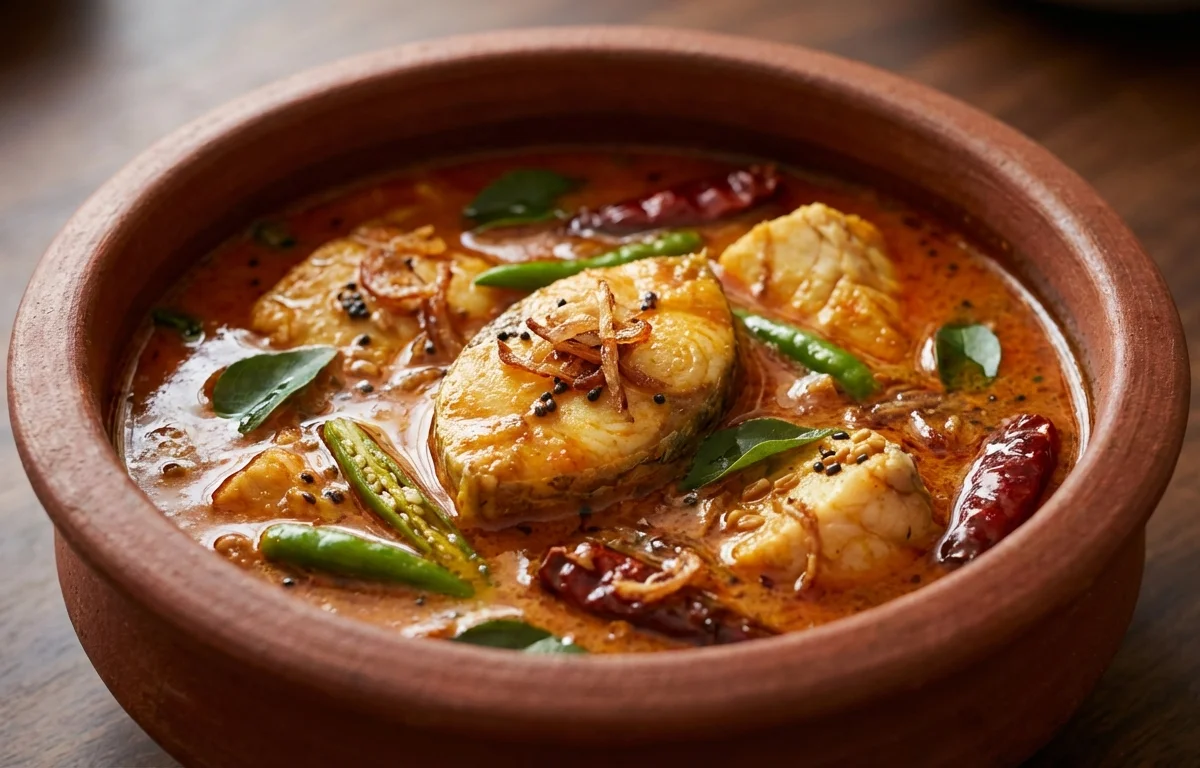
Malabar Fish Curry
A tangy, aromatic fish curry from Kerala's Malabar coast, where fresh fish gently simmers in a spiced coconut gravy. Raw mango or tamarind provides a subtle sourness that balances the creamy richness of freshly ground coconut paste. Best enjoyed with steamed rice for a simple coastal meal.
For 4 servings
- prep · ~10 min
Marinate the fish.
1.Gently rub fish slices with salt and a pinch of turmeric.2.Set aside for 10 minutes while you prepare the masala.TIPUse firm-fleshed fish like kingfish or pomfret so the slices hold their shape in the curry. - mix · ~3 min
Make the coconut paste.
1.Combine grated coconut, half the shallots, and 1 cup water in a mixer grinder.2.Blend to a very smooth, fine paste. Scrape down sides at least once.3.Mix tamarind paste into the ground coconut paste. - temper · ~7 min
Temper the spices in coconut oil.
1.Heat coconut oil in a manchatti or deep pan over medium heat.2.Add mustard seeds and let them splutter completely.3.Add fenugreek seeds and dried red chilies. Fry 10 seconds.4.Add curry leaves and the remaining sliced shallots, sauté until golden (4-5 min).5.Add crushed garlic, julienned ginger, and slit green chilies. Sauté 1 more minute. - saute · ~7 min
Build the masala base.
1.Add chopped tomatoes to the pan.2.Cook until tomatoes soften and turn mushy (3-4 min).3.Stir in red chili powder and coriander powder. Mix well and cook 2 minutes.4.Splash a tablespoon of water if spices start to stick. - simmer · ~6 min
Simmer the coconut gravy.
1.Pour in the coconut-tamarind paste and 0.5 cup water.2.Add remaining turmeric and salt.3.Rinse the blender jar with 0.5 cup water and add to the pan.4.Bring to a gentle boil, then lower heat to a simmer. Cook 5 minutes.TIPSimmer on low heat — coconut gravy can split if boiled hard. Gentle bubbles are enough. - simmer · ~9 min
Poach the fish in the curry.
1.Gently slide marinated fish slices into the simmering gravy.2.Spoon gravy over the fish to submerge them partially.3.Cover and cook on low heat for 8-10 minutes until fish is just done.4.Do not stir — swirl the pan gently once or twice to distribute heat.TIPFish cooks quickly. Stop as soon as the flesh flakes easily with a spoon. Overcooking makes it dry. - rest · ~5 min
Rest the curry before serving.
Switch off the heat and let the curry rest, covered, for 5 minutes. The fish continues to cook in residual heat and the flavors meld beautifully.
TIPMalabar fish curry tastes even better the next day. If making ahead, reheat very gently without boiling. - garnish
Finish with a drizzle of raw coconut oil.
Just before serving, drizzle a teaspoon of fresh coconut oil on top along with a few fresh curry leaves for aroma.
What to keep in mind.
7 tips from the recipe — small details that make a real difference to the final dish.
- 1Always use firm-fleshed fish like kingfish or pomfret so slices hold shape in the curry.
- 2Grind the coconut paste very smooth for a silky gravy; scrape mixer sides at least once.
- 3Simmer the gravy on low heat only—boiling hard can cause the coconut gravy to split.
- 4Slide fish in gently and do not stir; swirl the pan once or twice to distribute heat.
- 5Stop cooking as soon as the fish flakes easily with a spoon to avoid dry, overcooked fish.
- 6Let the curry rest covered for 5 minutes after cooking—flavors meld and fish finishes gently.
- 7This curry tastes even better the next day; reheat very gently without boiling.
Adapt it for your goals.
Low-oil
Reduce coconut oil to 1 tablespoon for tempering and omit the final drizzle. The coconut paste already provides enough richness, making this a lighter but still flavorful version.
high proteinHigh-protein
Replace kingfish with an equal weight of salmon or tuna steaks. These firm, oily fish hold up beautifully and add extra omega-3s without altering the cooking time.
jainJain
Skip the garlic and shallots; use asafoetida (hing) in the tempering and increase ginger and green chilies for depth. Use raw mango instead of tamarind for sourness to avoid any root vegetables.
veganVegan
Substitute fish with 300g of firm tofu or king oyster mushrooms sliced thick. Marinate and poach exactly as you would the fish—they absorb the coconut-tamarind gravy beautifully.
Why this is on our healthy list.
Rich in Omega-3s
Kingfish is an excellent source of long-chain omega-3 fatty acids, which support heart health and reduce inflammation.
Antioxidant-Rich Spices
Turmeric, curry leaves, and fenugreek seeds provide powerful antioxidants like curcumin that help combat oxidative stress.
Good Source of Healthy Fats
Coconut and coconut oil supply medium-chain triglycerides (MCTs), which are easily metabolized for quick energy.
Digestive Aid
Ginger, garlic, and tamarind promote digestion and can help reduce bloating, making this curry gentle on the stomach.
Frequently asked questions
Yes, but thaw it completely in the refrigerator, pat dry with paper towels, and marinate as directed. Reduce poaching time by 2-3 minutes since frozen fish cooks slightly faster.

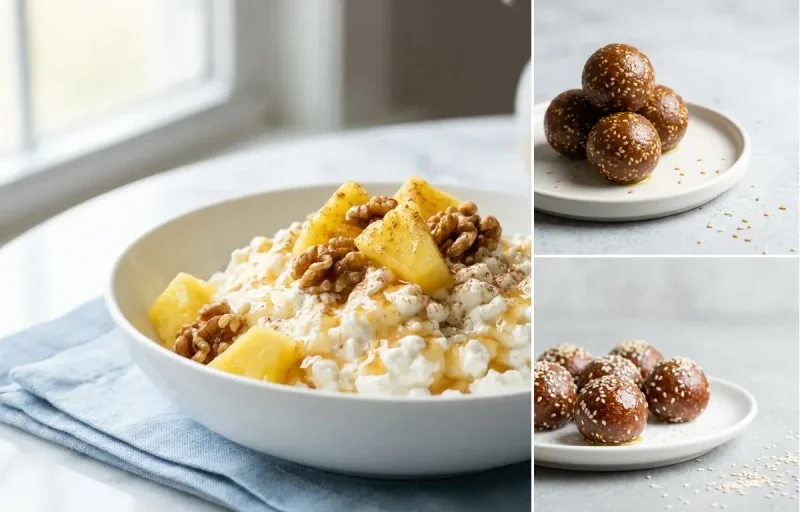

.webp)
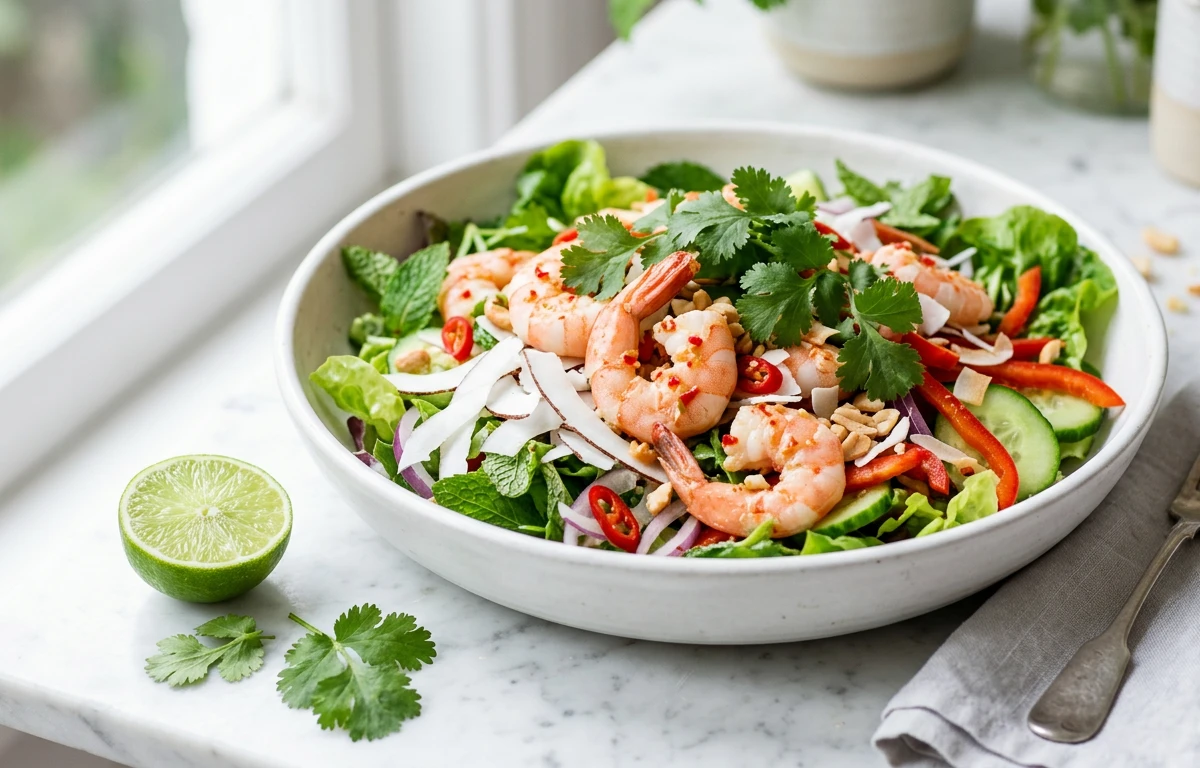
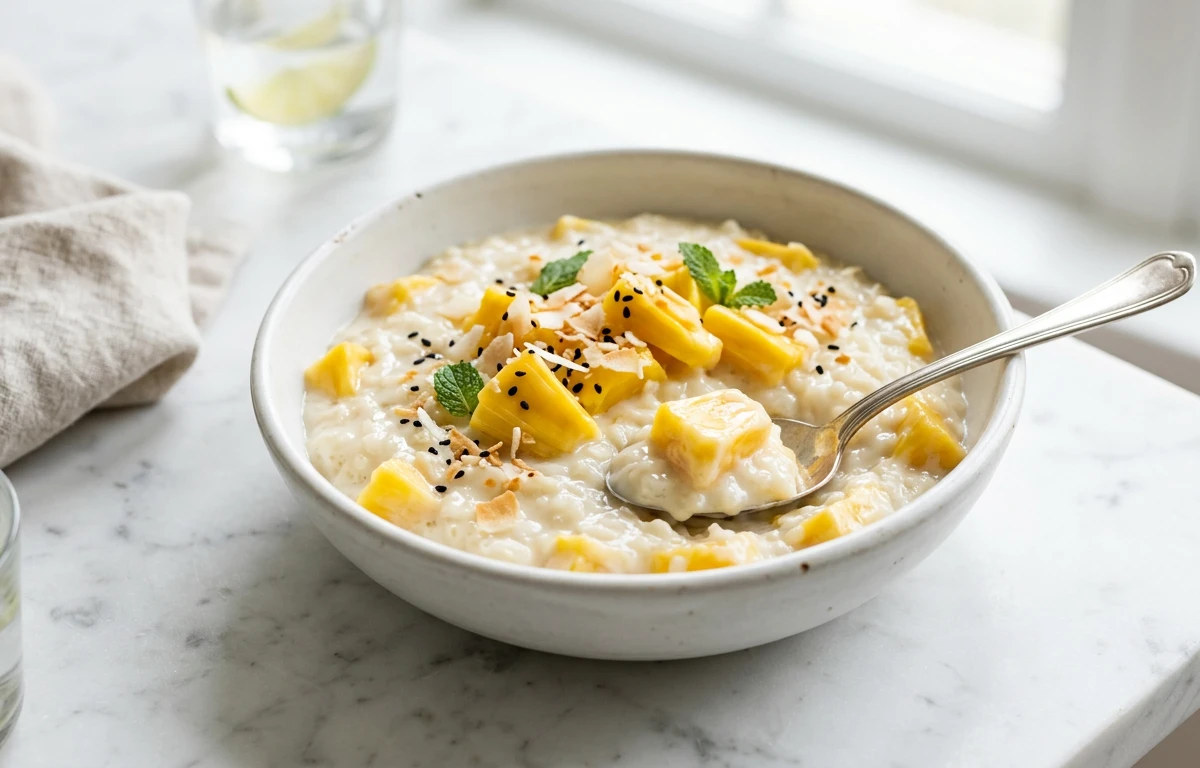
.webp)