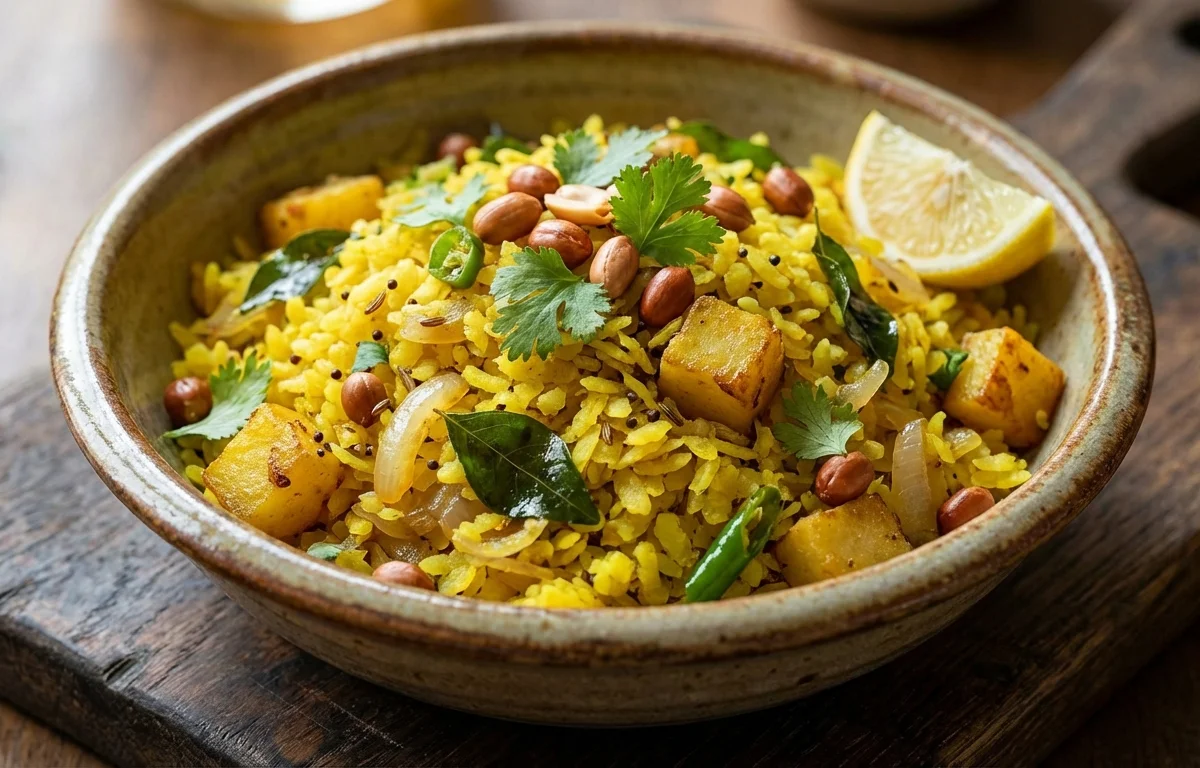
Masala Poha
Light, fluffy flattened rice tossed with onions, peanuts, warm spices, and a squeeze of lemon. This everyday Indian breakfast comes together quickly and has a lovely balance of soft texture, crunch, and fresh flavor.
For 4 servings
- prep · ~5 min
Rinse and rest the poha.
1.Place the poha in a colander and rinse it quickly under running water.2.Let it drain for 5 minutes so the flakes soften without turning mushy.3.Mix in the salt and sugar gently so they spread evenly.TIPUse thick poha here. Thin poha softens too fast and can clump in the pan. - temper · ~3 min
Make the tempering.
1.Heat oil in a wide pan over medium heat.2.Add mustard seeds and let them splutter.3.Add cumin seeds, curry leaves, green chili, and peanuts.4.Cook until the peanuts smell nutty and lightly crisp. - saute · ~6 min
Cook the onion and potato.
1.Add the onion and cook until lightly translucent.2.Add the diced potato and cook over medium heat.3.Stir often until the potato is tender and the onion is soft.TIPKeep the potato pieces small so they cook quickly and blend well with the poha. - saute · ~1 min
Add the masala.
Lower the heat and add turmeric powder, red chili powder, and coriander powder. Stir for a few seconds so the spices bloom without burning.
- mix · ~2 min
Fold in the poha.
Add the softened poha and sprinkle in the water. Toss gently until the masala coats the flakes evenly and everything is mixed well.
- steam · ~2 min
Cover and cook briefly.
Cover the pan and cook on low heat just until the poha is hot and fluffy.
- garnish
Finish with lemon juice and coriander leaves.
- serve
Serve the masala poha hot.
What to keep in mind.
7 tips from the recipe — small details that make a real difference to the final dish.
- 1Rinse the thick poha very briefly, then let it sit undisturbed so the flakes hydrate without breaking.
- 2Wait for the mustard seeds to fully splutter before adding cumin, or the tempering will taste flat.
- 3Cook the peanuts until just crisp in the oil; they soften slightly after the poha is mixed in.
- 4Dice the potato small and even so it turns tender in time without overcooking the onions.
- 5Add the powdered spices on low heat and stir only a few seconds to avoid a bitter, burnt masala.
- 6Sprinkle the 2 tablespoons of water evenly while folding so the poha stays fluffy instead of dry in spots.
- 7Add lemon juice only after switching off the heat to keep the fresh tang bright.
Adapt it for your goals.
Low-oil
Use less oil and dry-roast the peanuts separately; you still get crunch and tempering flavor with a lighter finish.
veganVegan
This recipe is naturally vegan as written, making it a convenient plant-based Indian breakfast.
no peanutNo-peanut
Skip the peanuts for allergy concerns, or replace them with roasted cashews for a different kind of richness and crunch.
extra vegExtra-veg
Add peas or finely chopped carrots with the potato for more color, sweetness, and a heartier breakfast.
Why this is on our healthy list.
Balanced Energy Breakfast
Poha and potato provide easy-to-digest carbohydrates, making this a filling morning dish that is not overly heavy.
Plant-Based Protein and Good Fats
Peanuts add protein, satisfying texture, and beneficial fats that make the poha more sustaining.
Contains Protective Spices
Turmeric, cumin, mustard seeds, curry leaves, and coriander bring antioxidants and deep flavor without needing rich sauces.
Frequently asked questions
Usually the poha was rinsed too long, too much water was added, or thin poha was used. Thick poha needs only a quick rinse and a short rest.