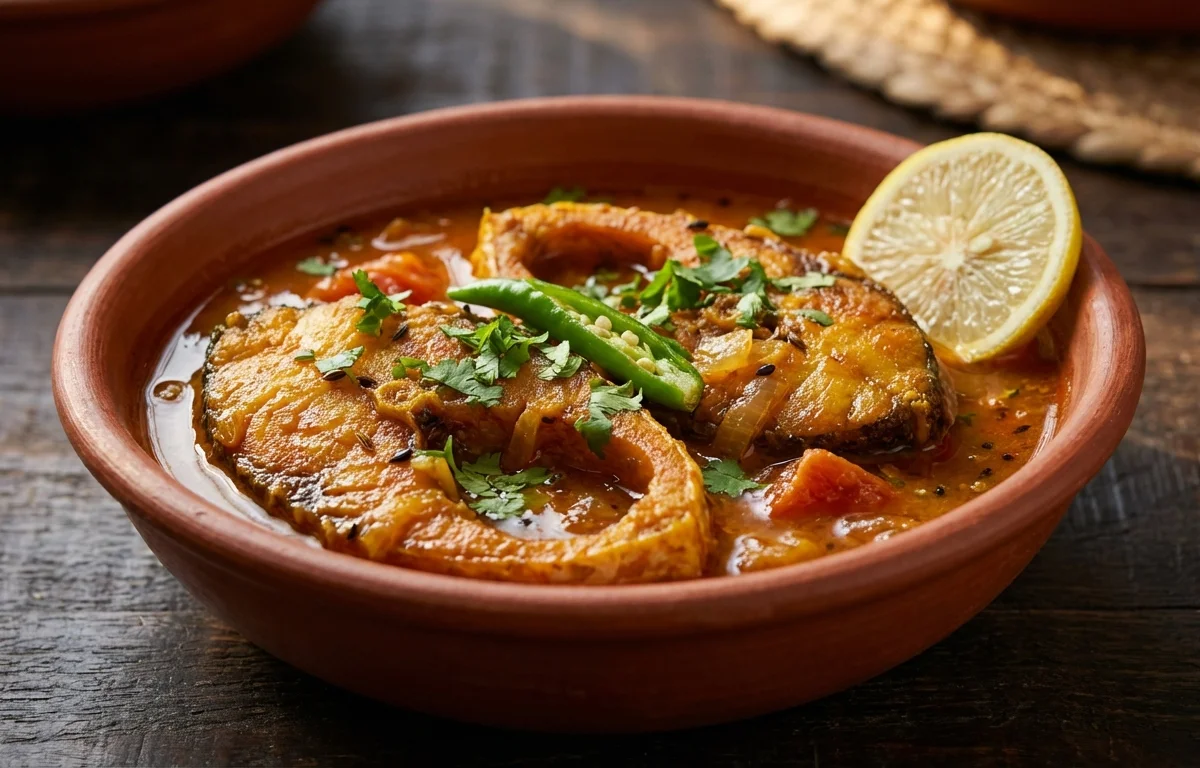
Masor Tenga Bhaja
A classic Assamese dish featuring crispy fried fish simmered in a tangy tomato-based gravy. The signature sourness from tomatoes and lemon, combined with the pungency of mustard oil, makes this a truly unique and flavorful preparation.
For 4 servings
Marinate the Fish
1.In a mixing bowl, gently coat the fish steaks with 1 tsp of turmeric powder and 1 tsp of salt.2.Ensure all pieces are evenly covered.3.Set aside to marinate for 15 minutes.Shallow Fry the Fish
1.Heat mustard oil in a wide, heavy-bottomed pan or kadai over medium-high heat. The oil is ready when it just begins to smoke lightly, which mellows its pungent flavor.2.Carefully slide the marinated fish pieces into the hot oil. Do not overcrowd the pan; fry in two batches if necessary.3.Fry for about 3-4 minutes per side until they are golden brown and crisp.4.Once fried, use a slotted spoon to remove the fish and set them aside on a plate lined with paper towels.Prepare the Tenga Masala Base
1.In the same pan with the remaining oil (remove excess if needed, leaving about 2-3 tbsp), add the sliced onions.2.Sauté on medium heat for 5-6 minutes until the onions become soft, translucent, and light golden at the edges.3.Add the ginger-garlic paste and slit green chilies. Stir and cook for about 1 minute until the raw smell disappears.Cook the Tomato Gravy
1.Add the finely chopped tomatoes to the pan, along with the remaining 0.5 tsp of turmeric powder, red chili powder, and the remaining 0.5 tsp of salt.2.Mix everything well. Cover and cook for 7-8 minutes, stirring occasionally, until the tomatoes break down completely and form a mushy paste.3.Continue to cook until you see oil separating from the masala at the sides of the pan.Combine Fish with Gravy
1.Pour in 0.5 cup of warm water and stir to combine. Bring the gravy to a gentle simmer and let it cook for 2-3 minutes to thicken slightly.2.Very gently, place the fried fish pieces back into the pan, nestling them into the gravy.3.Spoon some of the masala over the fish to coat them. Allow it to simmer for another 2 minutes, so the fish absorbs the tangy flavors. Avoid stirring too much to prevent the fish from breaking.Finish and Garnish
1.Turn off the heat.2.Drizzle the fresh lemon juice evenly over the dish.3.Garnish with freshly chopped coriander leaves.4.Serve immediately with hot steamed rice for the best experience.
What to keep in mind.
5 tips from the recipe — small details that make a real difference to the final dish.
- 1For the most authentic flavor, use mustard oil and heat it until it's lightly smoking before adding ingredients. This reduces its sharpness.
- 2Frying the fish until it's properly crisp is key to the texture of this dish. It prevents the fish from becoming mushy in the gravy.
- 3Be extremely gentle when adding the fried fish back to the gravy and when coating it with masala to keep the pieces intact.
- 4The consistency of the final dish should be semi-dry, with the masala clinging to the fish pieces, not a thin, runny curry.
- 5Adjust the tanginess by adding more or less lemon juice at the end. You can also use tomato puree for a smoother gravy.
Adapt it for your goals.
Souring Agent
For a more traditional Assamese tang, replace lemon juice with the juice of a Kaji Nemu (Assam Lemon) or add a few pieces of dried Thekera (Garcinia pedunculata) to the gravy while it simmers.
Fish VarietyFish Variety
While Rohu is classic, this recipe works well with other freshwater fish like Catla (Bhakua) or even firm saltwater fish like Kingfish (Surmai).
Spice AdditionSpice Addition
For a slightly different flavor profile, you can add a pinch of panch phoron (Bengali five-spice mix) to the hot oil before adding the onions.
Vegetable AdditionVegetable Addition
Add a few pieces of fried potato or elephant foot yam (Ool) to the gravy for extra texture and substance.
Why this is on our healthy list.
Rich in Omega-3 Fatty Acids
Rohu fish is a good source of omega-3 fatty acids, which are crucial for maintaining heart health, supporting brain function, and reducing inflammation in the body.
Excellent Source of Lean Protein
This dish provides high-quality protein from fish, essential for building and repairing tissues, muscle growth, and overall body function.
Anti-Inflammatory Properties
The use of turmeric (containing curcumin), ginger, and garlic provides powerful anti-inflammatory and antioxidant benefits, helping to combat oxidative stress.
Boosts Immunity
Ingredients like tomatoes (rich in Vitamin C and lycopene), lemon juice, and various spices contribute to a stronger immune system.
Frequently asked questions
One serving of Masor Tenga Bhaja contains approximately 350-400 calories, primarily from the fish (protein and fats) and the mustard oil used for frying.