
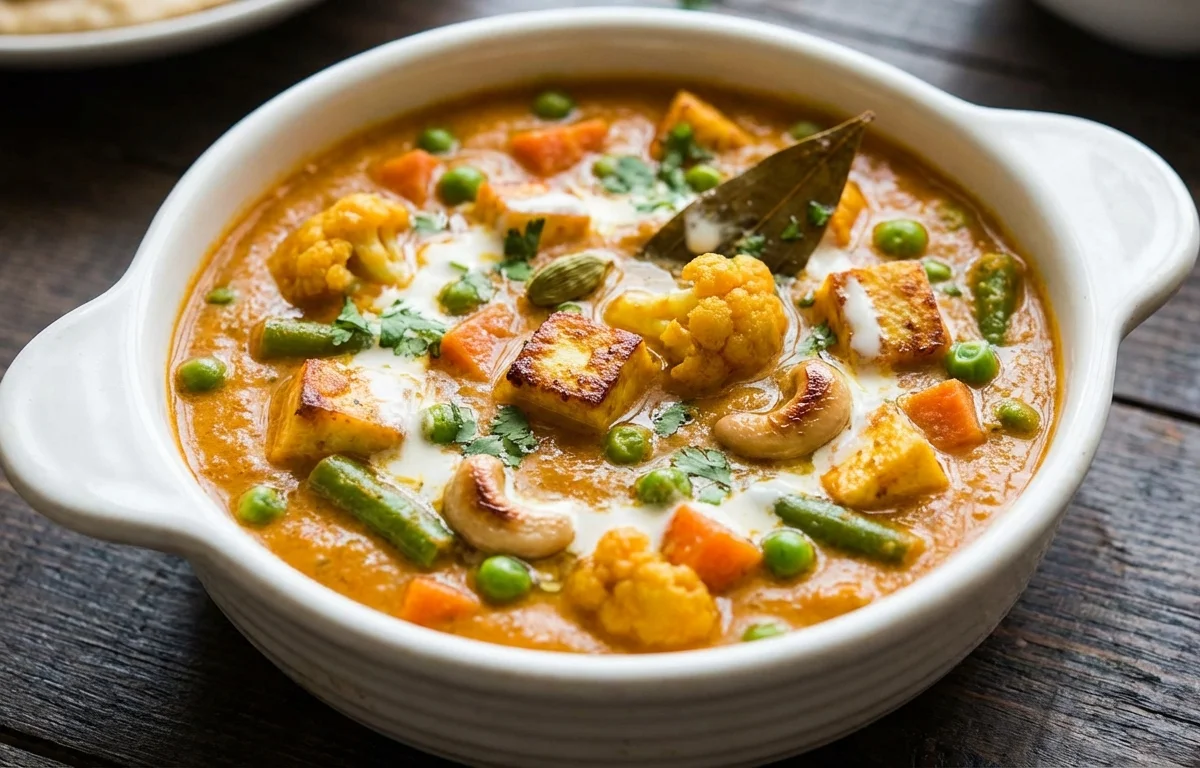
Mixed Vegetable
A simple North Indian mixed vegetable sabzi with everyday vegetables cooked in a light onion-tomato masala. It is comforting, colorful, and easy to pair with roti, dal, or rice for a balanced home-style meal.
For 4 servings
- prep · ~15 min
Prepare the vegetables.
1.Peel and cube the potato and carrot into small even pieces.2.Cut the cauliflower into small florets.3.Trim and chop the beans, cube the bell pepper, and finely chop the onion and tomato.4.Grate the ginger, mince the garlic, and slit the green chili. - saute · ~7 min
Start the masala base.
1.Heat the oil in a kadai or deep pan over medium heat.2.Add cumin seeds and let them sizzle for 20 to 30 seconds.3.Add onion and cook until light golden, 5 to 6 minutes.4.Add ginger, garlic, and green chili and cook for 1 minute.TIPKeep the heat medium so the garlic does not burn and turn bitter. - saute · ~6 min
Cook the tomatoes and spices.
1.Add tomato and cook until soft and pulpy, 4 to 5 minutes.2.Add turmeric powder, red chili powder, coriander powder, and salt.3.Mix well and cook for 1 minute so the spices lose their raw taste. - saute · ~4 min
Add the mixed vegetables.
1.Add potato, carrot, cauliflower, green peas, and beans to the pan.2.Mix well so the vegetables are coated in the masala.3.Cook for 3 to 4 minutes, stirring a few times. - simmer · ~12 min
Cover and cook until tender.
1.Pour in the water and mix once.2.Cover the pan and cook on low heat for 10 to 12 minutes.3.Stir once or twice in between so nothing sticks to the bottom.4.When the vegetables are almost done, add the bell pepper and mix.TIPAdd the bell pepper near the end so it stays slightly crisp and keeps its color. - saute · ~3 min
Finish the sabzi.
Remove the lid and cook for 2 to 3 minutes to dry any extra moisture. Sprinkle garam masala and mix gently without breaking the vegetables.
- garnish
Garnish with coriander leaves.
- serve
Serve hot with roti or rice.
What to keep in mind.
7 tips from the recipe — small details that make a real difference to the final dish.
- 1Cut potato, carrot, and beans to a similar small size so all the vegetables finish cooking together.
- 2Let the onion turn light golden before adding tomatoes; this gives the sabzi a sweeter, deeper masala base.
- 3Cook the tomatoes until the oil looks slightly separated, or the masala can taste sharp and raw.
- 4Add bell pepper only near the end so it stays bright, slightly crisp, and not watery.
- 5If the pan dries too fast while covered, sprinkle a little water rather than adding a large splash at once.
- 6Finish on an open flame for a few minutes to dry excess moisture; this keeps the sabzi good with roti.
- 7This sabzi keeps well for lunchboxes; cool fully before storing and reheat gently so the vegetables do not mash.
Adapt it for your goals.
Dry sabzi
Skip a little of the water and cook uncovered longer at the end for a drier version that packs especially well with roti or paratha.
veganVegan
The dish is naturally vegan as written, making it a simple plant-based sabzi for everyday meals.
jainJain
Omit onion, garlic, and potato; use more cauliflower, beans, peas, and bell pepper, and add a little extra tomato and ginger for body.
no chiliNo-chili
Skip green chili and red chili powder for a milder family-style version while keeping cumin, coriander powder, and garam masala for warmth.
Why this is on our healthy list.
Variety of Vegetables
This sabzi combines potato, carrot, cauliflower, peas, beans, and bell pepper, giving a broad mix of plant nutrients and fiber.
Fiber-Rich Meal Component
The mix of vegetables and peas can help make the meal more filling and pairs well with simple staples like roti, dal, or rice.
Plant-Based Everyday Dish
Made with vegetables, spices, and oil, this is a straightforward vegan-friendly option for a balanced home-style meal.
Gentle Use of Spices
Cumin, ginger, garlic, coriander, and turmeric add aroma and depth without needing heavy cream or rich gravies.
Frequently asked questions
Bell pepper cooks quickly, so adding it late helps it keep its color, slight crunch, and fresher taste instead of turning soft and watery.


