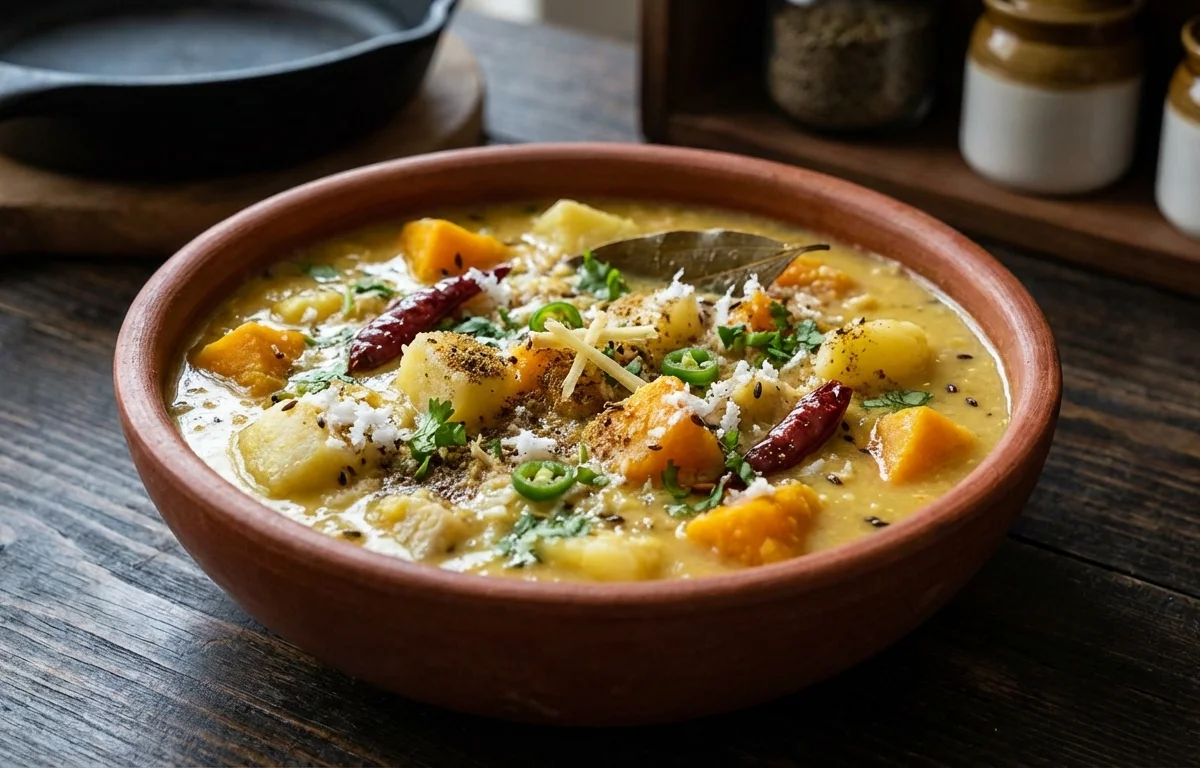
Muga Dali Tarkari
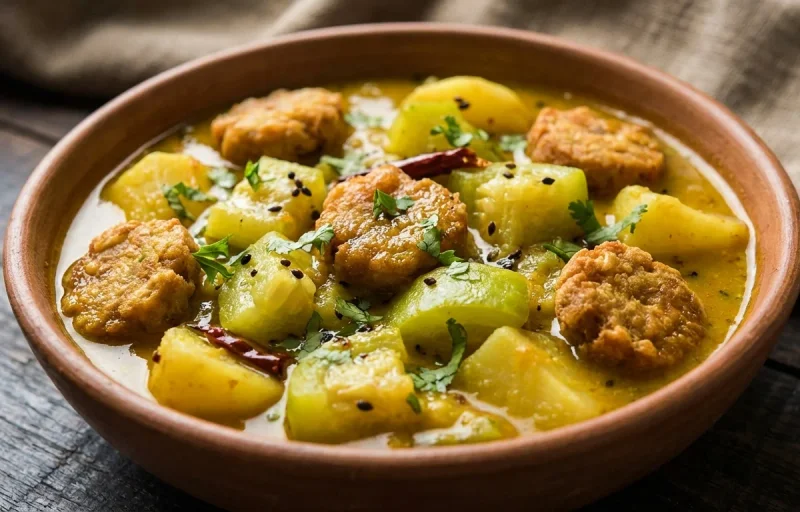
A light Odia-style vegetable curry made with roasted moong dal, gentle spices, and everyday vegetables. It cooks into a comforting semi-thick dish that pairs beautifully with plain rice or phulka as part of a simple home meal.
For 4 servings
- roast · ~4 min
Roast the moong dal.
Heat a dry pan over low heat and roast the moong dal until lightly golden and nutty. Do not let it darken too much.
TIPKeep the heat low and stir often so the dal roasts evenly without turning bitter. - prep · ~7 min
Prepare the vegetables.
1.Peel and cube the potato.2.Peel and cube the pumpkin.3.Peel the raw banana and cube it.4.Cube the eggplant and chop the tomato.5.Crush the ginger and chop the coriander leaves. - temper · ~1 min
Make the tempering.
1.Heat ghee in a pot over medium heat.2.Add cumin seeds, bay leaf, and dry red chili.3.Let the spices sizzle until fragrant. - saute · ~3 min
Cook the ginger and tomato.
Add the crushed ginger and chopped tomato. Cook for 2 to 3 minutes until the tomato softens.
- boil · ~7 min
Add the dal and vegetables.
1.Add the roasted moong dal to the pot.2.Add potato, pumpkin, raw banana, and eggplant.3.Add turmeric powder, salt, and sugar.4.Pour in the water and mix well.5.Bring everything to a boil. - simmer · ~15 min
Cook until soft and lightly thick.
Lower the heat, cover, and simmer until the dal is tender and the vegetables are cooked through. Stir once or twice and lightly mash a few pieces to thicken the tarkari.
TIPIf the pot looks dry before the dal softens, add a small splash of water and continue cooking. - simmer · ~2 min
Finish with cumin powder and garam masala.
Sprinkle in the cumin powder and garam masala. Simmer uncovered for 2 minutes so the flavors settle together.
- garnish
Garnish with coriander leaves.
- serve
Serve hot.
Serve the Muga Dali Tarkari hot with plain rice or phulka as part of a simple meal.
What to keep in mind.
7 tips from the recipe — small details that make a real difference to the final dish.
- 1Roast the moong dal only until lightly golden and nutty; deeper browning can make the tarkari taste bitter.
- 2Cut the potato, pumpkin, raw banana, and eggplant into similar small cubes so they finish cooking together.
- 3Add the eggplant soon after cutting, or keep it in water briefly, so it does not discolor before cooking.
- 4Stir just once or twice while simmering; too much stirring can break the pumpkin and make the curry mushy too early.
- 5Lightly mash a few potato and pumpkin pieces near the end to get the classic semi-thick Odia home-style texture.
- 6If making ahead, keep it a little looser in the pot; the roasted moong dal thickens more as it rests.
- 7A short 5-minute rest after finishing helps the cumin powder and garam masala bloom gently into the dal.
Adapt it for your goals.
Vegan
Replace ghee with a neutral oil for a fully plant-based version that still keeps the gentle Odia-style spice profile.
no onion no garlicNo-onion-no-garlic
This recipe is already naturally free from onion and garlic, making it suitable for simple satvik-style everyday meals.
low spiceLow-spice
Skip the dry red chili and keep only ginger, cumin, and turmeric for an even milder, very home-style tarkari.
more vegetableMore-vegetable
Add cubes of ridge gourd or papaya for a softer, lighter vegetable-forward version that still suits the dal base.
Why this is on our healthy list.
Plant Protein from Moong Dal
Roasted moong dal adds satisfying plant protein and makes the curry more filling while staying relatively light.
Fiber-Rich Vegetable Mix
Potato, pumpkin, raw banana, eggplant, and tomato contribute fiber and help make this a balanced everyday meal with rice or phulka.
Gentle Digestive Spices
Ginger and cumin are traditional spices used in simple dals and vegetable curries for warm, comforting flavor.
Naturally Moderate and Comforting
With light spicing, modest ghee, and no heavy cream or frying, this dish fits well into a simple home-style meal.
Frequently asked questions
Yes, roasting is important here because it gives Muga Dali Tarkari its characteristic nutty aroma and a deeper taste.