Mugachi Khichdi
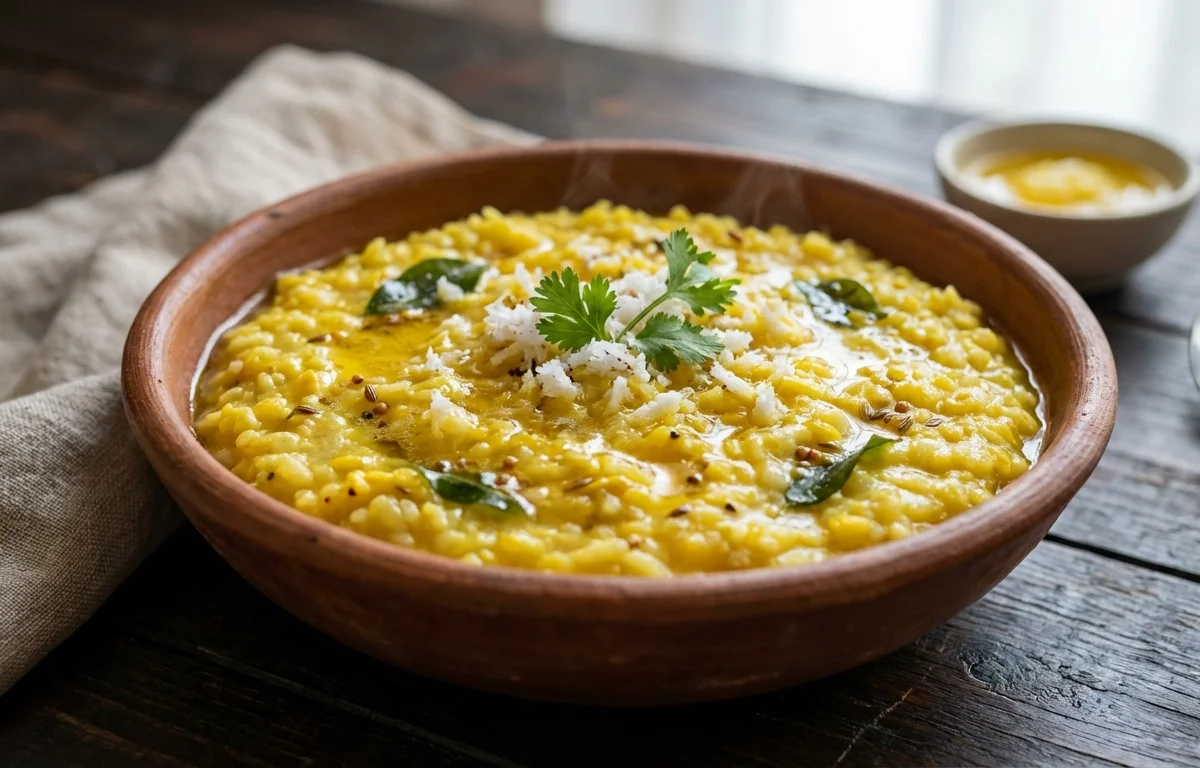
A light, comforting one-pot meal from Maharashtra made with yellow moong dal and rice, gently spiced with cumin and turmeric. This soft, porridge-like khichdi is easy to digest, mildly seasoned, and often served with a dollop of ghee, yogurt, and tangy pickle on the side.
For 4 servings
- prep · ~15 min
Wash and soak the rice and dal.
Wash the rice and moong dal together in water until the water runs clear. Soak in fresh water for 15 minutes, then drain completely.
TIPSoaking softens the dal and helps it cook evenly with the rice. - temper · ~1 min
Make the tempering.
1.Heat ghee in the pressure cooker over medium heat.2.Add cumin seeds and let them crackle (30 sec).3.Add asafoetida and stir briefly until fragrant (10 sec).TIPDo not let the cumin burn — medium heat is enough to release its aroma. - simmer · ~1 min
Add rice, dal, turmeric and water.
1.Add the soaked rice and dal to the cooker.2.Add turmeric powder and salt.3.Pour in 3 cups of water and stir well. - pressure cook · ~15 min
Pressure cook the khichdi.
Close the pressure cooker lid and cook on high heat until the first whistle. Lower the heat and cook for 3 more whistles. Turn off the heat and let the pressure release naturally.
TIPNatural pressure release gives the khichdi a softer, creamier texture. - mix · ~2 min
Mash and adjust consistency.
Open the cooker and stir the khichdi vigorously with a ladle to mash the rice and dal together. If it looks too thick, add a splash of hot water and mix until you get a soft, porridge-like consistency.
TIPThe khichdi thickens as it cools — keep it slightly looser than you want at the table. - garnish · ~1 min
Garnish with coriander and serve hot.
Ladle the khichdi into bowls, garnish with chopped coriander leaves, and serve immediately with a spoonful of ghee on top.
TIPServe with plain yogurt, roasted papad, and a wedge of lime for a complete meal.
What to keep in mind.
7 tips from the recipe — small details that make a real difference to the final dish.
- 1Soak the rice and dal for at least 15 minutes so they cook evenly and turn creamy.
- 2Use a heavy-bottomed pressure cooker for even heat and to prevent scorching.
- 3Let the pressure release naturally for a creamier, more digestible khichdi.
- 4Adjust the water amount by ¼ cup for a thinner or thicker porridge-like consistency.
- 5Stir the cooked khichdi vigorously to mash it lightly — this gives the signature soft texture.
- 6Serve with a generous dollop of ghee; it enhances absorption of nutrients and adds richness.
- 7Leftover khichdi thickens when chilled; thin it with hot water or milk while reheating.
Adapt it for your goals.
Vegetable-loaded
Add ½ cup of finely chopped carrots, peas, or bottle gourd (lauki) along with the rice and dal. This boosts fiber and nutrients while keeping the dish light and comforting.
high proteinHigh-protein
Replace half the rice with an extra ¼ cup of moong dal or add a tablespoon of crushed peanuts during tempering. This increases protein content without altering the soothing texture.
low oil / oil freeLow-oil / oil-free
Skip the ghee tempering; instead, dry-roast cumin seeds and asafoetida in a pan before adding to the cooker, then cook with just water. This reduces fat while retaining the aromatic base.
jainJain
Omit asafoetida (if not Jain-friendly), and replace ghee with a neutral oil. Use only yellow moong dal (no other lentils) and avoid adding any root vegetables or onions.
one pot stove topOne-pot stove-top
Cook in a deep pot over medium-low heat for 30–35 minutes, stirring occasionally and adding extra hot water as needed. This gives a similar texture without a pressure cooker.
Why this is on our healthy list.
Easy to Digest
The combination of split moong dal and white rice, pressure-cooked until soft, is gentle on the stomach and often recommended during illness or recovery.
Rich in Plant Protein
Moong dal provides a good amount of plant-based protein, making this a satisfying, muscle-friendly meal for vegetarians.
Anti-Inflammatory Spices
Turmeric and cumin both contain compounds that support digestion and have mild anti-inflammatory properties, adding subtle health benefits with every bite.
Low in Fat (without ghee)
When served without added ghee, this khichdi is very low in fat and cholesterol, making it a light, heart-friendly option.
Frequently asked questions
Yes, but brown rice needs more water (about 4 cups) and a longer cook time — expect 4 to 5 whistles instead of 3 — and the texture will be slightly nuttier and less creamy.



.webp)