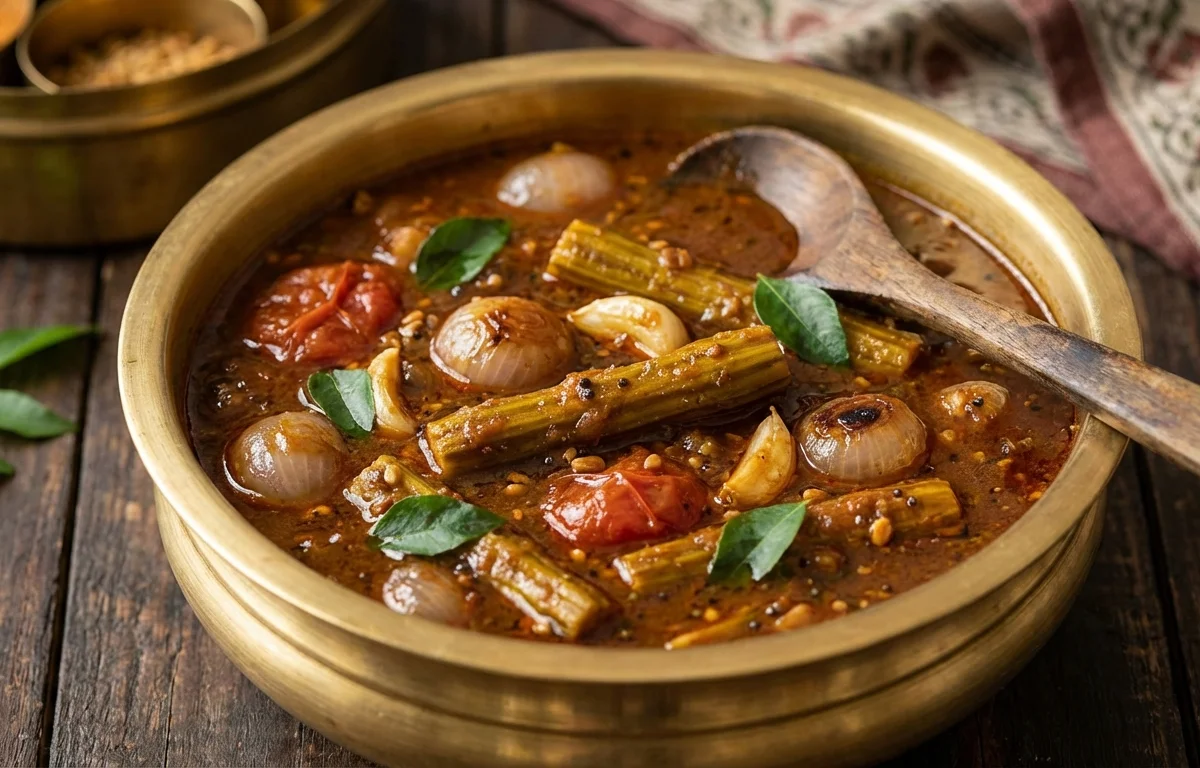
Murungakkai Puli Kuzhambu
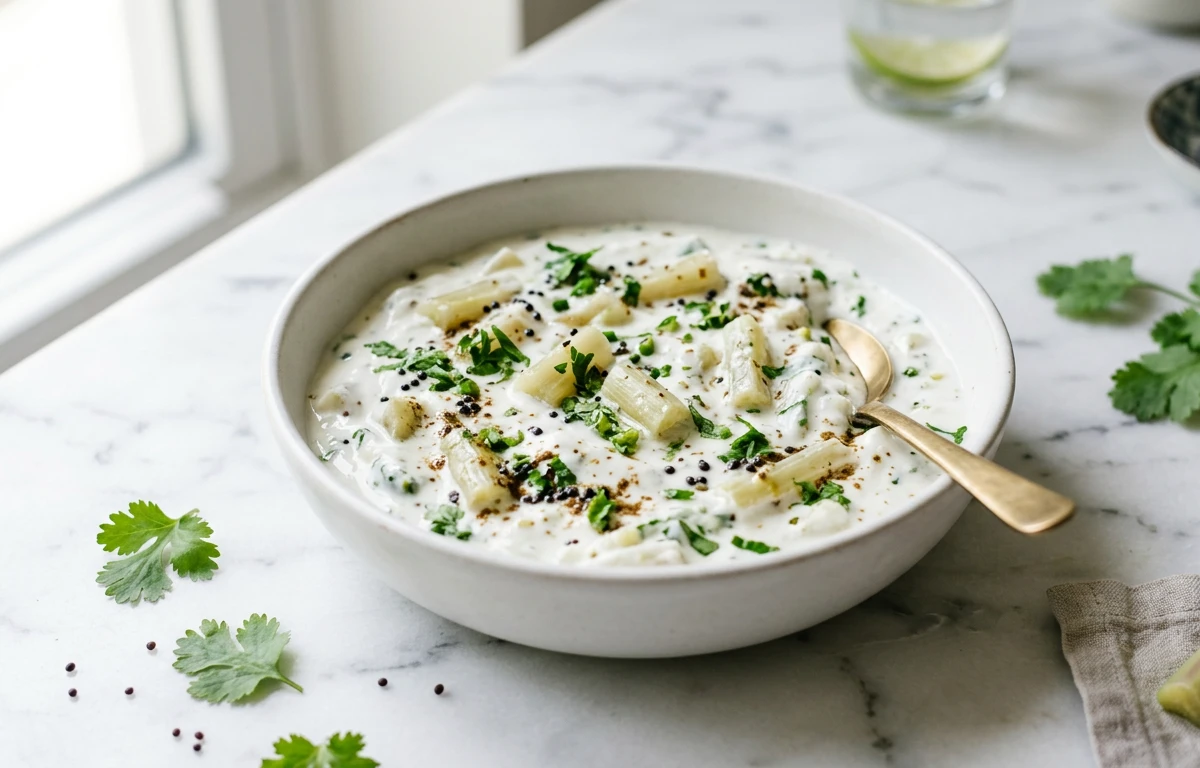
A tangy Tamil-style tamarind gravy with tender drumstick pieces, onion, garlic, and a gentle spice base. It is deeply savory, lightly spicy, and especially good with hot rice and a little ghee.
For 4 servings
- prep · ~15 min
Soak the tamarind and prep the vegetables.
1.Soak tamarind in 1 cup warm water for 15 minutes.2.Cut the drumstick into 2 inch pieces.3.Peel the small onion and garlic.4.Chop the tomato and keep everything ready.TIPPress and squeeze the tamarind well, then strain to get a smooth extract without fibers. - temper · ~1 min
Make the tempering.
1.Heat sesame oil in a kadai over medium heat.2.Add mustard seeds and let them splutter.3.Add fenugreek seeds, dried red chili, and curry leaves.4.Cook for a few seconds until fragrant.TIPDo not let the fenugreek seeds turn very dark or the kuzhambu will taste bitter. - saute · ~7 min
Cook the onion, garlic, and tomato.
1.Add small onion and garlic to the pan.2.Sauté until the onion softens and turns lightly golden, about 4 to 5 minutes.3.Add tomato and cook until soft and pulpy. - saute · ~1 min
Add the spice powders.
Lower the heat and add turmeric powder, red chili powder, coriander powder, and sambar powder. Mix well for 20 to 30 seconds so the spices bloom without burning.
TIPA low flame keeps the spice powders from catching at the bottom of the pan. - simmer · ~15 min
Simmer the drumstick in tamarind gravy.
1.Pour in the tamarind extract and remaining water.2.Add drumstick pieces, salt, and jaggery.3.Bring to a gentle boil, then reduce the heat.4.Simmer uncovered until the drumstick is tender and the gravy thickens slightly, about 12 to 15 minutes.TIPThe kuzhambu should stay pourable, not too thick; it thickens a little more as it rests. - rest · ~10 min
Rest the kuzhambu for 10 minutes.
- serve
Serve hot with rice.
What to keep in mind.
7 tips from the recipe — small details that make a real difference to the final dish.
- 1Cut drumstick into even 2-inch lengths so they soften at the same rate in the tamarind gravy.
- 2Let mustard fully splutter before adding fenugreek; undercooked mustard tastes raw, overbrowned fenugreek turns bitter.
- 3Sauté shallots until lightly golden, not deeply browned, so the kuzhambu keeps its balanced sweet-sour profile.
- 4After adding spice powders, stir only briefly on low heat; they should smell fragrant, not darken in the oil.
- 5Simmer uncovered so the tamarind mellows and the gravy reduces to a pourable consistency that clings lightly to rice.
- 6Resting the kuzhambu for 10 minutes is worth it; the drumstick absorbs the tangy gravy and the flavors round out.
- 7This kuzhambu tastes even better the next day; refrigerate and reheat gently, adding a splash of water if it has thickened.
Adapt it for your goals.
Jain
Skip the garlic and shallots, increase tomato slightly, and add a pinch more sambar powder for a simpler but still tangy kuzhambu.
low oilLow-oil
Reduce sesame oil and sauté on a lower flame with a splash of water when needed; useful if you want a lighter everyday version.
more spicyMore-spicy
Add one extra dried red chili or a little more chili powder for a sharper heat that stands up well to hot rice.
mixed vegetableMixed-vegetable
Add brinjal or a few pieces of raw mango along with drumstick for extra body and a more layered, traditional puli kuzhambu style.
Why this is on our healthy list.
Fiber-Rich Drumstick Pods
Drumstick pods add plant fiber and make the kuzhambu more filling while still keeping the dish light and broth-like.
Antioxidant Spice Base
Turmeric, red chili, coriander, curry leaves, garlic, and shallots contribute protective plant compounds along with strong flavor.
Lighter Than Creamy Gravies
This kuzhambu gets body from tamarind, onion, and tomato instead of cream or coconut milk, keeping it comparatively light.
Frequently asked questions
The pieces should look slightly darker and feel tender when pierced with a knife, but they should still hold their shape in the gravy.