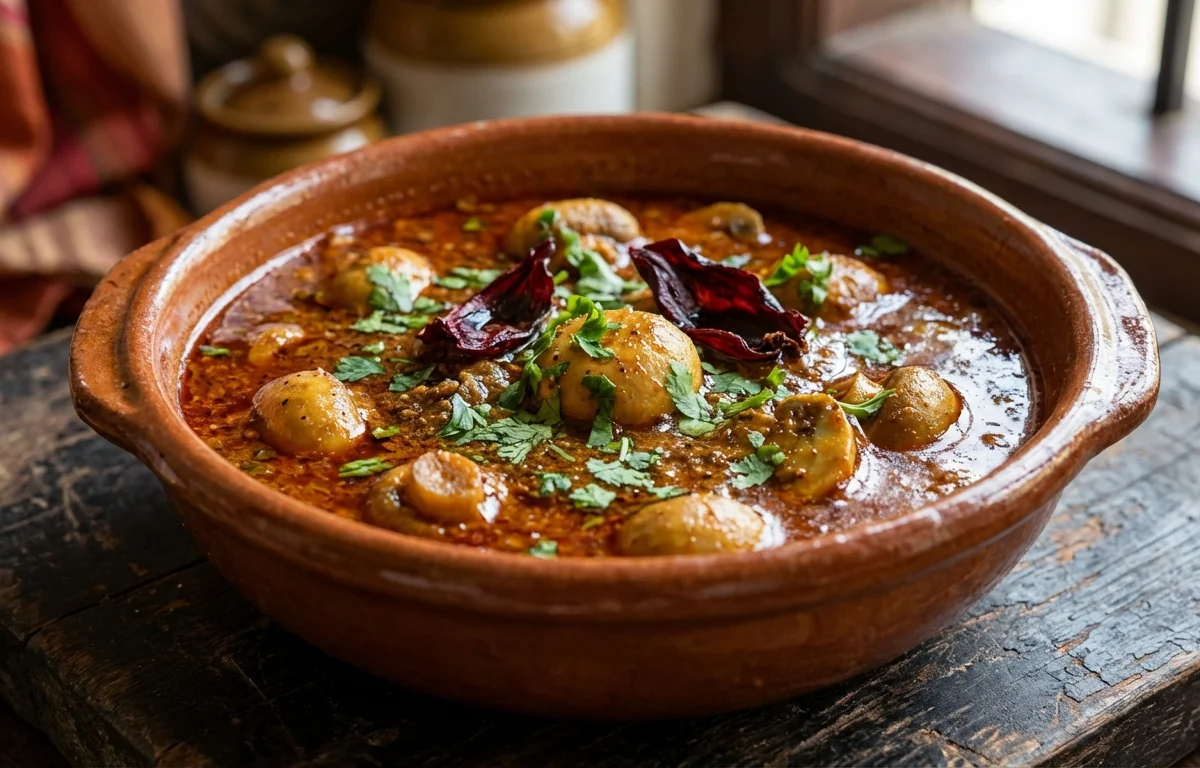
Mushroom Ambotik
A tangy, spicy Goan curry where meaty mushrooms swim in a vibrant red chili and vinegar-laced coconut gravy. This coastal classic balances heat, sourness, and richness, making it perfect with steamed rice or poi bread.
For 4 servings
- prep · ~30 min
Soak the red chilies.
Soak the kashmiri dried red chilies in warm water for 30 minutes until softened. Drain and set aside.
- prep · ~5 min
Make the spice paste.
In a small grinder, blend the soaked chilies, cumin seeds, black peppercorns, cloves, cinnamon stick, and grated coconut with 2-3 tablespoons of water into a smooth, thick paste.
- saute · ~6 min
Sauté the mushrooms.
Heat 1 tablespoon of oil in a heavy-bottomed pan over medium heat. Add the mushrooms and a pinch of salt. Sauté until they release their water and turn golden brown, about 5-6 minutes. Remove and set aside.
TIPDon't overcrowd the pan; the mushrooms need space to sear rather than steam. - saute · ~10 min
Build the onion-tomato base.
1.Heat the remaining 1 tablespoon oil in the same pan over medium heat.2.Add the chopped onion and sauté until translucent (3-4 min).3.Add the minced garlic and grated ginger; sauté until the raw smell disappears (1 min).4.Add the chopped tomatoes, turmeric powder, and slit green chilies. Cook until the tomatoes turn soft and mushy (4-5 min). - simmer · ~12 min
Cook the ambotik gravy.
1.Add the ground spice-coconut paste to the pan and stir well.2.Sauté the paste for 2-3 minutes until the oil starts to separate.3.Add the tamarind pulp and 1 cup of hot water. Stir and bring to a gentle boil.4.Season with salt, then simmer uncovered for 8-10 minutes to let the flavors meld.TIPStir occasionally to prevent the coconut paste from sticking to the bottom. - simmer · ~5 min
Add mushrooms to the curry.
Gently fold the sautéed mushrooms into the simmering gravy. Cover and let it cook on low heat for 5 minutes so the mushrooms absorb the tangy, spicy sauce.
TIPThe gravy thickens as it cools; add a splash of water if you prefer a thinner consistency. - garnish
Garnish with fresh coriander.
Turn off the heat and sprinkle generously with chopped cilantro. Let it rest for 2 minutes before serving.
- serve
Serve the Mushroom Ambotik.
Serve hot in a bowl with steamed rice, poi, or pav to mop up the tangy, spicy gravy.
What to keep in mind.
6 tips from the recipe — small details that make a real difference to the final dish.
- 1Sauté mushrooms in a single layer until golden to develop deep umami flavor, not steam them.
- 2Soak Kashmiri chilies in warm water for a full 30 minutes to soften for a silky paste.
- 3Cook the spice-coconut paste until oil separates to intensify the curry's aroma and taste.
- 4Simmer the gravy uncovered to let the tamarind and chili meld without thinning out.
- 5Fold mushrooms in gently at the end to keep them from breaking and allow absorption.
- 6Let the curry rest 5 minutes off heat before serving for flavors to deepen.
Adapt it for your goals.
Vegan
Already vegan-friendly — just ensure the oil used is plant-based and skip any optional ghee. The coconut and tamarind keep it luscious.
high proteinHigh-protein
Swap half the mushrooms with firm tofu or soy chunks (pre-soaked) for extra protein while retaining the gravy's tangy heat.
kebab styleKebab-style
Reduce water to 1/2 cup to make a thick masala. Marinate paneer or veggie chunks in it, skewer, and grill or pan-roast for a dry version.
Why this is on our healthy list.
Rich in Antioxidants
Mushrooms provide selenium and ergothioneine, which support cellular health, while Kashmiri chilies and turmeric add anti-inflammatory properties.
Gut-Friendly Sourness
Tamarind acts as a natural digestive aid, and the spice blend may stimulate metabolism without heavy cream or dairy.
Low in Saturated Fat
Using coconut as a base instead of cream keeps this curry cholesterol-free and lighter, with healthy medium-chain triglycerides.
Frequently asked questions
Yes, use 1/3 cup dried unsweetened coconut soaked in warm water for 10 minutes, then drain before grinding.