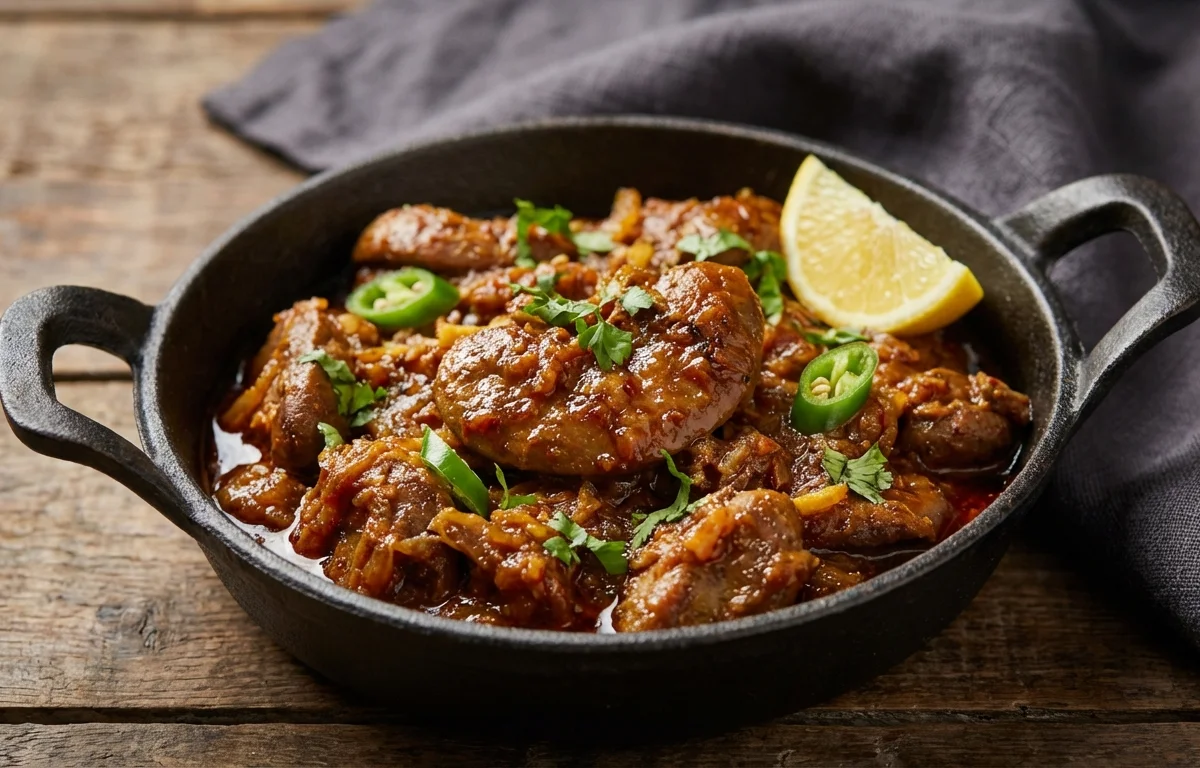
Mutton Gurda Fry
Tender goat kidneys cooked quickly with onions, ginger, garlic, black pepper, and warm spices for a bold, spicy fry. This rich, old-school dish is best served hot with roti, paratha, or a simple rice meal.
For 4 servings
- prep · ~10 min
Clean and cut the gurda.
1.Rinse the mutton kidney well under running water.2.Trim the white core and any tough membrane.3.Cut into small bite-size pieces and keep aside.4.Drizzle lemon juice over the pieces and set aside while you prepare the masala.TIPDo not soak too long after adding lemon juice or the kidney can turn firm. - saute · ~9 min
Cook the onion base.
1.Heat oil in a wide pan over medium heat.2.Add sliced onion and cook until lightly golden, 6 to 8 minutes.3.Add ginger, garlic, and green chili.4.Cook for 1 minute until the raw smell fades.TIPUse a wide pan so the kidney fries instead of steaming. - saute · ~6 min
Add tomato and spices.
1.Add chopped tomato and cook until soft and pulpy, 4 to 5 minutes.2.Add coriander powder, red chili powder, turmeric powder, black pepper, garam masala, and salt.3.Mix well and cook for 30 seconds. - fry · ~7 min
Fry the gurda quickly.
1.Add the kidney pieces to the pan.2.Stir on medium-high heat to coat them well in the masala.3.Cook for 5 to 7 minutes, stirring often, until the pieces are just cooked and the masala turns semi-dry.TIPDo not overcook the kidney or it will become rubbery. - garnish
Finish with coriander leaves.
- serve
Serve hot.
Serve the mutton gurda fry hot with roti, paratha, or a small portion of rice.
What to keep in mind.
7 tips from the recipe — small details that make a real difference to the final dish.
- 1Pat the cleaned kidney dry before it hits the pan so it fries instead of releasing excess water.
- 2Keep the lemon juice rest brief; a long soak can tighten the kidney and make it chewy.
- 3Slice the onions fine and cook only to light golden, not deep brown, so the masala stays balanced.
- 4Use a wide, heavy pan and avoid crowding, or the gurda will steam and lose its fried texture.
- 5Cook the kidney just until firm and springy; once it curls hard or turns bouncy, it is overdone.
- 6Finish with crushed black pepper right at the end if you want a sharper, more traditional peppery kick.
- 7This fry tastes best straight off the stove, but if reheating, do it briefly on a hot pan, not for long.
Adapt it for your goals.
Dry-fry
Cook a little longer on high heat after the kidney is done to make the masala cling tightly for a drier, dhaba-style finish.
extra spicyExtra-spicy
Add more slit green chilies and a touch more black pepper for a hotter version that pairs especially well with paratha.
low oilLow-oil
Use less oil and a good heavy pan; cook the onions slowly so they soften without needing much fat.
with liverWith-liver
Add a small amount of chopped mutton liver along with the kidney for a richer mixed-offal fry.
Why this is on our healthy list.
Rich in Protein
Goat kidney provides substantial animal protein, making this fry filling and supportive for muscle maintenance.
Naturally Iron-Rich
Organ meats like kidney are valued for iron and other micronutrients that support energy and blood health.
Includes Digestive Spices
Ginger, garlic, black pepper, and coriander add flavor while also bringing traditional digestive benefits to a rich dish.
Frequently asked questions
Trim out the white core and membranes thoroughly, rinse well, and use the brief lemon juice rest as given. Proper cleaning is the biggest factor.