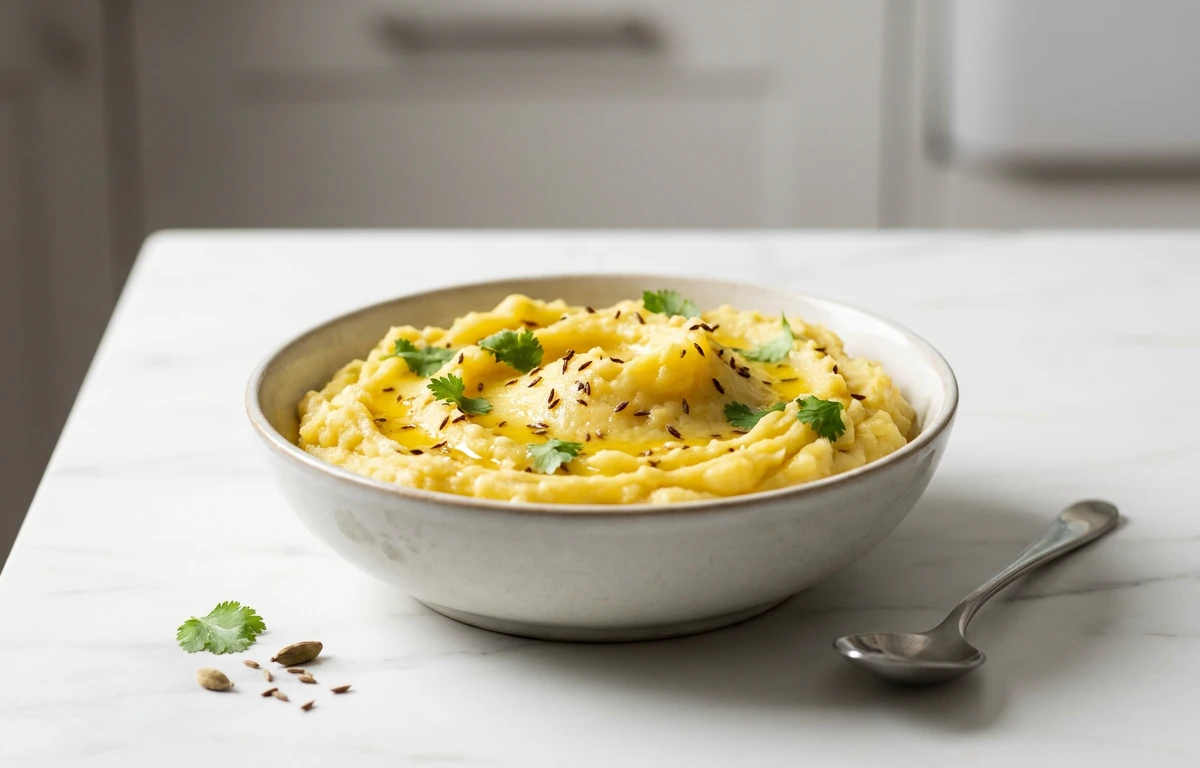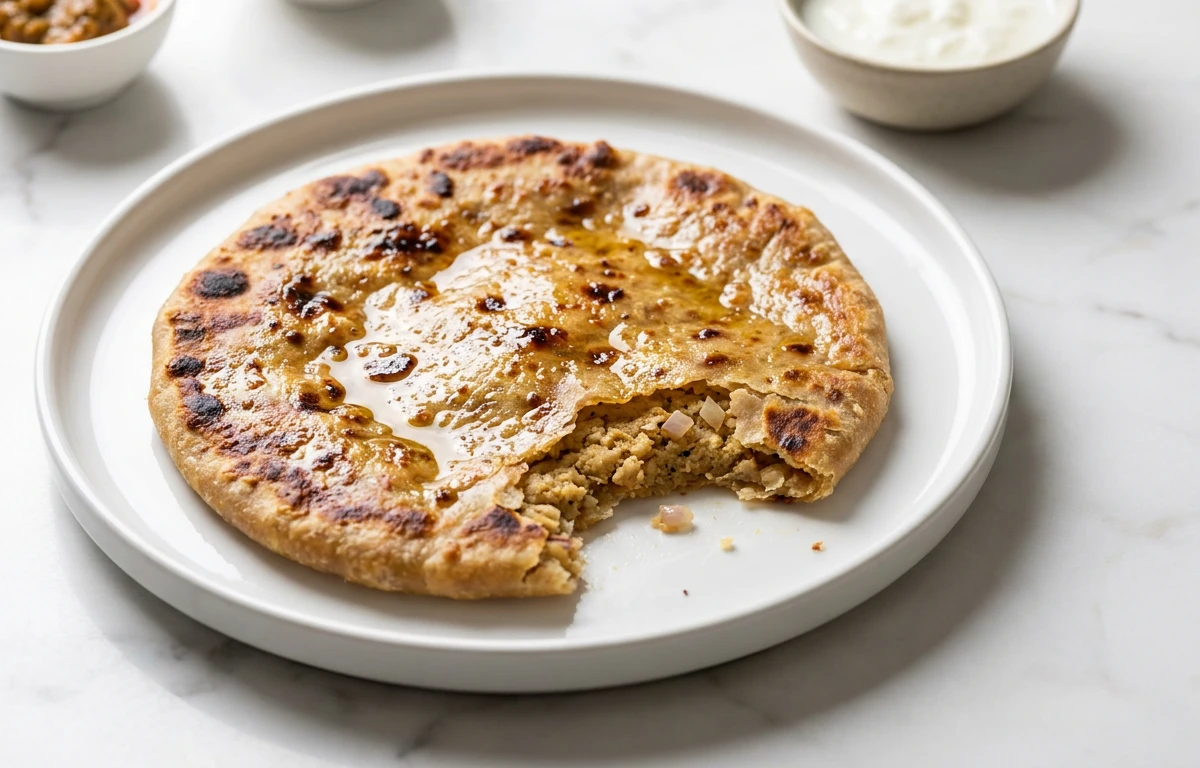
Oal ki Sabzi
A homestyle Bihar-style elephant foot yam curry with a gentle kick, soft chunks of oal, and a lightly spiced onion-tomato masala. It cooks into a comforting semi-dry sabzi that goes especially well with roti or plain rice.
For 4 servings
- prep
Peel and cut the oal.
Wear a little oil on your hands if needed, then peel the oal and cut it into medium cubes. Chop the onion, tomato, green chili, ginger, garlic, and cilantro.
TIPOal can irritate the skin, so avoid touching your face while handling it. - boil · ~12 min
Boil the oal until just tender.
Add the oal, 500 ml water, and a small part of the salt to a pan. Boil until the cubes are just tender but still hold their shape, then drain.
TIPDo not overcook the oal or it will break while mixing with the masala. - saute · ~6 min
Heat the mustard oil and start the masala.
1.Heat mustard oil until it reaches a light smoking point, then lower the heat slightly.2.Add cumin seeds and bay leaf and let them sizzle for 20-30 seconds.3.Add chopped onion and cook until light golden, about 5 minutes. - saute · ~7 min
Cook the aromatics and tomatoes.
1.Add ginger, garlic, and green chili and cook for 1 minute.2.Add tomato, turmeric powder, red chili powder, coriander powder, cumin powder, and the remaining salt.3.Cook until the tomato softens and the masala looks thick, about 4-5 minutes.4.Add 60 ml water and cook 1 minute to loosen the masala. - saute · ~7 min
Coat the oal in the masala.
Add the boiled oal cubes and mix gently so every piece is coated well. Cook on low heat for 5-7 minutes, stirring once or twice, until the sabzi turns semi-dry and flavorful.
- garnish
Finish with garam masala, lemon juice, and cilantro.
Sprinkle garam masala over the sabzi, add lemon juice, and mix lightly. Garnish with chopped cilantro.
- serve
Serve hot with roti or plain rice.
What to keep in mind.
7 tips from the recipe — small details that make a real difference to the final dish.
- 1Rub a little oil on your hands and knife before peeling oal to reduce the itchy irritation it can cause.
- 2Boil the yam only until a knife goes in with slight resistance; overboiled cubes will crumble when mixed into the masala.
- 3Let the mustard oil reach a light smoke before tempering so its raw sharpness mellows and the sabzi gets its classic Bihari flavor.
- 4Cook the onion to light golden, not dark brown, so the masala stays balanced and doesn't overpower the mild oal.
- 5After adding the boiled oal, stir gently and only once or twice to keep the cubes intact in the semi-dry sabzi.
- 6Add the lemon juice only at the end off or on very low heat, so the final tang stays bright instead of turning dull.
- 7This sabzi tastes even better after 20-30 minutes of resting, when the oal absorbs the onion-tomato masala more fully.
Adapt it for your goals.
No-onion-no-garlic
Skip onion and garlic, then use extra ginger, tomato, and a pinch more cumin for a simpler satvik-style version.
spicierSpicier
Add an extra green chili or a little more red chili powder if you want a sharper, more assertive heat with the earthy oal.
gravy styleGravy-style
Add more water while cooking the masala for a looser curry that pairs especially well with steamed rice.
potato oalPotato-oal
Add boiled potato cubes with the oal for a softer, more familiar mixed sabzi that stretches the dish further.
Why this is on our healthy list.
Fiber-Rich Main Ingredient
Elephant foot yam adds satisfying bulk and fiber, making this sabzi filling and well suited to a simple roti or rice meal.
Digestive Aromatics
Ginger, garlic, cumin, and coriander are traditional digestive spices that bring flavor while making the curry feel lighter.
Moderate Oil, Big Flavor
A small amount of mustard oil carries the spices well, so the dish gets strong taste without relying on heavy cream or butter.
Frequently asked questions
Raw elephant foot yam can irritate skin naturally. Rubbing a little oil on your hands and washing well after handling usually helps.



.webp)