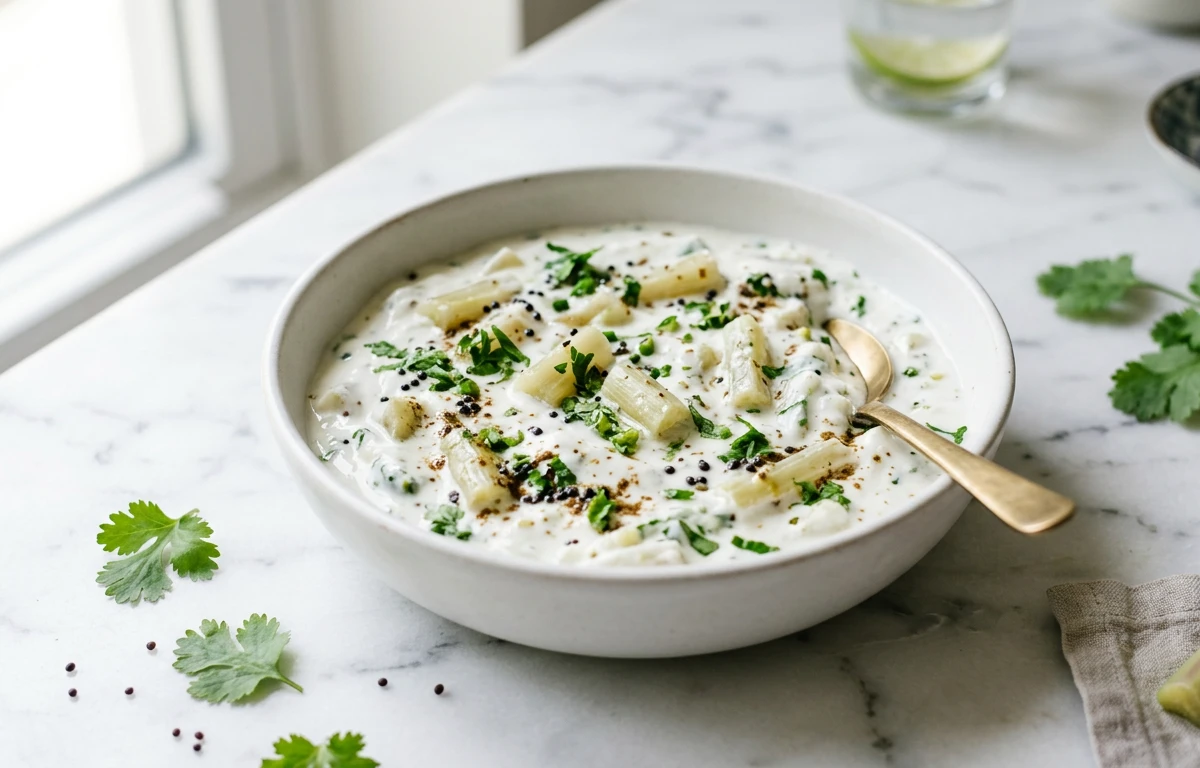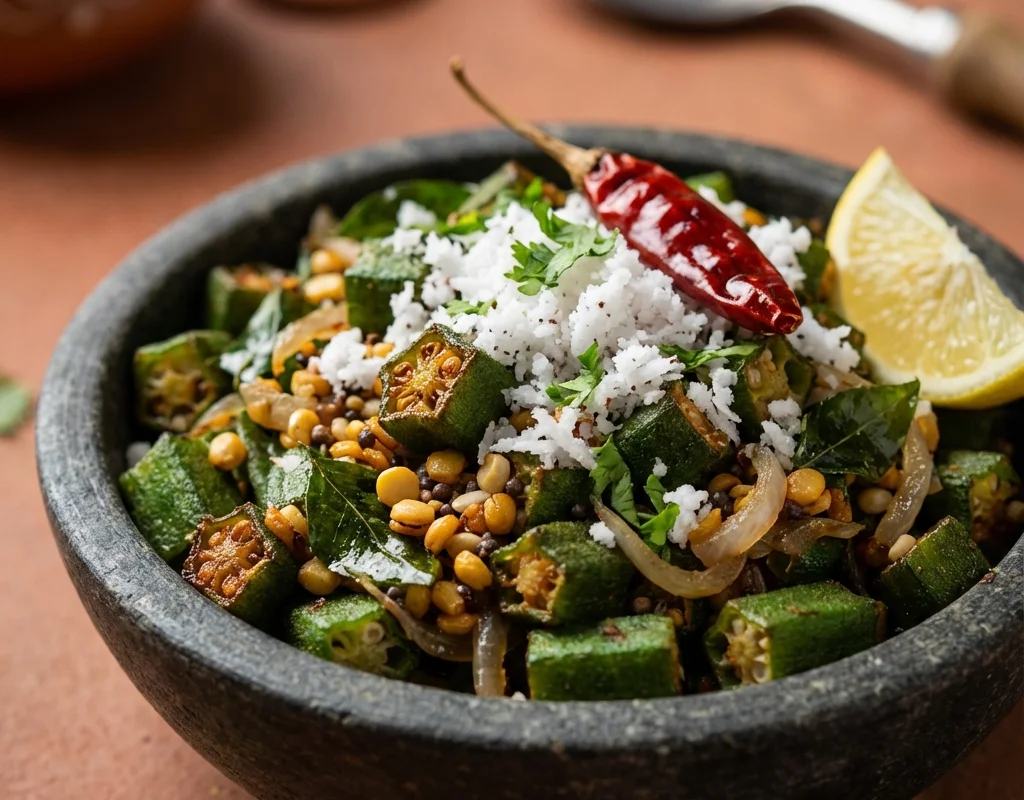
Okra Palya
A simple Karnataka-style okra stir-fry with onions, mild spices, and a light coconut finish. It stays tender with crisp edges and makes an easy side for rice, rasam, or chapati.
For 4 servings
- prep · ~15 min
Prep the okra and onions.
Wash the okra, dry it fully with a kitchen towel, then trim and cut into 1 inch pieces. Slice the onion and slit the green chilies.
- temper · ~2 min
Make the tempering.
1.Heat oil in a wide pan over medium heat.2.Add mustard seeds and let them splutter.3.Add urad dal and cook until lightly golden.4.Add curry leaves and green chilies and fry for a few seconds.TIPUse a wide pan so the okra cooks in a single layer and turns less slimy. - saute · ~4 min
Cook the onion.
Add the sliced onion and sauté until it softens and turns light golden.
- saute · ~12 min
Cook the okra with spices.
1.Add the cut okra and mix gently.2.Sprinkle in turmeric powder, red chili powder, and salt.3.Cook uncovered on medium heat, stirring every 2 to 3 minutes.4.Keep cooking until the okra loses its stickiness and turns tender with lightly crisp edges.TIPDo not cover the pan while cooking, or the okra will steam and become sticky. - garnish · ~1 min
Finish with grated coconut.
Add the grated coconut and mix for 1 minute so it warms through without losing its fresh taste.
- serve
Serve the okra palya hot.
What to keep in mind.
6 tips from the recipe — small details that make a real difference to the final dish.
- 1Dry the okra completely before cutting; even a little moisture makes bhindi release more slime.
- 2Use a wide kadai or frying pan so the okra sits in a shallow layer and crisps instead of steaming.
- 3Wait until the mustard seeds splutter and urad dal turns pale golden before adding onions for a fuller tempering flavor.
- 4Cook the okra uncovered and stir only every few minutes; constant stirring can make it break and turn mushy.
- 5Add the coconut right at the end and cook briefly so it stays sweet, fresh, and lightly textured.
- 6If making ahead, cool fully before storing and reheat in an open pan to bring back the dry, crisp-edged texture.
Adapt it for your goals.
Low-oil
Use a little less oil and cook in a very wide nonstick pan, stirring gently; good if you want a lighter everyday palya.
no onionNo-onion
Skip the onion for a simpler, more satvik-style version where the okra, tempering, and coconut stand out more clearly.
spicierSpicier
Add an extra green chili or a bit more red chili powder if you want the mild palya to pair with plain rice and curd.
peanut coconutPeanut-coconut
Mix in a spoon of coarsely crushed roasted peanuts with the coconut for extra nuttiness and a slightly heartier texture.
Why this is on our healthy list.
Fiber-Rich Vegetable Side
Okra and onion make this a vegetable-forward side that can help add fiber and bulk to a meal.
Includes Healthy Plant Compounds
Okra, curry leaves, green chilies, and turmeric contribute a range of natural plant compounds along with everyday flavor.
Lightly Satiating Finish
The small amount of fresh coconut adds richness and texture, helping the simple stir-fry feel more satisfying.
Frequently asked questions
This usually happens if the okra was not fully dry, the pan was crowded, or it was covered while cooking. Use a wide pan and cook uncovered.