Padengi Gassi
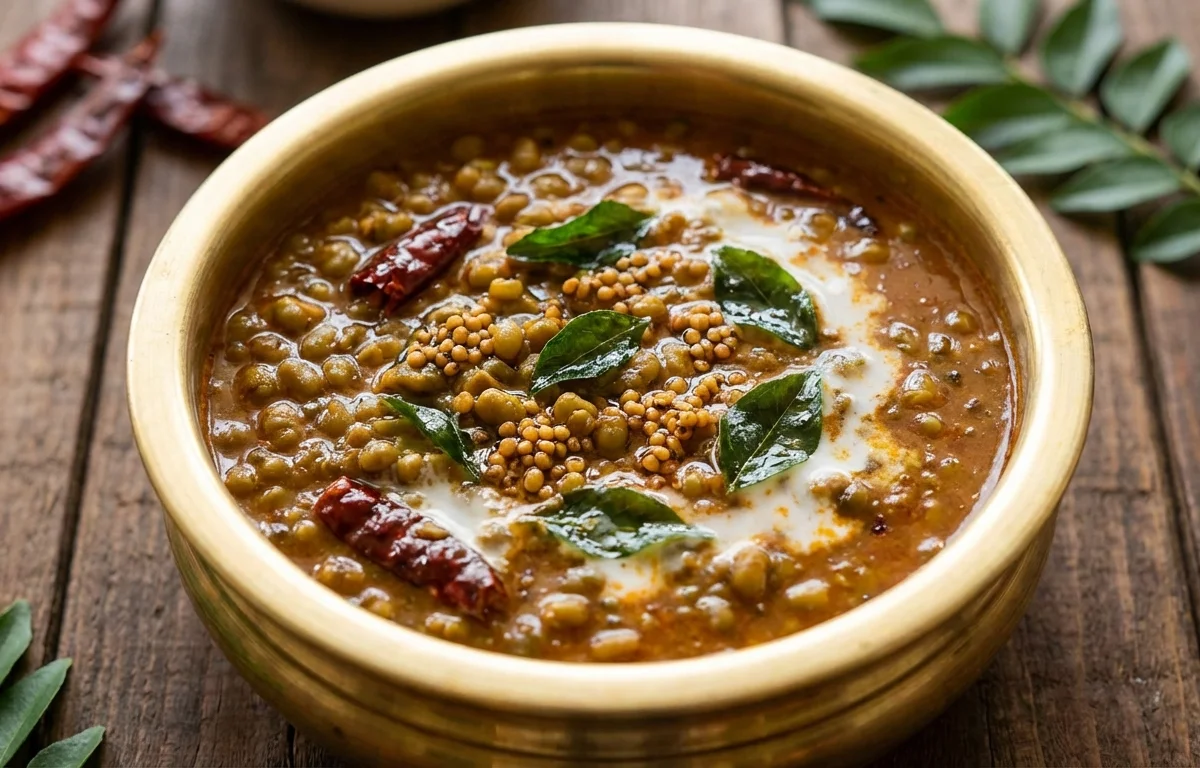
Padengi Gassi is a coastal Mangalorean curry made with black-eyed peas simmered in a roasted coconut and red chili masala. It is rich, gently spicy, and deeply comforting with rice on the side.
For 4 servings
- pressure cook · ~20 min
Cook the black-eyed peas.
1.Drain the soaked black-eyed peas and add them to a pressure cooker with 3 cups water.2.Add 0.25 tsp salt and stir once.3.Pressure cook until soft but not mushy, about 4 to 5 whistles.TIPThe peas should hold their shape in the curry, so avoid overcooking. - roast · ~7 min
Roast the masala ingredients.
1.Heat a small pan over medium heat and dry roast the coriander seeds, cumin seeds, and fenugreek seeds until aromatic.2.Add the dried red chili and roast briefly until crisp and deeper in color.3.Add the grated coconut and roast until lightly golden.4.Add the garlic and cook for 30 seconds to take off the raw edge.TIPKeep the heat medium-low once the coconut goes in so it browns evenly and does not taste bitter. - mix · ~5 min
Grind the roasted masala.
Cool the roasted mixture slightly, then grind it with tamarind paste and 1 cup water to a smooth, thick masala.
- simmer · ~10 min
Simmer the curry.
1.Transfer the cooked black-eyed peas with their cooking liquid to a pot.2.Add the ground masala and mix well.3.Add the remaining 0.25 tsp salt and bring the curry to a gentle simmer.4.Cook for 8 to 10 minutes, stirring now and then, until the gravy thickens and the flavors come together. - temper · ~5 min
Make the tempering.
1.Heat the oil in a small pan.2.Add mustard seeds and let them splutter.3.Add curry leaves and sliced onion.4.Cook the onion until lightly golden. - assemble · ~1 min
Finish the gassi.
Pour the hot tempering over the simmering curry and mix gently. Let it bubble for 1 minute so the onion and curry leaves flavor the gassi.
- serve
Serve hot with rice.
What to keep in mind.
7 tips from the recipe — small details that make a real difference to the final dish.
- 1Cook the black-eyed peas just until tender; they should press easily but still stay whole in the gravy.
- 2Roast the coconut only to a light golden shade, not dark brown, or the gassi can turn bitter.
- 3Byadgi chilies give the classic deep red color with moderate heat; use a hotter variety only if you want a spicier curry.
- 4Let the roasted masala cool a little before grinding so it blends smoother and does not turn oily.
- 5If the curry thickens too much after simmering, loosen it with a splash of the peas' cooking liquid rather than plain water.
- 6The tempering should be poured over the curry while both are hot, so the onion, mustard, and curry leaves bloom fully into the gassi.
- 7Padengi Gassi tastes even better after 30 minutes of rest, when the tamarind and roasted coconut settle into the beans.
Adapt it for your goals.
No-onion
Skip the sliced onion in the tempering for a simpler, more austere finish while keeping the mustard and curry leaves.
spicierSpicier
Add 1-2 hotter dried chilies along with the byadgi chilies if you want more heat without losing the traditional red color.
thicker gravyThicker-gravy
Use slightly less water while grinding the masala for a richer, thicker gassi that pairs especially well with plain rice.
jaggery touchJaggery-touch
Add a small pinch of jaggery at the simmering stage to gently round out the tamarind and chili, a common coastal balance.
Why this is on our healthy list.
Bean-Based Protein and Fiber
Black-eyed peas provide plant protein and fiber, making this curry filling and satisfying when served with rice.
Spice-Rich Digestive Support
Coriander, cumin, fenugreek, garlic, and curry leaves bring traditional digestive-friendly aromatics along with strong flavor.
Energy-Sustaining Meal
The combination of legumes and coconut creates a hearty curry that offers lasting satiety and a well-rounded feel.
Frequently asked questions
Yes. Use drained cooked peas and simmer them briefly in the masala; you may need a little extra water since you will not have the bean cooking liquid.