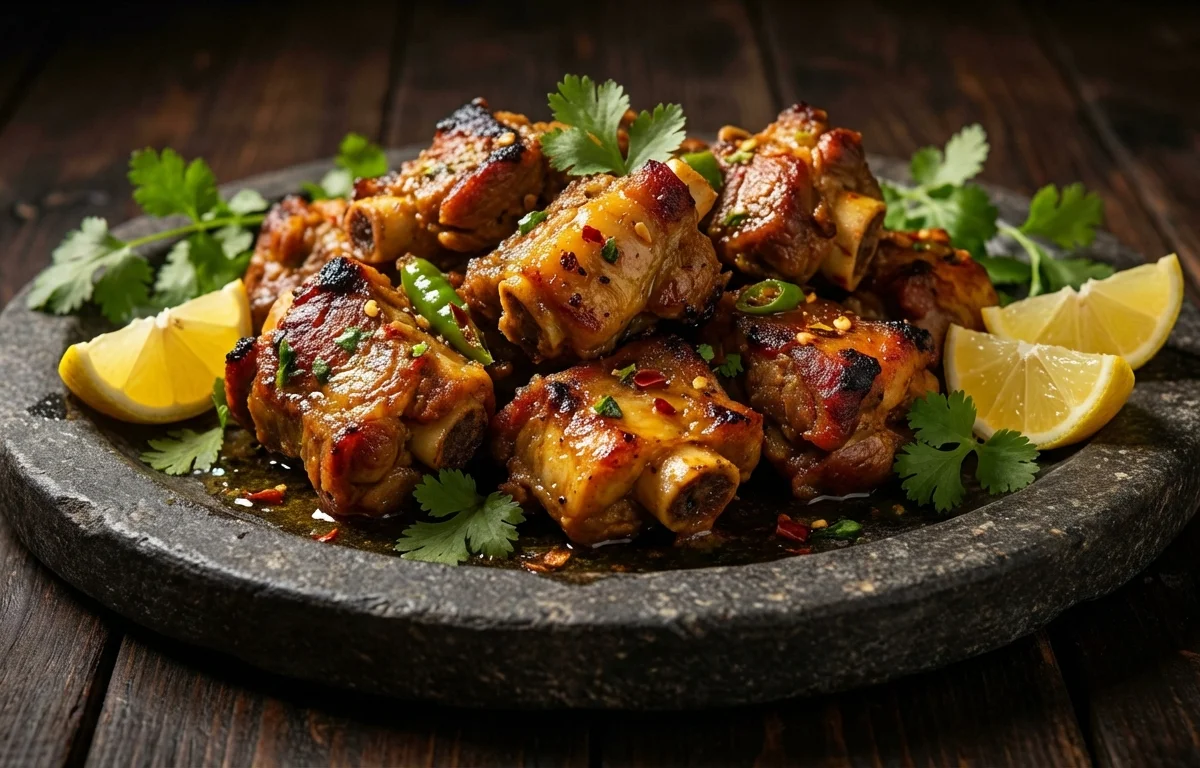
Pathar ka Gosht
A Hyderabadi classic where thin slices of mutton are marinated with yogurt, spices, and herbs, then cooked on a hot stone or heavy griddle until lightly charred outside and juicy inside. Rich, smoky, and deeply savory, it is usually served in small portions as part of a larger meal.
For 4 servings
- prep
Prepare the mutton.
Trim the mutton if needed and slice it thin. Lightly pound the pieces so they cook quickly and evenly on the hot surface.
- mix
Make the marinade.
1.Add yogurt, ginger-garlic paste, red chili powder, turmeric powder, coriander powder, cumin powder, garam masala, black pepper, green chili, cilantro, mint, lemon juice, and salt to a bowl.2.Mix until smooth and well combined.3.Add the mutton slices and coat each piece well with the marinade. - rest · ~120 min
Rest the mutton in the marinade.
Cover and refrigerate for at least 2 hours so the meat can absorb the spices and tenderize.
TIPA longer rest of 4 to 6 hours gives deeper flavor and softer meat. - grill · ~5 min
Heat the cooking surface.
Heat a flat stone if available, or use a heavy cast-iron tawa or griddle over medium-high heat until very hot.
TIPThe surface should be hot enough to sizzle the ghee right away but not so hot that the marinade burns instantly. - grill · ~15 min
Cook the mutton in batches.
1.Spread a little ghee over the hot surface.2.Place the marinated mutton slices in a single layer without crowding.3.Cook for 2 to 3 minutes on the first side until browned and lightly charred.4.Flip and cook the second side for 2 to 3 minutes until the mutton is just cooked through.5.Repeat with the remaining mutton, adding more ghee as needed.TIPDo not pile the slices on top of each other or they will steam instead of sear. - rest · ~2 min
Rest the cooked mutton briefly.
Transfer the cooked pieces to a plate and let them sit for 2 minutes so the juices settle.
- serve
Serve hot with onion and lemon wedges.
What to keep in mind.
7 tips from the recipe — small details that make a real difference to the final dish.
- 1Pat off excess marinade before the mutton hits the tawa so it chars instead of turning watery.
- 2Use very thin, lightly pounded slices; thick pieces will brown outside before the center turns tender.
- 3Let the marinated meat lose its fridge chill for 15 to 20 minutes so it sears evenly.
- 4Cook in small batches and wipe off burnt marinade bits between batches to avoid bitterness.
- 5A cast-iron tawa gives the closest result to stone cooking because it holds steady, intense heat.
- 6Stop cooking as soon as the slices are just done; overcooked mutton quickly turns chewy on a hot griddle.
- 7Serve immediately with onion and lemon, because Pathar ka Gosht is best while the edges are still sizzling.
Adapt it for your goals.
Low-oil
Use less ghee and cook on a well-seasoned cast-iron tawa; you still get good browning with a slightly lighter finish.
spicierSpicier
Increase red chili powder and green chili for a hotter, more robust version that suits spice lovers.
lambLamb
Swap goat mutton for thinly sliced lamb leg if you want a slightly milder flavor and softer bite.
boneless chickenBoneless-chicken
Use thin chicken thigh slices for a quicker-cooking variation; helpful when you want the same masala profile with less cooking time.
Why this is on our healthy list.
Protein-Rich Main
Mutton makes this dish filling and satisfying, providing substantial protein for a savory main course.
Herb-Forward Marinade
Mint, cilantro, green chili, ginger, and garlic add fresh plant compounds and bold flavor without relying only on heavy sauces.
Fermented Dairy Base
Yogurt brings tang and tenderness to the marinade while contributing dairy-based nutrients and helping balance the spices.
Frequently asked questions
Yes. A heavy cast-iron tawa or griddle works very well because it retains heat and helps the mutton sear properly.