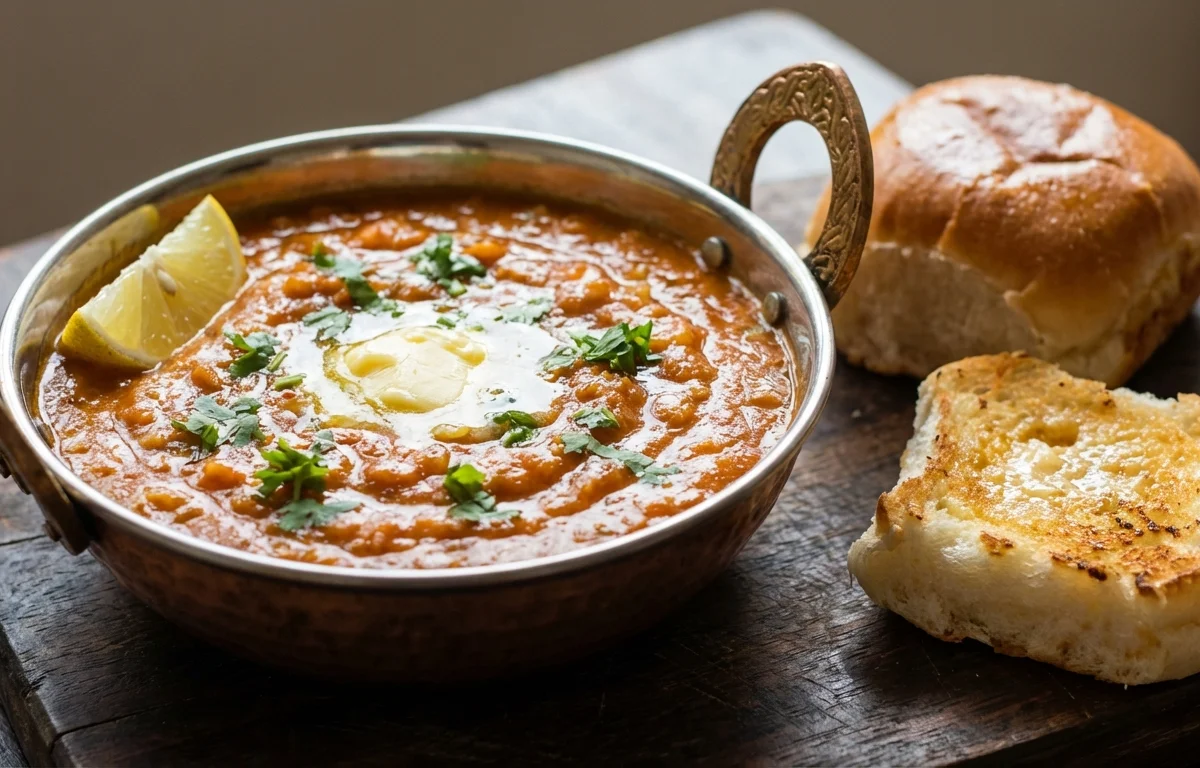
Pav Bhaji
Enjoy Mumbai's famous street food, Jain style! This rich and flavorful bhaji gets its creamy texture from raw bananas instead of potatoes and is made without any onion or garlic. It's a satisfying meal served with buttery, toasted pav.
For 4 servings
Pressure Cook the Vegetables
1.Place the cubed raw bananas, cauliflower florets, and green peas in a pressure cooker.2.Add 1 cup (240 ml) of water and a pinch of salt.3.Secure the lid and pressure cook on high heat for 3-4 whistles, or for about 10-12 minutes, until the vegetables are completely soft and mushy.4.Allow the pressure to release naturally. Open the cooker and use a potato masher to coarsely mash the cooked vegetables. Set aside.Prepare the Bhaji Base
1.Heat 2 tablespoons of butter and 1 tablespoon of oil in a large, heavy-bottomed pan or kadai over medium heat.2.Once the butter melts, add the hing, followed by the finely chopped capsicum. Sauté for 3-4 minutes until the capsicum softens.3.Add the ginger paste and green chili paste. Cook for another minute until the raw aroma disappears.4.Add the finely chopped tomatoes and cook for 6-8 minutes, stirring occasionally, until they break down and become soft and pulpy.Spice and Combine
1.Add the turmeric powder, Kashmiri red chili powder, and pav bhaji masala to the pan. Stir well and cook for 1 minute until the spices are fragrant.2.Pour in the mashed vegetable mixture and mix everything thoroughly to combine with the tomato base.3.Add the remaining salt and 1.5 cups (360 ml) of water. Stir well and bring the mixture to a gentle boil.Simmer and Mash
1.Reduce the heat to low. Using a potato masher, mash the bhaji directly in the pan for 3-4 minutes. This step is crucial for developing the classic texture and melding the flavors.2.Let the bhaji simmer for 8-10 minutes, stirring occasionally, until it thickens to your desired consistency. If it becomes too thick, add a splash of hot water.3.Turn off the heat. Stir in the fresh lemon juice and half of the chopped coriander leaves.Toast Pav and Serve
1.Heat a flat tawa or griddle over medium heat. Slit the pav buns horizontally, keeping one edge intact.2.Melt the remaining 2 tablespoons of butter on the tawa. You can sprinkle a pinch of pav bhaji masala onto the butter for extra flavor.3.Place the pav, cut-side down, onto the melted butter and toast for 1-2 minutes until golden brown and slightly crisp. Flip and toast the other side lightly.4.Serve the hot bhaji immediately, garnished with the remaining coriander leaves, a dollop of butter, and lemon wedges on the side.
What to keep in mind.
5 tips from the recipe — small details that make a real difference to the final dish.
- 1Use ripe, red tomatoes for the best color and tangy flavor, which is essential for a good bhaji.
- 2Mashing the bhaji thoroughly in the pan while it simmers is the most important step for achieving the authentic, integrated texture.
- 3Don't skimp on butter; it's key to the classic street-food taste and richness of the dish.
- 4For a vibrant red hue without excessive heat, always use Kashmiri red chili powder.
- 5Serve with finely chopped cabbage or raw banana instead of onions for a Jain-friendly crunch and garnish.
Adapt it for your goals.
Vegetable Addition
Incorporate other Jain-friendly vegetables like 1 cup of finely chopped cabbage or grated bottle gourd (dudhi). Add them to the pressure cooker along with the other vegetables.
Spicier VersionSpicier Version
Increase the green chili paste to 2 teaspoons and add 1/2 teaspoon of garam masala along with the pav bhaji masala for extra heat and aroma.
Cheesy Pav BhajiCheesy Pav Bhaji
For a modern twist, sprinkle a generous amount of grated Amul or mozzarella cheese over the hot bhaji just before serving.
Why this is on our healthy list.
Rich in Dietary Fiber
Made with a variety of vegetables like cauliflower, peas, and capsicum, this dish is a good source of dietary fiber, which aids digestion, promotes satiety, and helps maintain a healthy gut.
Plant-Based Goodness
This recipe is entirely plant-based and avoids root vegetables, making it suitable for a Jain diet. Raw bananas provide a creamy base rich in resistant starch, which can benefit gut health.
Source of Vitamin C
The generous use of tomatoes and capsicum provides a significant amount of Vitamin C, an antioxidant that boosts the immune system and supports skin health.
Frequently asked questions
One serving of Jain Pav Bhaji (approximately 1.5 cups of bhaji with 2 pav buns) contains around 450-550 calories, primarily from the butter and pav. The exact count can vary based on the amount of butter used.



.webp)