Pesara Pappu
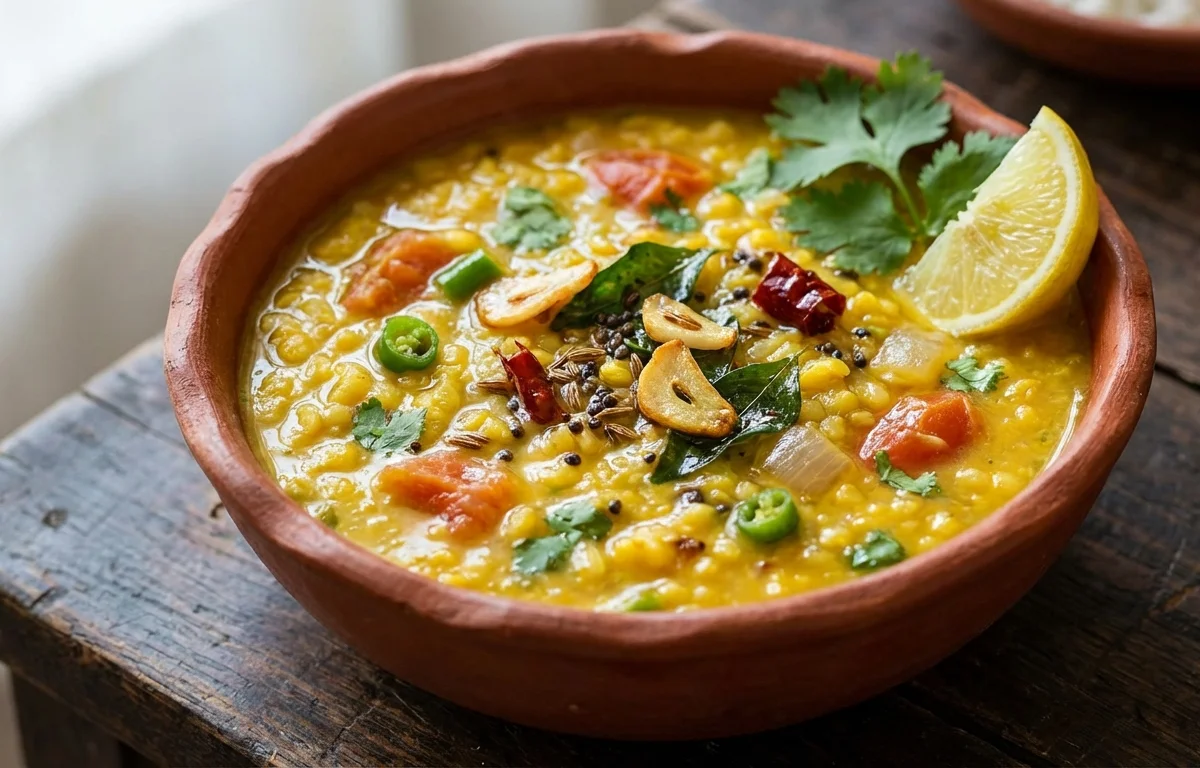
A simple Andhra-style moong dal made with yellow lentils, green chili, and a light tempering. It cooks up soft and comforting with a mild, clean flavor that pairs beautifully with hot rice, ghee, and a vegetable side.
For 4 servings
- prep · ~5 min
Wash the dal and prep the chili and garlic.
Rinse the moong dal in a few changes of water until the water runs mostly clear. Slit the green chilies and lightly crush the garlic cloves.
- pressure cook · ~15 min
Pressure cook the dal until soft.
1.Add moong dal, water, green chilies, and turmeric powder to a pressure cooker.2.Close the lid and cook on medium heat for 2 to 3 whistles, until the dal turns soft.3.Let the pressure drop naturally before opening the cooker.TIPDo not overcook it into a paste if you want a light, pourable texture. - mix · ~3 min
Mash lightly and season the dal.
Open the cooker and mash the dal lightly with the back of a ladle. Add salt and mix well. If it looks too thick, add a splash of water and bring it to a loose dal consistency.
- temper · ~2 min
Make the tempering.
1.Heat ghee in a small pan over medium heat.2.Add mustard seeds and let them splutter.3.Add cumin seeds, crushed garlic, and curry leaves.4.Cook for 30 to 40 seconds until the garlic smells fragrant.TIPKeep the heat moderate so the garlic turns aromatic without burning. - assemble · ~2 min
Pour the tempering over the dal.
Add the hot tempering to the cooked dal and mix gently. Simmer for 1 to 2 minutes so the flavors come together.
- serve
Serve hot.
Serve Pesara Pappu hot with steamed rice and a little extra ghee if you like.
What to keep in mind.
6 tips from the recipe — small details that make a real difference to the final dish.
- 1For a classic light Andhra texture, mash only part of the cooked moong dal and leave some grains visible.
- 2Let the pressure release naturally; quick release can make the dal split unevenly and turn gluey.
- 3Add salt only after pressure cooking so the moong softens faster and stays tender.
- 4When making the tempering, wait for the mustard seeds to fully splutter before adding cumin and garlic.
- 5Do not brown the garlic deeply; this dal tastes best when the tempering stays fragrant and gentle, not smoky.
- 6If reheating leftovers, loosen with a little hot water first because moong dal thickens noticeably as it sits.
Adapt it for your goals.
Vegan
Replace ghee with neutral oil or coconut oil for a fully plant-based version while keeping the same tempering spices.
spicierSpicier
Add an extra green chili or lightly crush the slit chilies before cooking if you want more heat without changing the dish's simple profile.
no garlicNo-garlic
Skip the garlic in the tempering for a cleaner, satvik-style taste that still works well with cumin, mustard, and curry leaves.
tomatoTomato
Cook in a little chopped tomato with the dal for a slightly tangy, looser pappu that pairs nicely with rice and vegetable fry.
Why this is on our healthy list.
Good Source of Plant Protein
Moong dal provides plant protein and makes this simple pappu filling while still feeling light on the stomach.
Comforting and Easy to Digest
Split yellow moong is commonly valued for its gentle, soft-cooking nature, especially in mild home-style dals like this one.
Aromatic Spices With Less Heaviness
Green chili, cumin, garlic, curry leaves, and turmeric add flavor and character without needing a rich masala base.
Frequently asked questions
Yes. Simmer the washed moong dal with water, green chilies, and turmeric in a pot until very soft, then mash lightly and continue with the tempering.



.webp)