Pesarapappu Charu
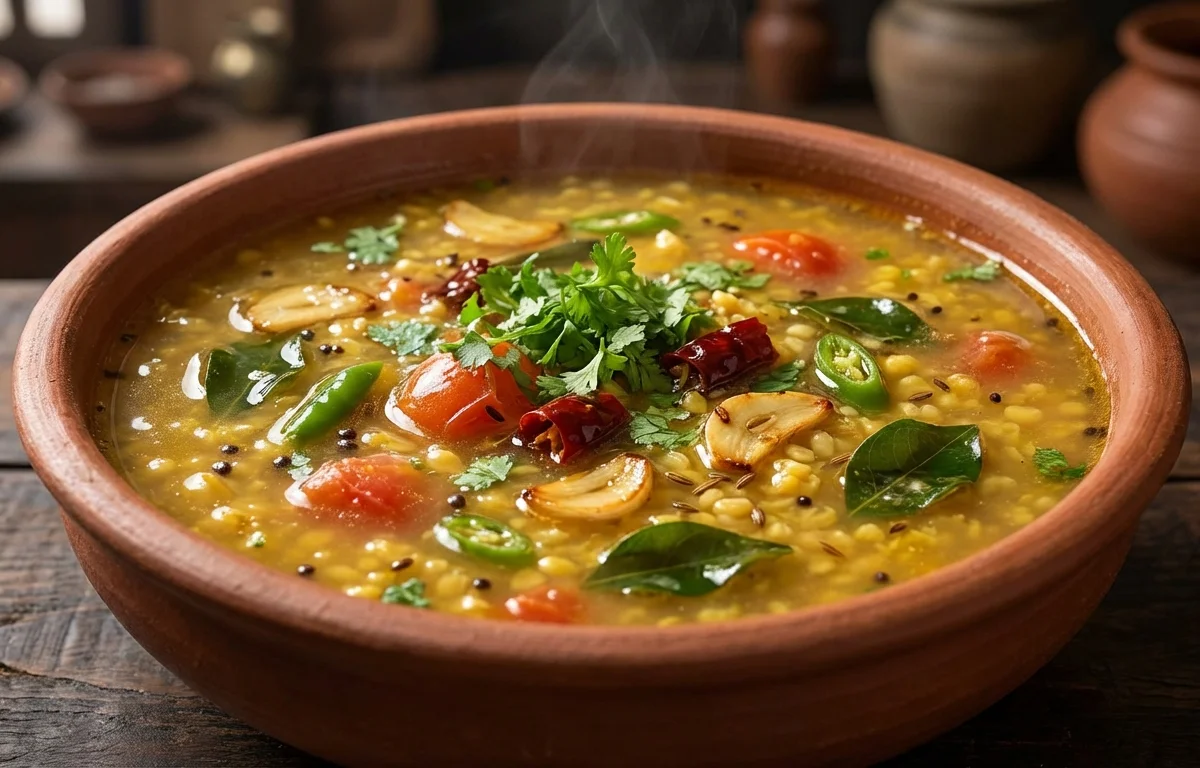
A light, tangy, and spice-laced lentil soup from Andhra Pradesh made with moong dal, tamarind, and a vibrant tempering of mustard seeds, curry leaves, and garlic. This thin, soupy charu is a comforting digestive aid, perfect over steamed rice with a dollop of ghee.
For 4 servings
- pressure cook · ~15 min
Pressure cook the moong dal.
1.Wash 0.5 cup moong dal and add to the pressure cooker with 1.5 cups water and a pinch of turmeric powder.2.Close the lid and cook on medium heat for 3 whistles, then let the pressure release naturally.TIPDon't overcook — the dal should be soft but not completely mushy. - prep · ~10 min
Prepare the tamarind water.
Soak the tamarind pulp in 0.5 cup warm water for 10 minutes. Squeeze well and strain to extract thick tamarind juice. Discard the pulp.
- boil · ~11 min
Combine and simmer the charu base.
1.In a deep saucepan, add the cooked dal along with any remaining water and mash it lightly against the sides.2.Add 1.5 cups fresh water, the chopped tomatoes, slit green chilies, red chili powder, and salt.3.Bring to a boil, then reduce heat and simmer for 8 to 10 minutes until the tomatoes are completely soft and the raw smell disappears.TIPSimmer on low heat so the flavors meld without reducing too much. - boil · ~4 min
Add tamarind juice and finish cooking.
Pour the strained tamarind juice into the simmering dal mixture. Stir well and let it bubble gently for another 3 to 4 minutes. Taste and adjust salt if needed, then turn off the heat.
TIPDon't over-boil once the tamarind is added — it keeps that bright tangy flavor. - temper · ~2 min
Make the tempering.
1.In a small tempering pan, heat 2 tsp ghee over medium heat until it shimmers.2.Add mustard seeds and let them splutter (30 sec).3.Reduce heat slightly and add cumin seeds, crushed garlic, broken dried red chili, curry leaves, and a pinch of asafoetida.4.Sauté for 30 to 40 seconds until the garlic turns golden and the curry leaves crisp up.TIPWatch the garlic closely — it burns fast and turns bitter. - mix
Pour the tempering over the charu.
Immediately pour the sizzling tempering over the hot charu. It will crackle and release a beautiful aroma. Stir gently to mix.
TIPPour the tempering on right before serving for the best fresh aroma. - garnish
Garnish with fresh coriander leaves and serve hot.
Sprinkle chopped coriander leaves on top. Serve the pesarapappu charu hot as a soup or ladled over steamed rice with a drizzle of raw ghee.
TIPThis charu tastes even better after resting for 10 minutes as the garlic and tamarind deepen.
What to keep in mind.
6 tips from the recipe — small details that make a real difference to the final dish.
- 1Pressure-cook the dal for exactly 3 whistles; overdoing it turns the charu gluey instead of light and soupy.
- 2Use ripe, deep-red tamarind for the best tang—green tamarind can make the charu sour in a harsh way.
- 3Add tamarind juice only after the tomatoes have softened; adding it too early dulls the bright tanginess.
- 4Crush the garlic cloves just enough to crack them—whole cloves infuse the oil without burning during tempering.
- 5Let the charu rest for 10 minutes after the tempering; the flavors of garlic and curry leaves meld beautifully.
- 6For a thinner texture, add up to ½ cup extra hot water after simmering; the charu should be spoonable, not thick.
Adapt it for your goals.
No-onion-garlic (satvic)
Omit the garlic and asafoetida; use a pinch of hing in the tempering for similar digestive effects. This variation suits those following a satvic or no-allium diet.
high proteinHigh-protein
Replace half the moong dal with masoor dal (red lentils) and add a handful of chopped spinach. This boosts the protein and iron content while keeping the soup's texture thin.
low oilLow-oil
Reduce ghee to 1 teaspoon and dry-roast the mustard seeds and cumin in a non-stick pan before adding a splash of water—lowers calories without losing the tempering's essential flavor.
with vegetablesWith vegetables
Add ¼ cup each of bottle gourd (lauki) and carrot cubes along with the tomatoes. The mild sweetness of these vegetables complements the tangy tamarind base.
Why this is on our healthy list.
Easy on Digestion
Moong dal and asafoetida are traditionally used in Indian cooking to reduce bloating and aid digestion, making this a light meal for sensitive stomachs.
Good Plant-Based Protein
The moong dal provides a moderate amount of plant protein, supporting muscle repair and satiety, especially when paired with rice.
Rich in Lycopene
The tomatoes, cooked down in the charu, release lycopene—a powerful antioxidant linked to heart and skin health.
Low in Saturated Fat
Using only ghee for tempering keeps the saturated fat content low, while the lentil base is naturally fat-free.
Frequently asked questions
Yes: soak the moong dal for 30 minutes, then boil it in 2 cups of water in an open pot for 25-30 minutes until soft. Stir occasionally to prevent sticking.



.webp)