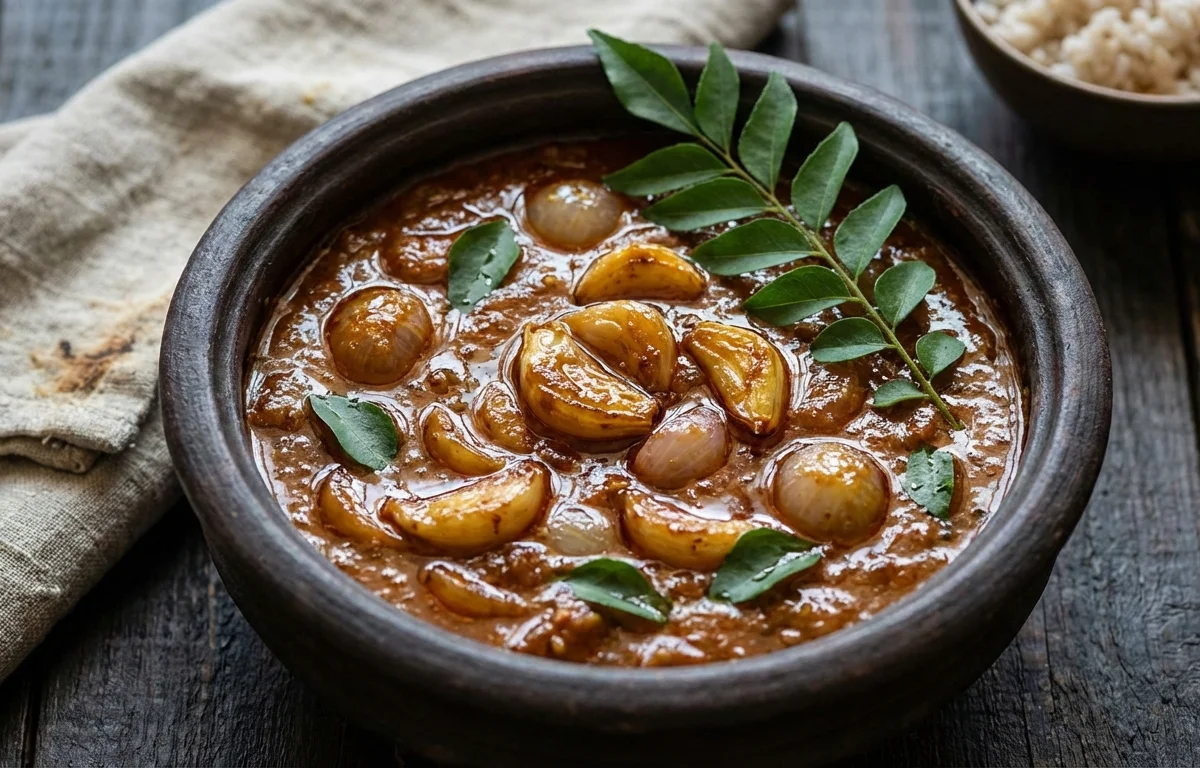
Poondu Kozhambu
A bold Tamil-style garlic tamarind gravy with deep, tangy flavor and gentle heat. The garlic turns soft and sweet as it cooks, making this comforting kozhambu especially good with hot rice and a little ghee.
For 4 servings
- prep · ~10 min
Soak the tamarind and get the ingredients ready.
1.Soak the tamarind in 0.5 cup warm water for 10 minutes.2.Peel the garlic cloves and shallots.3.Squeeze and extract the tamarind well, then strain it.4.Mix the rice flour with 1 tbsp water to make a smooth slurry.TIPKeep the rice flour slurry lump-free so the gravy thickens evenly. - temper · ~1 min
Make the tempering.
1.Heat sesame oil in a kadai over medium heat.2.Add mustard seeds and let them crackle.3.Add fenugreek seeds, dried red chili, and curry leaves.4.Cook for a few seconds until fragrant without letting the fenugreek darken too much.TIPFenugreek turns bitter fast, so keep the heat moderate. - saute · ~5 min
Cook the garlic and shallots.
1.Add the garlic cloves and shallots to the pan.2.Sauté for 4 to 5 minutes until the shallots soften and the garlic turns lightly golden in spots.3.Stir often so the garlic cooks evenly and does not burn. - saute
Add the spice powders.
Lower the heat and add turmeric powder, red chili powder, and coriander powder. Stir for 15 to 20 seconds so the spices bloom in the oil.
TIPDo not fry the powders too long or they will taste harsh. - simmer · ~15 min
Pour in the tamarind liquid and simmer the kozhambu.
1.Pour in the tamarind extract and the remaining water.2.Add salt and jaggery, then mix well.3.Bring the gravy to a gentle boil.4.Reduce the heat and simmer until the raw tamarind smell fades and the garlic turns very soft. - simmer · ~3 min
Thicken the gravy lightly.
Stir the rice flour slurry once and pour it into the simmering kozhambu. Cook for 2 to 3 minutes, stirring gently, until the gravy looks glossy and lightly thickened.
- rest · ~5 min
Let the kozhambu rest for 5 minutes.
TIPA short rest helps the flavors settle and the gravy thicken a little more. - serve
Serve hot with rice.
What to keep in mind.
7 tips from the recipe — small details that make a real difference to the final dish.
- 1Use whole peeled garlic cloves, not chopped, so they turn soft and sweet without disappearing into the gravy.
- 2Keep the fenugreek just lightly toasted; if it turns deep brown, the whole kozhambu can taste bitter.
- 3After adding the spice powders, stir only briefly on low heat so they bloom without scorching in the sesame oil.
- 4Simmer until the sharp raw tamarind smell is completely gone; that is the key doneness cue for a rounded gravy.
- 5Stir the rice flour slurry again right before pouring, because it settles quickly and can thicken unevenly.
- 6This kozhambu tastes even better after a few hours, so make it ahead if you want a deeper, melded flavor.
- 7Store refrigerated for 2 to 3 days and reheat gently; the gravy will thicken on standing, so loosen with a splash of hot water.
Adapt it for your goals.
No-onion
Skip the shallots for a sharper, more garlic-forward poondu kozhambu that keeps well and pairs especially well with plain rice.
spicierSpicier
Add one extra dried red chili or a little more chili powder if you want a hotter, more assertive gravy.
shallot richShallot-rich
Increase the shallots slightly for a sweeter, rounder kozhambu that softens the tamarind's sharpness.
without rice flourWithout-rice-flour
Reduce the gravy a little longer instead of adding slurry if you prefer a more concentrated, naturally thickened finish.
Why this is on our healthy list.
Garlic-Rich Comfort Dish
This kozhambu uses plenty of garlic, which brings strong savory flavor along with naturally beneficial plant compounds.
Digestive Spice Support
Fenugreek, curry leaves, and coriander are traditional spices that add aroma and may feel gentler in a tamarind-based gravy.
Moderate Oil, Big Flavor
A small amount of sesame oil carries the spices well, so the dish tastes rich without needing heavy ingredients.
Frequently asked questions
It usually needs a bit more simmering, because raw tamarind tastes sharper. A small extra pinch of jaggery can also help round it out.