Poondu Rasam
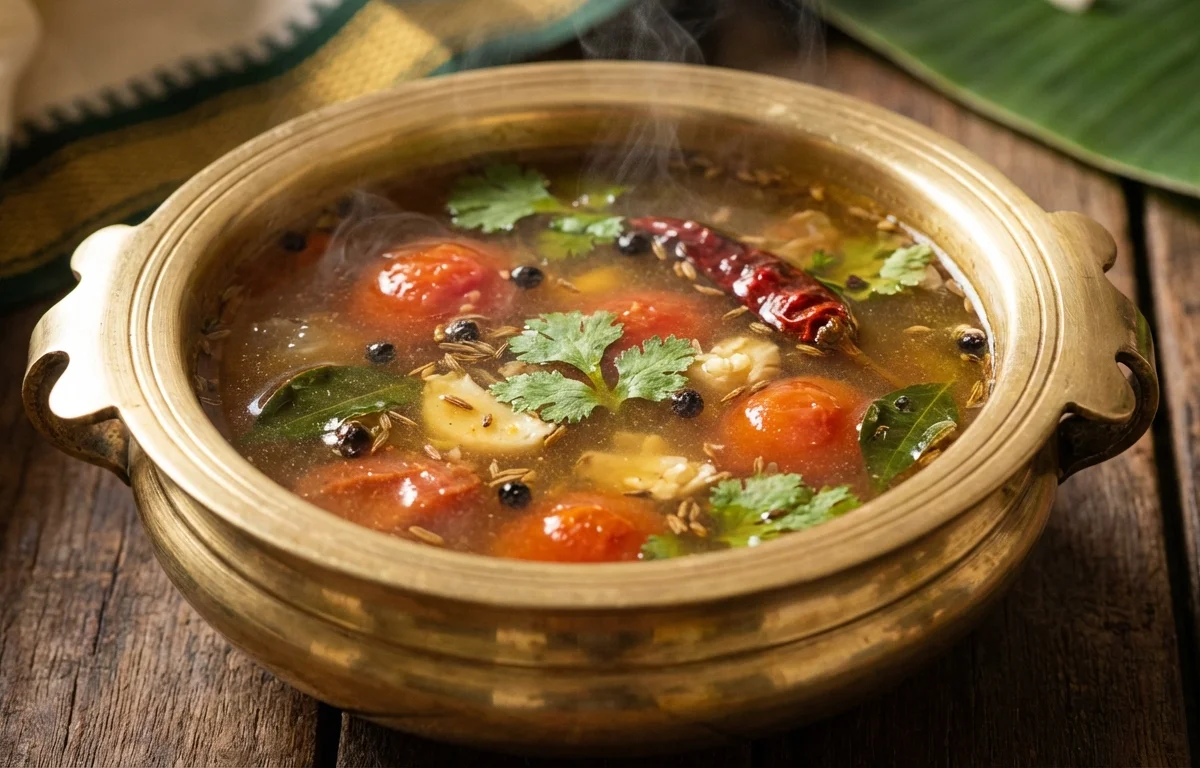
A light, peppery South Indian rasam where garlic takes center stage. Tamarind, tomato, cumin, and curry leaves give it a warm, tangy broth that is soothing with rice or lovely to sip on its own.
For 4 servings
- prep · ~10 min
Soak the tamarind and crush the spices.
1.Soak the tamarind in a little warm water for 10 minutes.2.Squeeze well and strain to get a smooth tamarind extract.3.Coarsely crush the black pepper and cumin seeds.4.Lightly crush the garlic cloves so they release flavor as they cook.TIPDo not grind the pepper and cumin too fine; a coarse crush gives better rasam flavor. - boil · ~12 min
Cook the rasam base.
1.Add tamarind extract, water, chopped tomato, crushed garlic, crushed pepper, crushed cumin, turmeric powder, and salt to a pot.2.Bring it to a gentle boil over medium heat.3.Cook until the tomato softens and the garlic turns tender, about 10 to 12 minutes.4.Once the rasam smells fragrant and slightly foamy on top, lower the heat.TIPDo not let rasam boil hard for too long after it starts foaming or the fresh aroma fades. - temper · ~1 min
Make the tempering.
1.Heat ghee in a small pan over medium heat.2.Add mustard seeds and let them splutter.3.Add asafoetida and curry leaves, then cook for a few seconds until aromatic.4.Pour the hot tempering over the rasam right away.TIPKeep the heat medium so the mustard seeds crackle without burning the curry leaves. - garnish · ~2 min
Add coriander leaves and rest the rasam.
Stir in the chopped coriander leaves and let the rasam sit for 2 minutes so the flavors settle together.
- serve
Serve hot.
Serve the poondu rasam hot as a light soup or with steamed rice as part of a South Indian meal.
What to keep in mind.
7 tips from the recipe — small details that make a real difference to the final dish.
- 1Lightly crush the garlic instead of mincing it, so it perfumes the rasam without making the broth harsh.
- 2Stop the simmer once the rasam turns slightly foamy on top; overboiling dulls the pepper, cumin, and curry leaf aroma.
- 3Coarsely crush pepper and cumin fresh just before cooking for the classic rasam texture and sharper fragrance.
- 4Strain the tamarind extract well so the broth stays smooth and free of fibers or grit.
- 5Pour the hot mustard-curry leaf tempering directly into the rasam and cover for a minute to trap the aroma.
- 6If serving with rice, keep the rasam slightly stronger and tangier; for sipping, add a splash more hot water before serving.
- 7Poondu rasam reheats well, but warm it gently and do not boil again after adding coriander.
Adapt it for your goals.
Vegan
Replace ghee with coconut oil or sesame oil for a fully plant-based rasam with a slightly different but still authentic South Indian finish.
spicierSpicier
Add a few more peppercorns or a pinch of crushed red chilli for a hotter, more warming rasam that is especially nice in cooler weather.
dal enrichedDal-enriched
Stir in a little cooked and thinned toor dal for a slightly fuller-bodied rasam that pairs especially well with rice.
no tomatoNo-tomato
Skip the tomato and increase tamarind slightly for a more old-style, sharper garlic rasam where the poondu flavor stands out even more.
Why this is on our healthy list.
Garlic-Rich Comfort Broth
With plenty of garlic cloves in a light broth, this dish is soothing, aromatic, and easy to enjoy when you want something gentle yet flavorful.
Digestive Spice Support
Cumin, black pepper, asafoetida, curry leaves, and tamarind are traditional rasam ingredients valued for making a light meal feel warming and digestible.
Light and Hydrating
Because it is mostly a thin tamarind-tomato broth with herbs and spices, poondu rasam feels lighter than many richer gravies and soups.
Frequently asked questions
Yes. The rasam will be a bit sharper and more tamarind-forward, but it still tastes excellent because the garlic, pepper, and cumin remain the main flavors.