Pot Roast
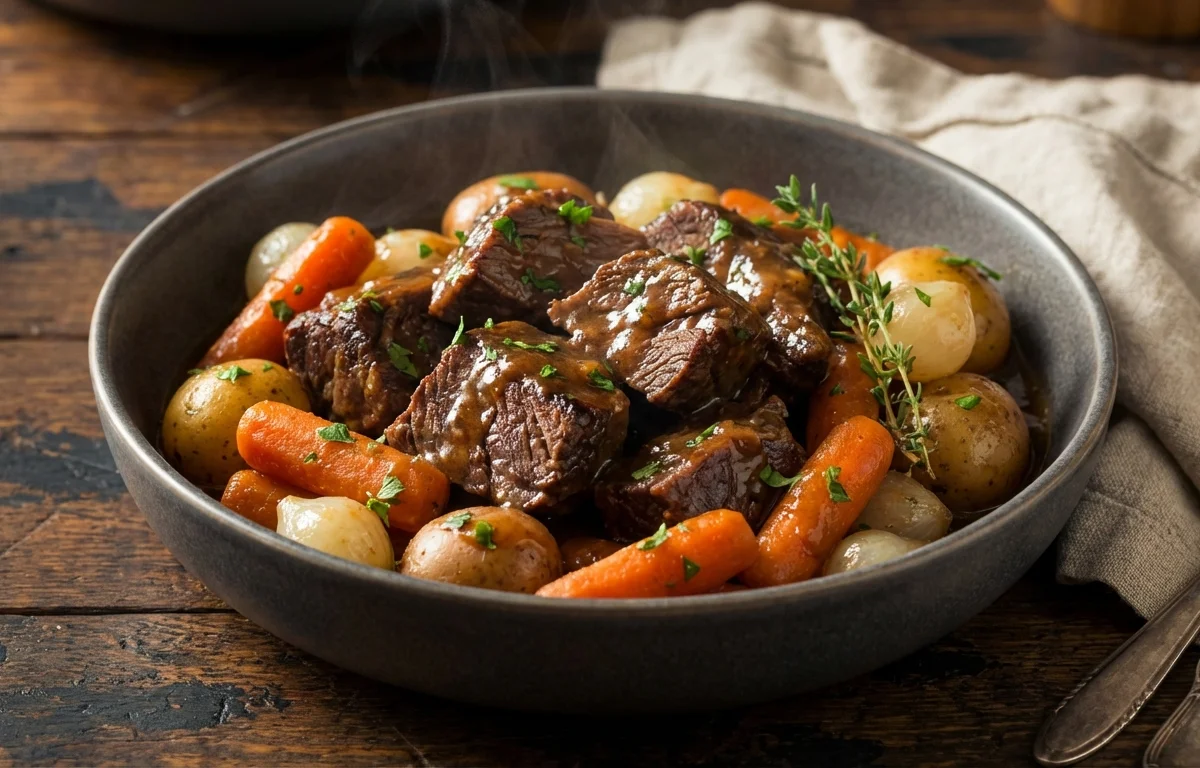
A cozy, old-fashioned Sunday supper made from a humble beef chuck roast braised low and slow with root vegetables until fork-tender. The meat soaks up a rich, beefy jus while carrots, potatoes, and onions turn buttery-soft in the same pot. Simple pantry ingredients and a heavy Dutch oven do all the work, filling the house with that nostalgic, savory aroma.
For 4 servings
- prep
Preheat oven and season the meat.
1.Set an oven rack in the lower-middle position and preheat to 300°F (150°C).2.Pat the beef chuck roast completely dry with paper towels.3.Season all sides generously with 0.5 tsp salt and 1 pinch black pepper.TIPDrying the surface well ensures a deep brown sear. Don’t rush this step. - fry · ~10 min
Sear the chuck roast.
1.Heat 2 tbsp olive oil in a large Dutch oven over medium-high heat until shimmering.2.Carefully lay the roast in the hot oil and sear without moving for 4–5 minutes per side.3.Transfer the deeply browned roast to a plate and set aside.TIPWork in batches if your pot is crowded—steam is the enemy of a good crust. - saute · ~10 min
Cook the aromatics and tomato paste.
1.Reduce heat to medium. Add the sliced onions, carrot chunks, and celery pieces to the same pot.2.Cook, stirring occasionally, until softened and just starting to brown (5–7 min).3.Stir in the smashed garlic cloves and cook 1 minute until fragrant.4.Add 2 tbsp tomato paste and stir constantly for 2 minutes to caramelize it slightly.TIPCaramelizing the tomato paste deepens the savory backbone of the gravy. - simmer · ~3 min
Deglaze with wine and add liquids.
1.Pour in 1 cup dry red wine and scrape up every browned bit stuck to the bottom of the pot.2.Let the wine bubble and reduce by half (about 3 min).3.Return the beef chuck roast and any accumulated juices to the pot.4.Add 2 cups water, fresh thyme sprigs, and bay leaves. The liquid should come about halfway up the roast—do not submerge it completely.TIPScrape thoroughly—those browned bits are pure flavor that will dissolve into the cooking liquid. - roast · ~30 min
Braise in the oven until fork-tender.
1.Cover the Dutch oven with its lid and transfer to the preheated 300°F oven.2.Braise for 2 hours, then check the meat—it should yield easily to a fork but not be falling apart.3.Add the halved baby potatoes, nestling them into the liquid around the roast.4.Cover again and continue braising for another 1 to 1.5 hours, until the meat shreds effortlessly with a fork.TIPKeep the lid tight to trap steam—this gentle, moist heat breaks down the tough connective tissue. - prep
Remove the meat and vegetables.
1.Lift the tender pot roast onto a cutting board and tent loosely with foil.2.Use a slotted spoon to transfer the carrots, potatoes, and any large onion pieces to a serving platter.3.Fish out and discard the thyme sprigs and bay leaves from the pot. - simmer · ~5 min
Make the pan gravy.
1.Tilt the pot and skim off excess fat from the surface of the remaining liquid, leaving about 1 tbsp.2.In a small bowl, whisk 2 tbsp all-purpose flour with 1/4 cup cold water to form a smooth slurry.3.Place the pot over medium heat and bring the liquid to a gentle simmer.4.Whisk in the flour slurry and cook, stirring constantly, until the gravy thickens to your liking (3–5 min).TIPFor a velvety gravy, simmer it a full 3 minutes—this cooks away any raw flour taste. - assemble
Slice the roast and serve.
1.Slice or gently pull the beef into thick pieces and arrange on the serving platter with the vegetables.2.Spoon some of the hot gravy over the meat and garnish everything with chopped parsley.3.Serve immediately with the remaining gravy on the side.TIPSlice against the grain for the most tender bite.
What to keep in mind.
6 tips from the recipe — small details that make a real difference to the final dish.
- 1Pat the chuck roast bone-dry before searing to ensure a deep, mahogany crust.
- 2Do not skip caramelizing the tomato paste—it adds umami depth to the finished gravy.
- 3Braise with the pot lid tightly sealed to keep steam in and break down connective tissue.
- 4Add potatoes only during the final hour so they stay intact and don't turn mushy.
- 5Let the roast rest under foil for 10–15 minutes before slicing to retain juices.
- 6For a thicker gravy, let the flour slurry simmer a full 3 minutes to cook out raw taste.
Adapt it for your goals.
Herb-swap
Replace thyme and bay leaves with 2 sprigs fresh rosemary and 1 star anise for a subtly different aromatic profile that pairs well with red wine.
low oilLow-oil
Sear the roast in a dry nonstick pan using only 1 tsp oil, then proceed as written—this reduces fat while still achieving good browning.
gluten freeGluten-free
Swap the all-purpose flour slurry for 1 tbsp cornstarch mixed with 2 tbsp cold water to thicken the gravy without gluten.
mushroom loverMushroom-lover
Add 200g quartered cremini mushrooms along with the aromatics in step 3 for an extra layer of earthy savoriness.
Why this is on our healthy list.
Rich in Collagen
The beef chuck roast's connective tissue breaks down into gelatin during the long braise, which supports joint and skin health.
High in Vitamin A
Carrots provide a significant amount of beta-carotene, which the body converts into vitamin A for healthy vision and immunity.
Good Source of Iron
Beef chuck roast is naturally rich in heme iron, a form that is easily absorbed and essential for oxygen transport in the blood.
Potassium from Potatoes
Baby potatoes contribute potassium, a mineral that helps regulate fluid balance and muscle contraction.
Frequently asked questions
Yes, you can substitute beef brisket or bottom round, but chuck roast is best because its marbling turns tender during long braising.