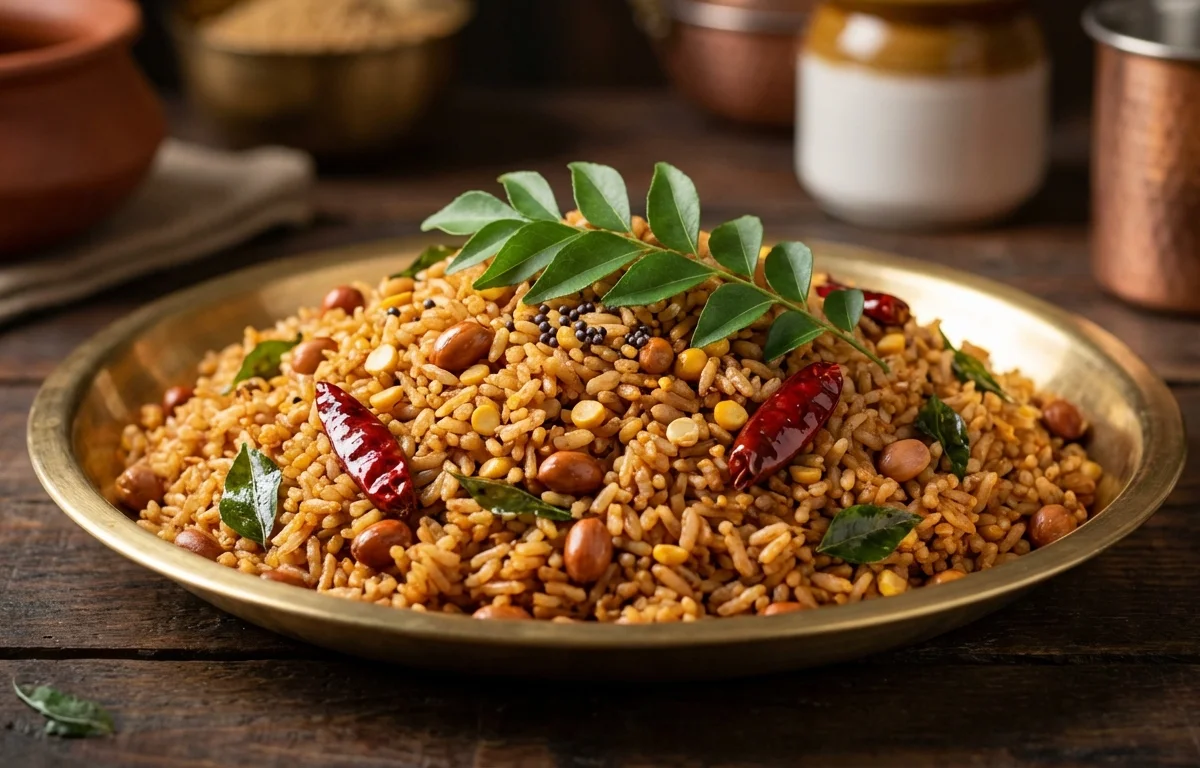
Puli Sadam
Tangy tamarind rice with a deep, spiced flavor and a gentle crunch from peanuts. This South Indian classic keeps well, travels beautifully, and tastes even better after the rice soaks up the seasoned tamarind paste.
For 4 servings
- prep · ~20 min
Soak the tamarind and rinse the rice.
1.Soak tamarind in 1 cup warm water for 20 minutes.2.Rinse the rice well until the water runs mostly clear.3.Set both aside while you prepare the next steps. - boil · ~20 min
Cook the rice.
Cook the rice with 2.5 cups water and half of the salt until just done and separate. Spread it on a wide plate or tray to cool so the grains stay fluffy.
TIPCool the rice before mixing. Warm rice can turn sticky and clump when tossed with the tamarind paste. - prep · ~3 min
Extract the tamarind pulp.
Squeeze the soaked tamarind well and strain out a smooth pulp. Discard the fibers and any seeds.
- temper · ~4 min
Make the tempering.
1.Heat sesame oil in a pan over medium heat.2.Add mustard seeds and let them splutter.3.Add urad dal, chana dal, and peanuts; fry until the dals turn light golden.4.Add dried red chili, green chili, curry leaves, asafoetida, and turmeric powder; cook for a few seconds until fragrant.TIPKeep the heat medium so the dals and peanuts toast evenly without burning the spices. - simmer · ~10 min
Cook the tamarind mixture.
Pour in the tamarind pulp, add the remaining salt and jaggery, and simmer until the raw smell goes away and the mixture thickens to a glossy paste.
TIPThe paste should be thick, not watery. A concentrated paste coats the rice better and gives stronger flavor. - mix · ~3 min
Mix the tamarind paste with the rice.
Add the cooled rice to a wide bowl. Spoon the tamarind mixture over it and toss gently until every grain is coated evenly.
- rest · ~10 min
Let the rice rest for 10 minutes.
TIPA short rest helps the rice absorb the tamarind and spices, giving a fuller, more balanced taste. - serve
Serve the puli sadam at room temperature or slightly warm.
What to keep in mind.
6 tips from the recipe — small details that make a real difference to the final dish.
- 1Cook the rice just until done and cool it fully on a wide plate so the grains stay separate when mixed.
- 2Simmer the tamarind pulp until the raw smell disappears; if you stop early, the rice will taste harshly sour.
- 3Fry the urad dal, chana dal, and peanuts to light golden before adding powders so they keep their crunch.
- 4Use a wide bowl and fold gently from the sides while mixing to avoid breaking the rice grains.
- 5Let the mixed rice rest at least 10 minutes before serving so the tamarind paste seasons the rice evenly.
- 6Puli sadam often tastes better after a few hours, making it ideal for lunch boxes and travel meals.
Adapt it for your goals.
Extra-spicy
Add one more dried red chili or an extra slit green chili for a sharper heat that stands up to the tangy tamarind.
jainJain
Skip the asafoetida if it contains wheat or additives you avoid, and lean on extra curry leaves and chilies for aroma.
nut freeNut-free
Omit the peanuts and add a little more chana dal and urad dal for crunch without nuts.
festival styleFestival-style
Make the tamarind paste slightly thicker and let the rice rest longer for a more intense, temple-style puli sadam taste.
Why this is on our healthy list.
Plant-Based Protein Boost
Peanuts, urad dal, and chana dal add some plant protein and make the rice more satisfying than plain seasoned rice.
Digestive Spice Support
Asafoetida, curry leaves, and tamarind are traditional ingredients often used to add flavor while keeping rice dishes easier to enjoy.
Balanced Energy Dish
Rice provides steady energy, while the oil, legumes, and peanuts add richness and staying power for travel or packed meals.
Frequently asked questions
Cooled rice stays fluffy and separate. If you mix the tamarind paste into hot rice, the grains can clump and turn mushy.