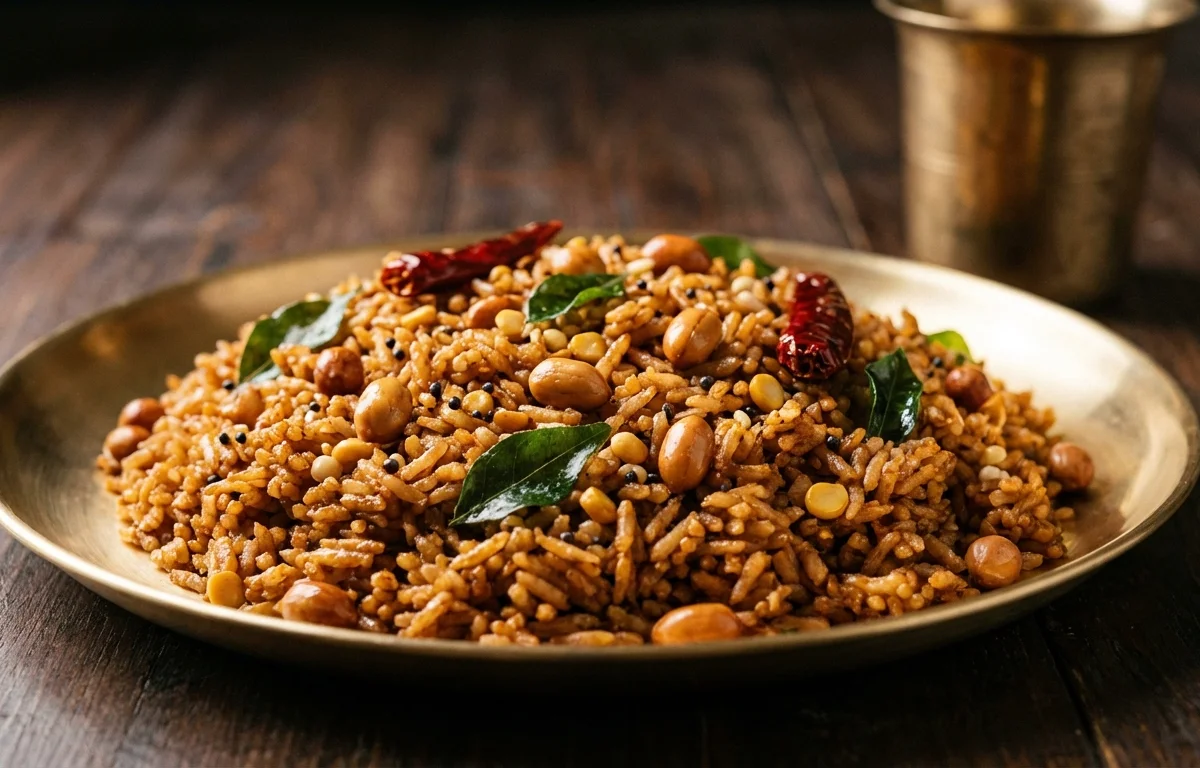
Puliyodarai
Tangy tamarind rice with a deep, roasted spice note and a crunchy tempering of peanuts, chana dal, and curry leaves. This South Indian temple-style rice dish keeps well and tastes even better after the flavors settle.
For 4 servings
- prep · ~15 min
Soak the rice and prepare the tamarind.
1.Rinse the rice well until the water runs mostly clear.2.Soak the rice in fresh water for 15 minutes, then drain.3.Soak the tamarind in 1.5 cups warm water and squeeze well to extract the pulp.4.Strain the tamarind extract and keep it ready.TIPA brief soak helps the rice cook into separate grains instead of turning sticky. - boil · ~15 min
Cook the rice and cool it.
Bring 2 cups water to a boil, add the drained rice, and cook until just done and the grains stay separate. Spread the cooked rice on a plate or wide bowl to cool slightly so it does not clump when mixed.
TIPDo not overcook the rice. Puliyodarai tastes best with firm, separate grains. - roast · ~4 min
Roast the spice mix.
1.Heat a small pan on low heat.2.Dry roast fenugreek seeds until lightly aromatic.3.Add coriander seeds, sesame seeds, and 2 dried red chilies.4.Roast until fragrant, then cool and grind to a coarse powder.TIPKeep the heat low while roasting fenugreek so it turns aromatic, not bitter. - temper · ~5 min
Make the tempering.
1.Heat sesame oil in a wide pan over medium heat.2.Add mustard seeds and let them splutter.3.Add chana dal, urad dal, peanuts, and 2 dried red chilies.4.Cook until the dals turn golden and the peanuts smell nutty.5.Add curry leaves, asafoetida, and turmeric powder.TIPStir the dals often so they color evenly and do not burn before the peanuts cook. - simmer · ~12 min
Cook the tamarind paste.
Pour in the tamarind extract, then add salt and jaggery. Simmer on medium-low heat until the raw smell fades and the mixture thickens into a glossy paste.
TIPReduce the tamarind well; a thick paste coats the rice better and gives deeper flavor. - mix · ~1 min
Add the roasted spice powder.
Stir the roasted spice powder into the tamarind paste and cook for 1 minute more so the flavors meld well.
- mix · ~3 min
Mix the rice with the pulikachal.
Add the cooled rice to the pan a little at a time and fold gently until every grain is coated with the tamarind mixture.
TIPFold gently with a flat spoon so the rice stays fluffy and does not break. - rest · ~10 min
Rest the puliyodarai before serving.
Cover and let it sit for 10 minutes so the rice absorbs the tamarind and spice flavors evenly.
- serve
Serve the puliyodarai.
What to keep in mind.
7 tips from the recipe — small details that make a real difference to the final dish.
- 1Spread the cooked rice wide and drizzle a few drops of sesame oil while cooling to keep the grains separate.
- 2Strain the tamarind extract well so no fibers or grit end up in the final rice.
- 3Roast fenugreek only until lightly aromatic; over-roasting it will make the puliyodarai noticeably bitter.
- 4Cook the tamarind mixture until it turns thick and glossy, not watery, or the rice will become soggy.
- 5Mix the rice into the pulikachal in batches so you can control the tang and avoid breaking the grains.
- 6Let the finished rice rest at least 10 minutes before serving; puliyodarai tastes rounder once the seasoning settles.
- 7This dish keeps well for lunch boxes; cool completely before packing so the tempering stays crisp longer.
Adapt it for your goals.
Low-oil
Reduce the sesame oil slightly and keep the tamarind paste thicker; good if you want a lighter version that still keeps the classic tang.
peanut freePeanut-free
Skip the peanuts and add a little extra chana dal for crunch if serving someone with a peanut allergy.
milletMillet
Make the same pulikachal and mix it with cooked little millet or foxtail millet for a nuttier, heartier alternative to rice.
extra spicyExtra-spicy
Add one or two more dried red chilies to the roast or tempering for a sharper, hotter puliyodarai.
Why this is on our healthy list.
Digestive spice base
Tamarind, asafoetida, curry leaves, and fenugreek are traditionally used in South Indian cooking to add tang and support easier digestion.
Balanced energy and crunch
Rice provides steady comfort-food energy, while peanuts and lentils add texture plus some protein and staying power.
Includes beneficial seeds
Sesame and coriander seeds contribute aroma along with plant compounds and natural oils that enrich the dish.
Frequently asked questions
Usually the rice was overcooked or the tamarind mixture was too thin. Use firm, separate rice and reduce the tamarind extract to a thick paste before mixing.