Pundi Gasi
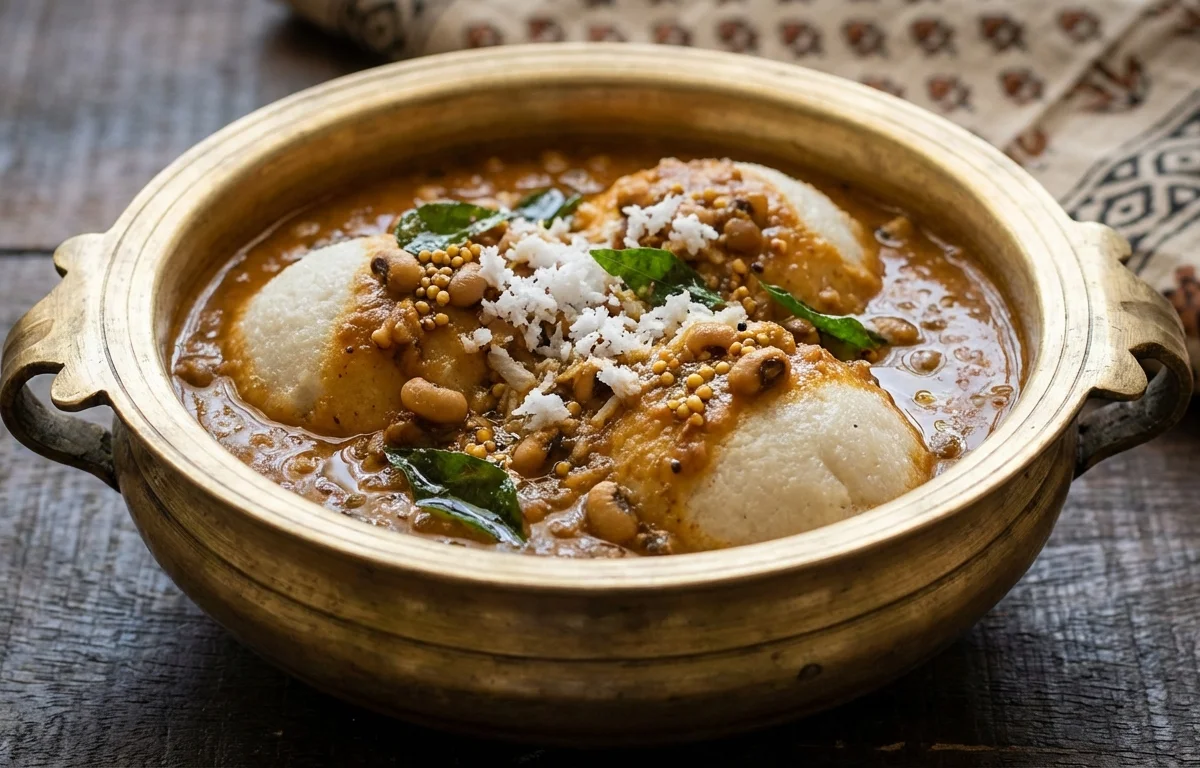
A comforting Mangalorean-style gravy with soft rice dumplings simmered in a lightly spiced coconut and tamarind sauce. It is homely, filling, and especially good with a gentle tempering of curry leaves and mustard.
For 4 servings
- prep · ~20 min
Soak the rice and prepare the tamarind.
1.Wash the rice well and soak it in water for 20 minutes.2.Soak the tamarind in a little warm water until soft.3.Squeeze and extract the pulp, then keep it aside. - mix · ~4 min
Grind the rice for the dumplings.
Drain the soaked rice and grind it with 1 cup water to a slightly coarse paste. It should be smooth enough to cook but not completely fine.
TIPKeep the batter slightly coarse so the dumplings hold shape and have a traditional texture. - boil · ~8 min
Cook the rice paste into a soft dough.
Pour the ground rice into a thick pan with 1 cup water and 0.25 tsp salt. Cook over low heat, stirring continuously, until it thickens into a soft dough that leaves the sides of the pan.
TIPStir without stopping once the mixture starts thickening to avoid lumps. - rest · ~5 min
Cool the dough slightly.
Transfer the dough to a plate and let it cool just enough to handle comfortably.
- assemble · ~7 min
Shape the pundi dumplings.
Grease your palms lightly with water and shape the warm dough into small smooth balls. Keep them covered so they do not dry out.
- steam · ~10 min
Steam the dumplings.
Place the dumplings in a steamer and steam until firm and cooked through.
- saute · ~3 min
Toast the spices for the gravy.
In a small pan, dry roast the dried red chili, coriander seeds, cumin seeds, and fenugreek seeds over low heat until fragrant. Do not let them darken too much.
TIPLow heat keeps the spices aromatic and prevents bitterness. - mix · ~5 min
Grind the masala.
Grind the roasted spices with fresh coconut, tamarind pulp, turmeric powder, and 1 cup water to a smooth paste.
- boil · ~10 min
Cook the gravy.
Transfer the ground masala to a pot. Add 1 cup water and the remaining 0.25 tsp salt, then bring it to a gentle boil and cook until the raw coconut smell fades and the gravy thickens slightly.
- temper · ~1 min
Make the tempering.
1.Heat oil in a small pan over medium heat.2.Add mustard seeds and let them splutter.3.Add curry leaves and fry briefly until fragrant. - assemble · ~3 min
Combine the dumplings and gravy.
Add the steamed dumplings to the simmering gravy and pour the tempering over the top. Let everything cook together for 2 to 3 minutes so the dumplings absorb some flavor.
- serve
Serve the pundi gasi hot.
What to keep in mind.
7 tips from the recipe — small details that make a real difference to the final dish.
- 1Shape the dumplings while the rice dough is still warm; cold dough tends to crack at the edges.
- 2Keep a small bowl of water nearby and wet your palms lightly so the pundi stay smooth and non-sticky.
- 3Steam the dumplings with a little space between them so they firm up evenly without sticking together.
- 4Do not over-roast the fenugreek; even a little extra color can make the coconut gravy taste bitter.
- 5Let the gravy simmer until the raw coconut smell disappears before adding the dumplings for a fuller, rounded taste.
- 6Once the pundi go into the gravy, keep the heat gentle and stir carefully so they do not break.
- 7This dish tastes even better after a short rest, as the dumplings absorb the tamarind-coconut gravy.
Adapt it for your goals.
Spicier
Increase the dried red chilies or use a hotter variety if you want a deeper, more assertive gasi.
garlic temperingGarlic-tempering
Add lightly crushed garlic to the mustard and curry leaf tempering for a stronger, savory finish.
thinner gravyThinner-gravy
Add a little extra water while simmering if you prefer a looser gasi to serve more like a curry.
mini pundiMini-pundi
Shape smaller dumplings for quicker steaming and better gravy absorption in every bite.
Why this is on our healthy list.
Gentle, Filling Comfort Food
Rice dumplings and coconut gravy make this a satisfying meal that is soft-textured and easy to eat.
Plant-Based Ingredients
This dish is built entirely from rice, coconut, spices, tamarind, and curry leaves, making it naturally vegetarian.
Spice-Driven Digestive Support
Cumin, coriander, fenugreek, and tamarind are traditional ingredients often used to add warmth and digestive balance to curries.
Frequently asked questions
The dough was likely too cool or too dry. Shape them while still warm and use lightly wet palms to smooth the surface.