Rajma Gogji
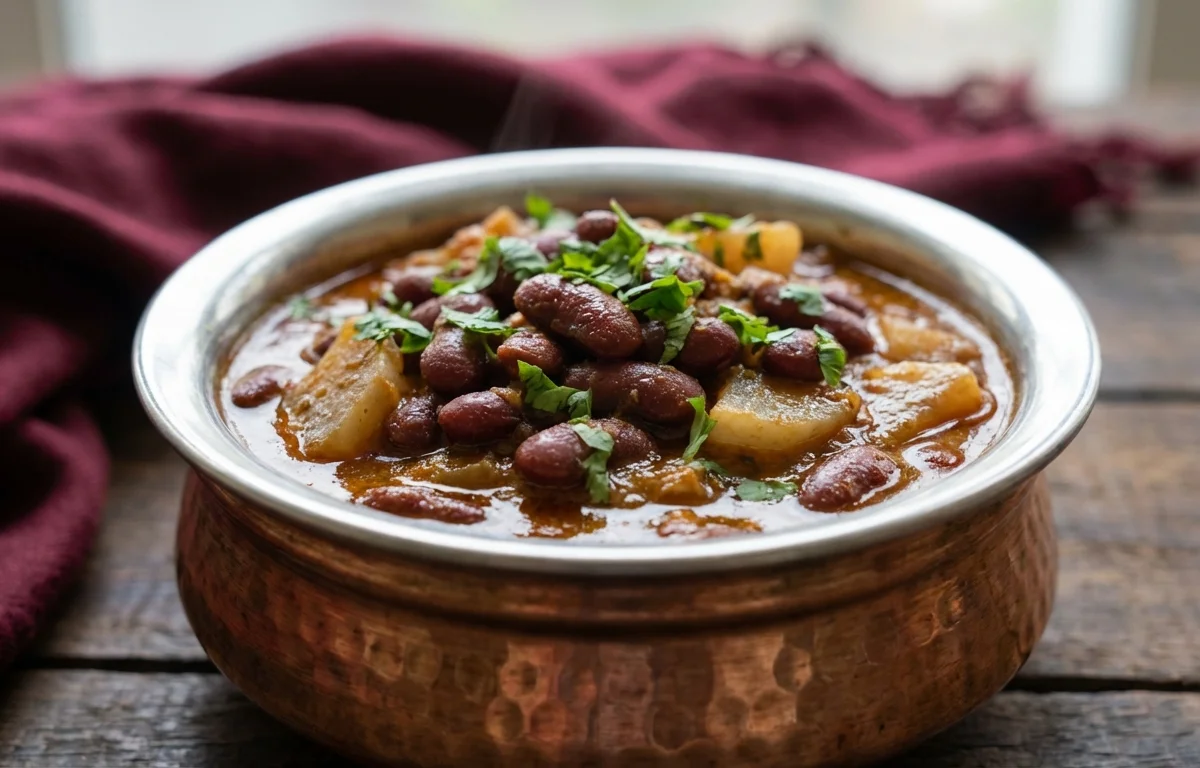
A comforting Kashmiri-style curry where tender rajma and mild turnips simmer together in a lightly spiced gravy. The beans soak up the earthy sweetness of gogji, making it a homely dish that goes especially well with steamed rice.
For 4 servings
- prep · ~1 min
Soak the rajma.
Wash the rajma well and soak it in enough water overnight. Drain before cooking.
- pressure cook · ~35 min
Pressure cook the rajma.
1.Add soaked rajma, 3 cups water, and 0.25 tsp salt to a pressure cooker.2.Cook on medium heat until the beans are fully tender, about 20 to 25 minutes after full pressure.3.Let the pressure release naturally and keep the rajma with its cooking liquid.TIPWell-cooked rajma should mash easily between your fingers; undercooked beans will not soften properly in the gravy. - prep · ~5 min
Prepare the gogji.
Peel the gogji and cut them into medium wedges so they hold their shape while simmering.
- saute · ~5 min
Cook the spices and gogji.
1.Heat mustard oil in a pan until hot, then lower the heat slightly.2.Add asafoetida and stir for a few seconds.3.Add fennel powder, ginger powder, red chili powder, and turmeric powder.4.Add the gogji right away and mix well to coat with the spices.TIPDo not let the powdered spices sit in the hot oil for long or they can burn and turn bitter. - simmer · ~12 min
Simmer the gogji until almost tender.
Add 1 cup water and the remaining 0.25 tsp salt. Cover and cook on low heat for 10 to 12 minutes, until the gogji is nearly cooked but not falling apart.
- simmer · ~10 min
Add the rajma and finish the curry.
1.Pour the cooked rajma along with its cooking liquid into the pan.2.Mix gently so the gogji stays intact.3.Simmer uncovered for 8 to 10 minutes until the flavors come together and the gravy lightly thickens. - rest · ~5 min
Let the curry rest for 5 minutes.
- serve
Serve hot with steamed rice.
What to keep in mind.
7 tips from the recipe — small details that make a real difference to the final dish.
- 1Cook the rajma until a bean crushes easily between your fingers; firm beans stay chalky in the gravy.
- 2Heat the mustard oil until it just smokes lightly, then reduce the heat before adding hing and powdered spices.
- 3Add the turnips immediately after the spices so the fennel and ginger powders do not scorch in the oil.
- 4Cut the gogji into medium wedges; small pieces will break down before the rajma and gravy finish simmering.
- 5Simmer the final curry uncovered so the rajma starch lightly thickens the gravy without mashing the turnips.
- 6Let the dish rest for 5 minutes before serving; the turnips absorb the spiced liquid and the gravy settles.
- 7This curry tastes even better the next day, but reheat gently so the gogji stays intact.
Adapt it for your goals.
No-onion-no-garlic
Keep it exactly in the traditional satvik style; the hing, fennel, and dry ginger provide plenty of aroma without onion or garlic.
spicierSpicier
Increase the red chili powder slightly for a warmer finish if you prefer a hotter rajma curry while keeping the same Kashmiri flavor base.
thicker gravyThicker-gravy
Mash a spoonful of the cooked rajma into the pan during the final simmer for a richer, clingier gravy.
stovetop cookedStovetop-cooked
If you do not use a pressure cooker, simmer the soaked rajma until fully tender before proceeding; useful for cooks avoiding pressure cooking.
Why this is on our healthy list.
Plant Protein from Rajma
Kidney beans add satisfying plant-based protein, making this rice-and-curry meal more filling and balanced.
Fiber-Rich Ingredients
Both rajma and turnips contribute dietary fiber, which supports fullness and gives the dish hearty texture.
Moderate, Simple Spicing
The curry relies on fennel, dry ginger, turmeric, and hing rather than heavy cream or butter, keeping it lighter in style.
Vegetable-and-Legume Combination
Pairing turnips with beans brings together earthy vegetables and legumes in one comforting, nutrient-diverse dish.
Frequently asked questions
Yes. Use cooked canned beans with some water or light stock, but simmer them well with the turnips so they absorb the mustard oil and spice flavors.