Ruwangan Chaman
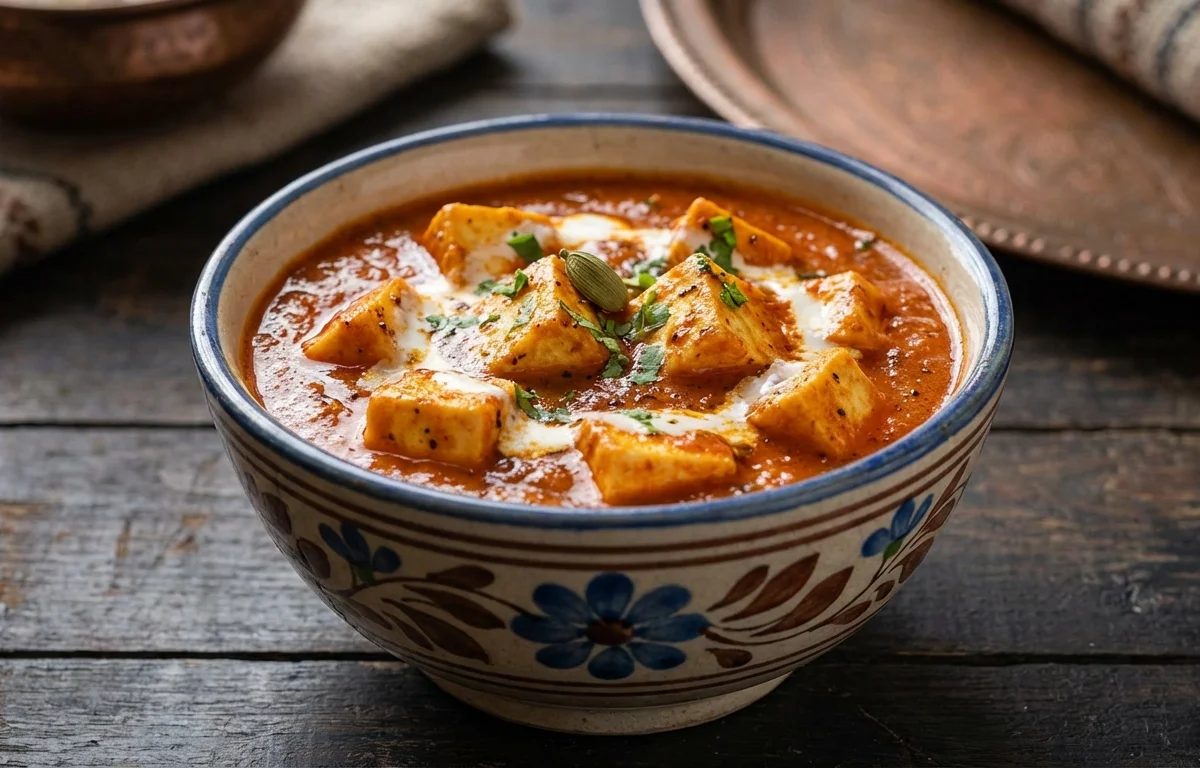
A classic Kashmiri paneer curry where fried paneer is simmered in a light tomato gravy scented with fennel and dry ginger. The flavors are gentle yet distinctive, making it a lovely companion for plain rice or rotis.
For 4 servings
- prep · ~5 min
Prepare the paneer and tomato puree.
1.Cut the paneer into medium cubes.2.Puree the tomatoes until smooth.3.Measure the fennel powder, dry ginger powder, red chili powder, turmeric powder, asafoetida, salt, and water. - fry · ~5 min
Fry the paneer lightly.
Heat mustard oil in a pan over medium heat. Add the paneer cubes and fry until lightly golden on a few sides, then remove to a plate.
TIPDo not over-fry the paneer or it can turn chewy. - saute · ~4 min
Cook the spice base.
1.Lower the heat and let the oil cool slightly.2.Add asafoetida, fennel powder, dry ginger powder, red chili powder, and turmeric powder.3.Stir for a few seconds without letting the spices burn.4.Pour in the tomato puree and mix well.TIPA splash of water while adding the powders helps keep the spices from scorching. - simmer · ~10 min
Simmer the gravy.
Add salt and water, then bring the gravy to a gentle simmer. Cook for 8 to 10 minutes until the raw tomato taste disappears and the gravy looks glossy.
- simmer · ~4 min
Finish the curry with paneer.
Add the fried paneer to the simmering gravy and cook for 3 to 4 minutes so the cubes soak up the flavors while staying soft.
- serve
Serve hot.
What to keep in mind.
6 tips from the recipe — small details that make a real difference to the final dish.
- 1Heat mustard oil until it just reaches smoking point, then lower the heat before frying for a mellower, less sharp flavor.
- 2Fry the paneer only until pale golden at the edges; deep browning will make it chewy in this delicate gravy.
- 3If your tomato puree is very sour, simmer it a little longer before adding paneer so the gravy stays balanced and gentle.
- 4Add a spoonful of water with the spice powders to prevent fennel and dry ginger from catching in the hot oil.
- 5Keep the final simmer brief after adding paneer so the cubes absorb the gravy without turning rubbery.
- 6This curry tastes even better after 20 to 30 minutes of resting, when the fennel and dry ginger settle into the tomato base.
Adapt it for your goals.
Low-oil
Shallow-sear or even skip frying the paneer and add it directly to the simmered gravy for a lighter everyday version.
veganVegan
Replace paneer with firm tofu and keep the same spice profile for a plant-based curry with similar texture.
no onion no garlicNo-onion-no-garlic
This dish already fits that style well; just ensure your asafoetida is a pure variety if serving strict satvik or fasting-friendly meals.
richer gravyRicher-gravy
Add a spoonful of cream or whisked yogurt at the end for a softer, less tangy finish while keeping the Kashmiri spice notes.
Why this is on our healthy list.
Good Source of Protein
Paneer contributes protein, making this curry more filling and helpful for a satisfying vegetarian meal.
Tomato-Based Antioxidants
The tomato gravy brings beneficial plant compounds and acidity that brighten the dish without needing heavy ingredients.
Digestive Spice Support
Fennel, dry ginger, and asafoetida are traditional spices often used to make rich foods feel easier to digest.
Frequently asked questions
It was likely fried too long or simmered too long in the gravy. Light frying and a short final simmer keep it soft.