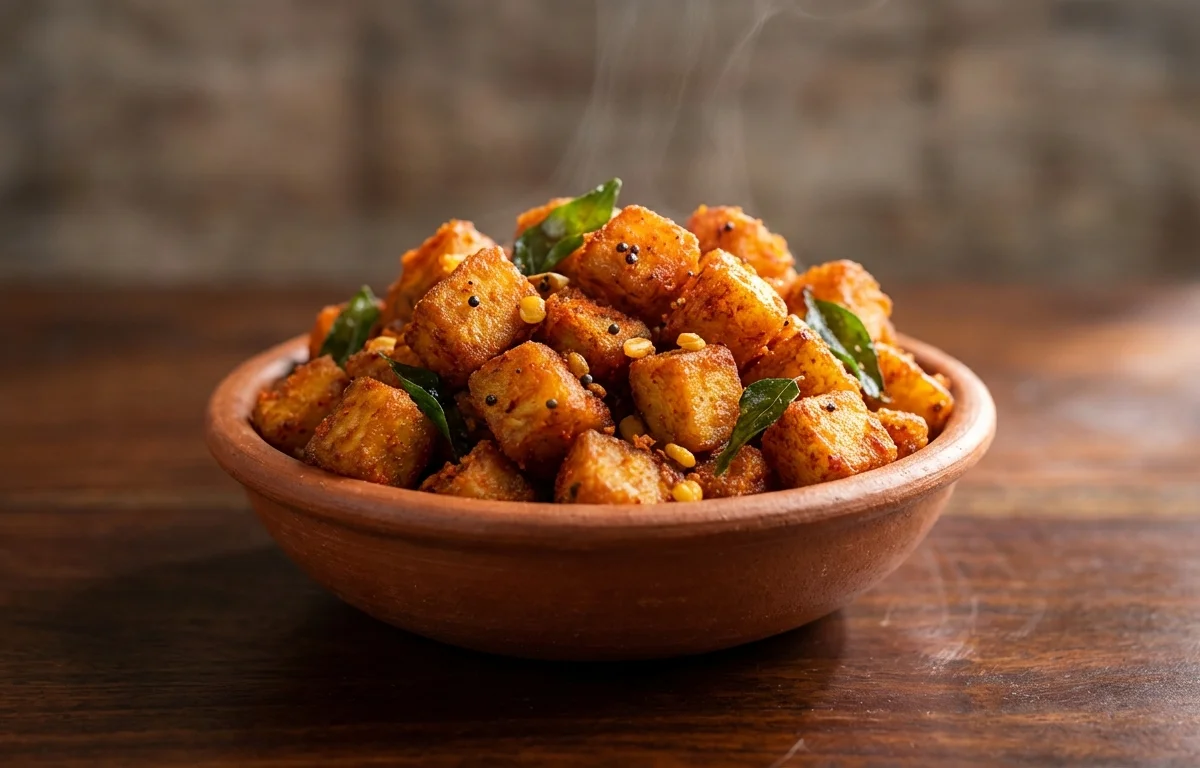
Seppankizhangu Fry
Crisp-edged colocasia fry with a soft center, tossed in a simple South Indian spice mix. It makes a lovely side for rasam rice, curd rice, or sambar and comes together with everyday pantry ingredients.
For 4 servings
- boil · ~15 min
Boil the seppankizhangu until just tender.
1.Place the seppankizhangu in a pot with water and the salt meant for boiling water.2.Bring to a boil and cook until a knife goes in with slight resistance, about 12 to 15 minutes.3.Drain the water fully and let the seppankizhangu cool enough to handle.TIPDo not overcook or the slices will break and turn mushy in the pan. - prep
Peel and slice the seppankizhangu.
Peel the cooled seppankizhangu and slice into thick rounds. Keep the slices fairly even so they crisp at the same rate.
- temper · ~2 min
Make the tempering.
1.Heat oil in a wide pan over medium heat.2.Add mustard seeds and let them splutter.3.Add urad dal, curry leaves, and asafoetida.4.Cook for 20 to 30 seconds until the dal turns light golden and fragrant.TIPUse a wide pan so the slices sit in a single layer and brown well. - fry · ~3 min
Add the spice powders and seppankizhangu.
1.Lower the heat and add turmeric powder, red chili powder, coriander powder, and the pinch of salt for seasoning.2.Add the sliced seppankizhangu and toss gently to coat the pieces without breaking them.3.Spread the slices out as much as possible in the pan.TIPAdd the spice powders on low heat so they do not burn. - fry · ~15 min
Pan-fry until crisp and browned.
1.Cook on medium heat for 4 to 5 minutes without stirring too often.2.Flip the slices gently and continue frying until both sides are crisp and golden brown, about 8 to 10 minutes more.3.Toss once or twice near the end for even color.TIPLeave the slices undisturbed for stretches of time to help them form a crisp crust. - serve
Serve hot.
Serve the seppankizhangu fry hot as a side with rice, rasam, sambar, or curd rice.
What to keep in mind.
7 tips from the recipe — small details that make a real difference to the final dish.
- 1Boil only until a knife meets slight resistance; overcooked seppankizhangu will crumble while frying.
- 2After boiling, drain completely and let the slices cool before peeling so they stay firm and less sticky.
- 3Slice the colocasia into even, thick rounds so the outside crisps before the center dries out.
- 4Use a wide pan and keep the pieces in a single layer; overcrowding will steam them instead of browning.
- 5Add the chili, coriander, and turmeric on low heat, then quickly toss in the slices to prevent the powders from scorching.
- 6Do not stir constantly; leaving the slices undisturbed for a few minutes at a time builds the best crust.
- 7Serve immediately for the crispest texture, though leftovers can be re-crisped in a hot tawa or skillet.
Adapt it for your goals.
Extra-spicy
Increase the red chili powder slightly for a hotter fry that pairs especially well with mild curd rice.
pepper garlicPepper-garlic
Swap part of the chili powder for freshly crushed black pepper and add a little minced garlic to the tempering for a bolder, earthy finish.
low oilLow-oil
Use a well-seasoned nonstick or cast-iron pan and fry in smaller batches with less oil; the slices still crisp if not crowded.
no hingNo-hing
Skip the asafoetida if unavailable or if your hing contains wheat, while keeping the mustard, urad dal, and curry leaves for aroma.
Why this is on our healthy list.
Root Vegetable Energy
Seppankizhangu provides satisfying carbohydrates, making this a filling side dish alongside rasam, sambar, or curd rice.
Digestive Spice Support
The tempering includes asafoetida, curry leaves, and mustard seeds, ingredients traditionally used to add flavor and aid a heavy root vegetable dish.
Moderate Oil Preparation
Because the colocasia is pan-fried rather than deep-fried, the dish gets crisp edges with comparatively less oil.
Frequently asked questions
It was likely overboiled or stirred too much in the pan. Cook only until just tender, cool it fully, and fry the slices gently without frequent tossing.