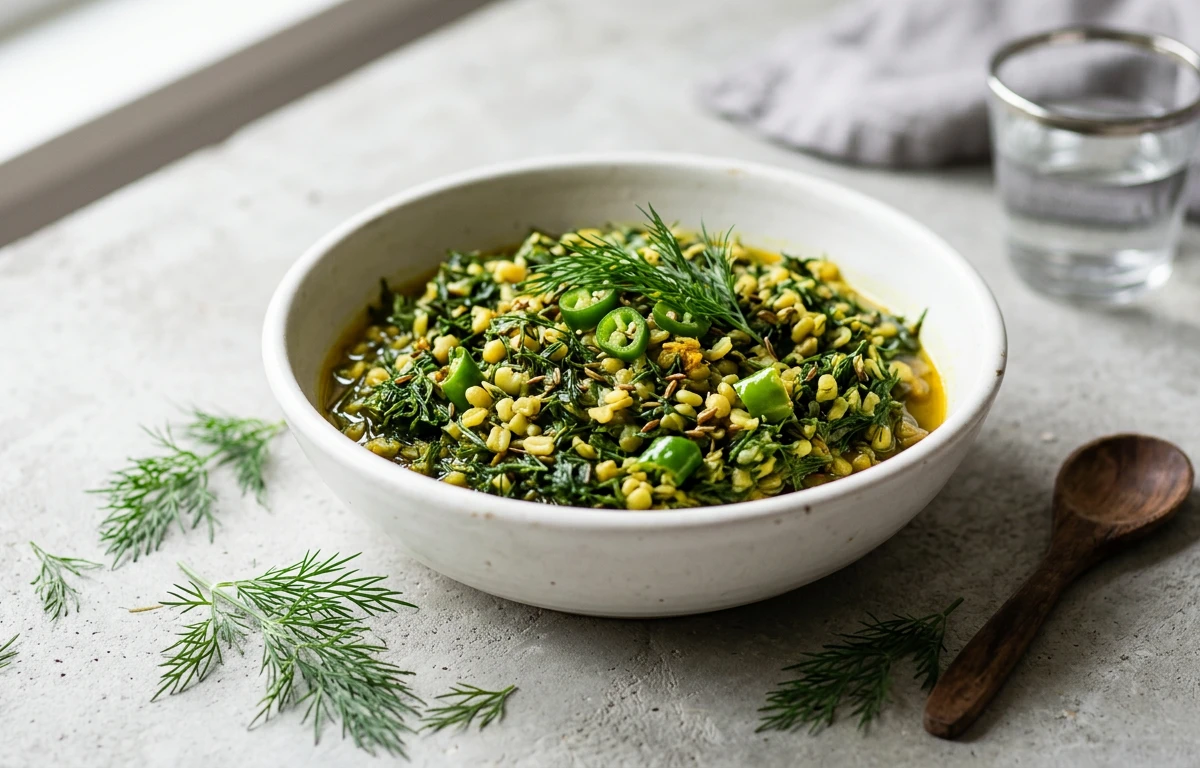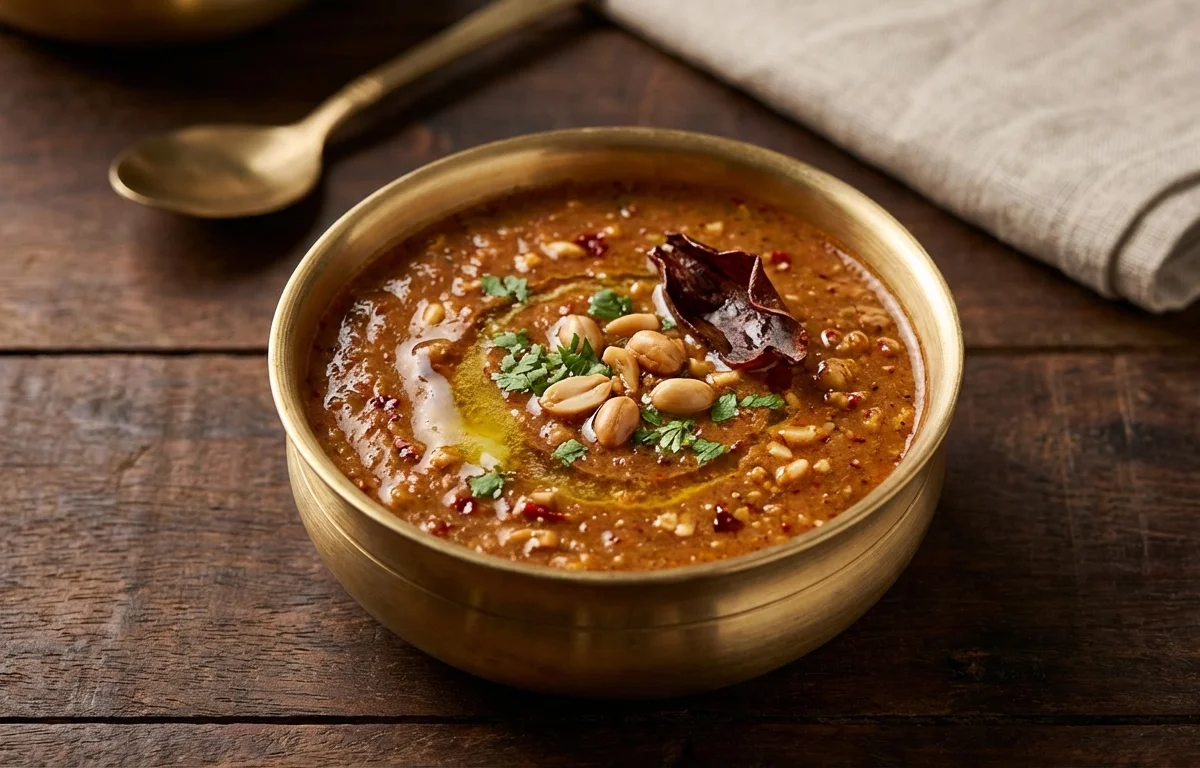
Shengdanyachi Amti
A comforting Maharashtrian peanut curry with a nutty body, gentle heat, and a tangy finish from tamarind or kokum. It comes together with simple pantry staples and tastes lovely with bhakri, rice, or soft phulka.
For 4 servings
- prep · ~5 min
Soak and grind the peanuts.
1.Drain the soaked peanuts.2.Blend the peanuts with 1 cup water to a smooth, pourable paste.3.If needed, scrape the jar once or twice so the paste turns even.TIPA smoother peanut paste gives the amti a silkier finish. - temper · ~2 min
Make the tempering.
1.Heat oil in a pan over medium heat.2.Add mustard seeds and let them splutter.3.Add cumin seeds, curry leaves, green chili, and asafoetida.4.Stir for a few seconds until fragrant. - saute
Cook the spices briefly.
Add turmeric powder, godha masala, and red chili powder. Stir quickly for 10 to 15 seconds without letting the spices burn.
TIPKeep the heat low at this stage so the dry spices stay fragrant, not bitter. - simmer · ~12 min
Add the peanut paste and simmer the amti.
1.Pour in the ground peanut paste and the remaining 2 cups water.2.Add tamarind paste, jaggery, and salt, then mix well.3.Bring the curry to a gentle simmer, stirring often so it does not catch at the bottom.4.Cook until slightly thick and glossy. - garnish
Garnish with coriander leaves.
- serve
Serve hot with rice, bhakri, or phulka.
What to keep in mind.
7 tips from the recipe — small details that make a real difference to the final dish.
- 1Blend the soaked peanuts very smooth; any graininess will make the amti feel coarse instead of silky.
- 2Stir frequently after adding the peanut paste, as ground peanuts can settle and catch at the bottom quickly.
- 3Keep the flame low when adding godha masala and chili powder so the spices bloom without turning bitter.
- 4Add tamarind only after the peanut paste goes in; this helps the curry stay smooth as it simmers.
- 5If the amti thickens too much on standing, loosen it with a splash of hot water before serving.
- 6This curry tastes even better after 20 to 30 minutes of resting, when the peanut, jaggery, and tamarind flavors meld.
- 7Refrigerate leftovers and reheat gently, stirring well, because peanut-based gravies thicken noticeably when chilled.
Adapt it for your goals.
Kokum
Use kokum instead of tamarind for a more traditional coastal-style tang and a slightly lighter, fruitier sourness.
low oilLow-oil
Reduce the oil in the tempering and use a heavy pan; the amti will still stay rich because the peanuts provide plenty of body.
spicierSpicier
Add an extra green chili or a little more red chili powder if you want a sharper heat against the sweet-sour peanut base.
garlicGarlic
Add lightly crushed garlic to the tempering for a more robust, homestyle variation that pairs especially well with bhakri.
Why this is on our healthy list.
Plant Protein From Peanuts
Peanuts make this amti filling and satisfying while contributing plant-based protein and healthy fats.
Digestive Spice Support
Cumin, asafoetida, curry leaves, and turmeric are commonly used to make rich dals and gravies feel lighter and more digestible.
Balanced Sweet-Sour Profile
Tamarind and a small amount of jaggery create depth of flavor, which can help a simple pantry dish taste complete without excess richness.
Frequently asked questions
Yes, but the flavor will be deeper and more toasty, and the final amti may taste less delicate than the traditional version made with soaked raw peanuts.



.webp)