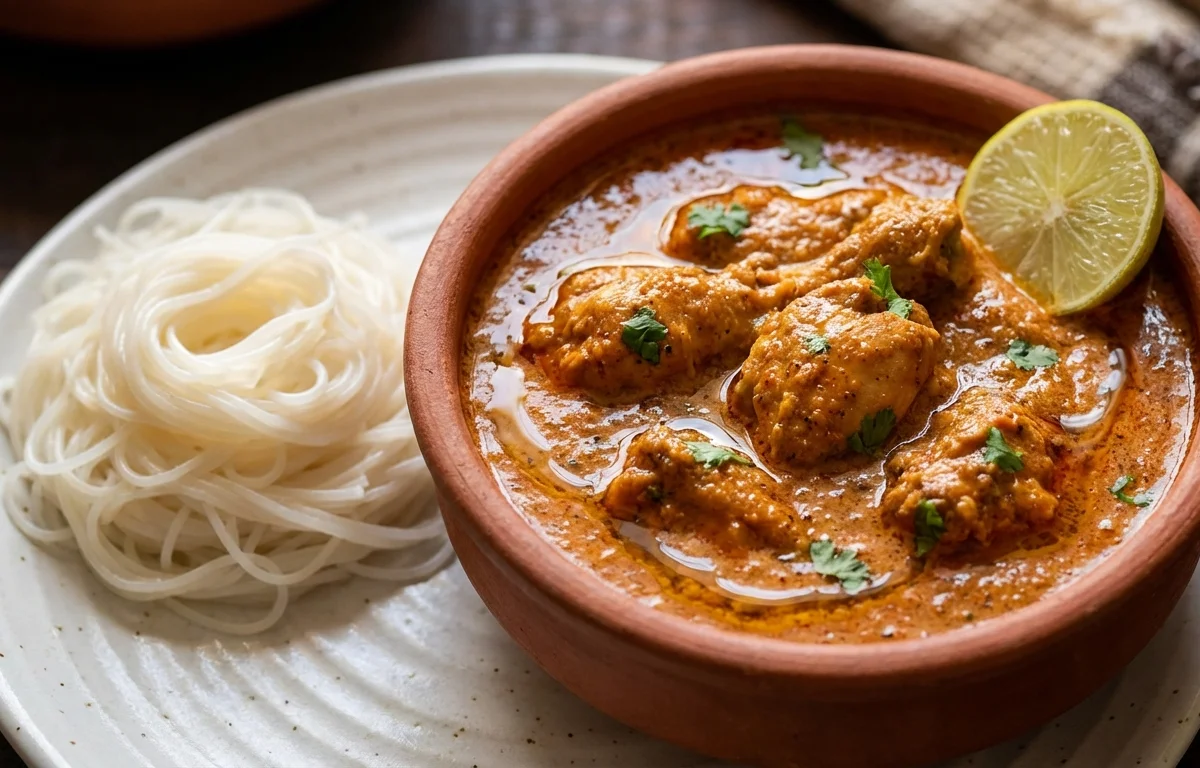
A classic Goan Catholic comfort food featuring delicate, steamed rice noodles (Shevyo) served with a fragrant and creamy chicken and coconut milk curry (Rosu). A true taste of Goa, perfect for a special Sunday meal.
Prep30m
Cook40m
Soak120m
Servings4
Serving:1 bowlOne serving is 1 cup of chicken rosu, served with 2 shevyo (rice noodle) nests.473 cal
Ingredients
For 4 servings
2 cupIdli Rice (Also known as Ukda rice. Must be soaked for at least 4 hours.)
2.5 tspSalt (Use 1 tsp for shevyo batter and 1.5 tsp for the curry, or adjust to taste.)
500 gChicken (Bone-in, curry cut pieces are recommended for the best flavor.)
1.5 cupFresh Coconut (Grated. Avoid using desiccated or frozen for authentic taste.)
250 gOnion (About 2 medium onions. Roughly chop one for the masala and finely chop the other.)
2.25 cupWater (About 1/4 cup for grinding masala and 2 cups for the curry. More may be needed for the batter.)
Nutrition per Serving
473
Calories
34g
Protein
39g
Carbs
Instructions
1
Prepare the Shevyo Batter
Wash the idli rice thoroughly under running water until the water runs clear.
Soak the rice in ample water for at least 4 hours, or preferably overnight.
After soaking, drain the water completely. Transfer the rice to a wet grinder or a high-power blender.
Add 1 tsp of salt and grind the rice, adding water tablespoon by tablespoon, until you get a very smooth, thick, and dense paste. The consistency should be thicker than idli batter and hold its shape.
Set the batter aside while you prepare the curry.
2
Make the Goan Masala Paste
In a blender jar, combine the grated coconut, roughly chopped onion, garlic cloves, ginger, green chilies, coriander seeds, cumin seeds, black peppercorns, cloves, and cinnamon stick.
Add about 1/4 cup of water and grind to a very fine, smooth paste. Scrape down the sides as needed to ensure there are no coarse bits. Set aside.
A classic Goan Catholic comfort food featuring delicate, steamed rice noodles (Shevyo) served with a fragrant and creamy chicken and coconut milk curry (Rosu). A true taste of Goa, perfect for a special Sunday meal.
This goan recipe takes 70 minutes to prepare and yields 4 servings. At 473.21 calories per serving with 33.87g of protein, it's a moderately challenging recipe perfect for lunch or dinner.
Heat vegetable oil in a heavy-bottomed pot or kadai over medium heat.
Add the finely chopped onion and sauté for 4-5 minutes until it becomes soft and translucent.
Add the chicken pieces and sear on all sides for 5-7 minutes until they are lightly browned.
Stir in the ground masala paste and turmeric powder. Cook for 6-8 minutes, stirring frequently, until the raw aroma disappears and you see oil separating from the masala.
Pour in 2 cups of warm water, add 1.5 tsp of salt, and the tamarind paste. Stir everything together well.
Bring the curry to a boil, then reduce the heat to low. Cover the pot and let it simmer gently for 20-25 minutes, or until the chicken is tender and the gravy has thickened slightly.
4
Steam the Shevyo
While the curry is simmering, prepare your steamer by adding water and bringing it to a boil.
Lightly grease idli plates or a flat steamer tray.
Fill a shevyo press (idiyappam press) with the prepared rice batter.
Press the batter onto the greased plates in a circular motion to form delicate noodle nests.
Carefully place the plates in the steamer. Cover and steam on high heat for 8-10 minutes.
The shevyo are cooked when they appear firm, non-sticky, and have a slight sheen. Do not overcook, as they can become hard.
5
Serve
Once the chicken rosu is ready, check the seasoning and adjust salt or tamarind if needed.
Gently remove the steamed shevyo from the plates while they are still hot.
Serve the fresh, hot shevyo immediately in a bowl, with a generous ladle of the chicken rosu poured over them.
Pro Tips
1For the most authentic flavor, use freshly grated coconut. It makes a significant difference in the creaminess and taste of the curry.
2The consistency of the shevyo batter is key. If it's too thin, the noodles will be flat; if too thick, they will be very difficult to press.
3To check if shevyo are cooked, touch them lightly. If the batter doesn't stick to your finger, they are done.
4Shevyo are best eaten fresh and hot. They tend to dry out and harden as they cool.
5For a richer curry, you can extract thick and thin coconut milk separately instead of grinding the coconut directly into the masala.
Recipe Variations
Prawn Curry
Prawn Curry
Substitute the chicken with 500g of prawns. Add the prawns in the last 5-7 minutes of cooking to prevent them from becoming tough.
Vegetarian Version
Vegetarian Version
Replace chicken with a mix of vegetables like potatoes, carrots, green beans, and cauliflower. You can also add chickpeas for protein.
Spicier Curry
Spicier Curry
Add 2-3 dried Kashmiri red chilies along with the other whole spices when grinding the masala for a vibrant color and extra heat.
Health Benefits
✨
Rich in Protein
Chicken is an excellent source of high-quality lean protein, which is essential for muscle growth, repair, and overall body function.
⚡
Provides Sustained Energy
The steamed rice noodles are a good source of complex carbohydrates, providing a steady release of energy to keep you active throughout the day.
❤️
Source of Healthy Fats
Fresh coconut is rich in medium-chain triglycerides (MCTs), a type of fat that is easily digested and can be used for energy. It also adds a creamy texture and rich flavor.
✨
Aromatic Spices with Benefits
Spices like turmeric, ginger, and garlic have anti-inflammatory and antioxidant properties that can support immune health and overall well-being.
Frequently Asked Questions
How many calories are in one serving of Shevyo Ani Rosu?
A typical serving of Shevyo Ani Rosu contains approximately 550-650 calories, depending on the amount of coconut and the fat content of the chicken used.
Is Shevyo Ani Rosu healthy?
It can be part of a balanced diet. It's a good source of protein from chicken and carbohydrates for energy from the rice noodles. The use of fresh coconut provides healthy fats. To make it healthier, use lean chicken and control the portion size.
Can I make this dish vegetarian?
Yes, absolutely. You can replace the chicken with mixed vegetables like potatoes, carrots, peas, and cauliflower, or use chickpeas or paneer for a protein-rich vegetarian version.
What can I use if I don't have a shevyo press?
A shevyo press (or idiyappam/sevai press) is ideal. If you don't have one, you can use a potato ricer with the finest disc attachment as a substitute, though the texture might be slightly different.
Can I make the shevyo ahead of time?
Shevyo are best served immediately after steaming as they can become dry and hard upon cooling. It is not recommended to make them far in advance. You can, however, prepare the batter and the curry base ahead of time.
Is this dish gluten-free?
Yes, this dish is naturally gluten-free as the noodles (shevyo) are made from rice and the curry does not contain any gluten-based thickeners.