
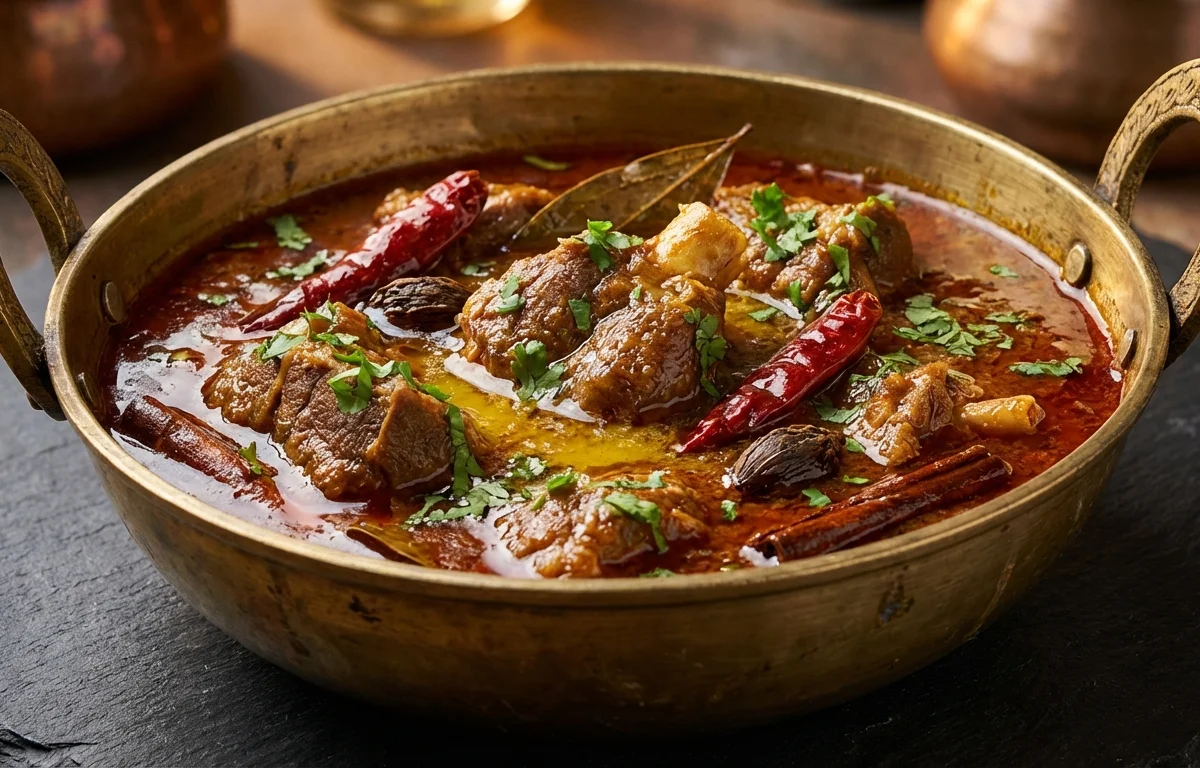
Shikari Maas
A bold, rustic mutton curry from the royal hunting kitchens of Rajasthan. Slow-cooked with whole spices, plenty of garlic, and fiery red chilies, the meat turns tender and intensely flavorful. This minimal-ingredient hunter's stew relies on a long, gentle simmer to draw out the richness of the mutton, making it a perfect companion for bajra roti or steamed rice.
For 4 servings
- prep · ~15 min
Marinate the mutton.
1.In a large bowl, combine the mutton pieces with yogurt and a pinch of the measured salt.2.Mix well to coat every piece. Cover and set aside for 15 minutes at room temperature. - temper · ~2 min
Bloom the whole spices in ghee.
1.Heat ghee in a heavy-bottomed pan or kadhai over medium heat.2.Add the cinnamon stick and black cardamom pods. Sauté for 30 seconds until fragrant.3.Add the whole garlic cloves and whole dried red chilies. Sauté for 1 minute, stirring constantly, until the garlic is lightly golden and the chilies darken slightly.TIPKeep the heat medium — high heat will burn the garlic and make the dish bitter. - saute · ~6 min
Sear the marinated mutton.
1.Add the marinated mutton pieces to the pan, reserving any leftover yogurt marinade.2.Sear the meat on high heat for 5-6 minutes, turning occasionally, until browned on all sides.TIPDo not crowd the pan. Brown the mutton in batches if needed to lock in juices. - simmer · ~75 min
Slow-cook the mutton until tender.
1.Pour in the water and add the remaining salt and any leftover yogurt from the marinade.2.Bring to a rolling boil, then reduce the heat to low.3.Cover the pan with a tight-fitting lid and let it simmer gently for 75-80 minutes, or until the meat is fall-off-the-bone tender.TIPCheck occasionally and add a splash of hot water if the gravy dries out before the meat is tender. - saute · ~6 min
Dry up the gravy to a rustic finish.
1.Once the mutton is tender, remove the lid and increase the heat to medium-high.2.Sauté vigorously for 5-7 minutes, until the excess moisture evaporates and the ghee separates, leaving a thick, semi-dry coating clinging to the meat.TIPThis is the signature rustic texture of Shikari Maas — dry, intense, and glossy with ghee. - garnish
Finish with coriander and serve hot.
1.Turn off the heat and sprinkle generously with chopped fresh coriander leaves.2.Transfer to a serving bowl and serve immediately with bajra roti or steamed rice.
What to keep in mind.
6 tips from the recipe — small details that make a real difference to the final dish.
- 1Use bone-in mutton for deeper flavor and natural body in the gravy.
- 2Don't skip the yogurt marinade; it tenderizes the meat and adds subtle tang.
- 3Sauté garlic and chilies until just golden — burnt garlic ruins the dish.
- 4Brown the mutton in batches if needed to get a good sear without steaming.
- 5Simmer covered on the lowest heat; patience yields fall-off-the-bone meat.
- 6Dry the gravy at the end until ghee glistens on the meat — that's the rustic finish.
Adapt it for your goals.
Low-oil
Reduce ghee to 1 tablespoon and use a non-stick pan; the meat still braises in its own juices but with less fat.
high proteinHigh-protein
Replace 1 cup water with bone broth for extra collagen and mineral richness.
vegetarianVegetarian
Substitute mutton with 400g jackfruit or paneer; skip the marinade and cook for 20-25 minutes instead.
spice rubSpice-rub
Add 1 teaspoon garam masala with the cinnamon for a more layered spice profile without altering the rustic method.
Why this is on our healthy list.
Rich in Iron
Mutton provides heme iron, which is easily absorbed and supports healthy red blood cells.
Ghee for Fat-Soluble Vitamins
A moderate amount of ghee helps the body absorb vitamins A, D, E, and K from other ingredients.
Probiotic Boost from Yogurt
The yogurt marinade introduces beneficial lactic acid bacteria that aid digestion.
No Refined Spices or Preservatives
This dish uses only whole ingredients — no spice powders, no additives — making it a clean, traditional preparation.
Frequently asked questions
Yes, but the cooking time will be shorter (about 45 minutes) and you'll lose some of the bone marrow richness that defines the dish.


.webp)
.webp)
.webp)