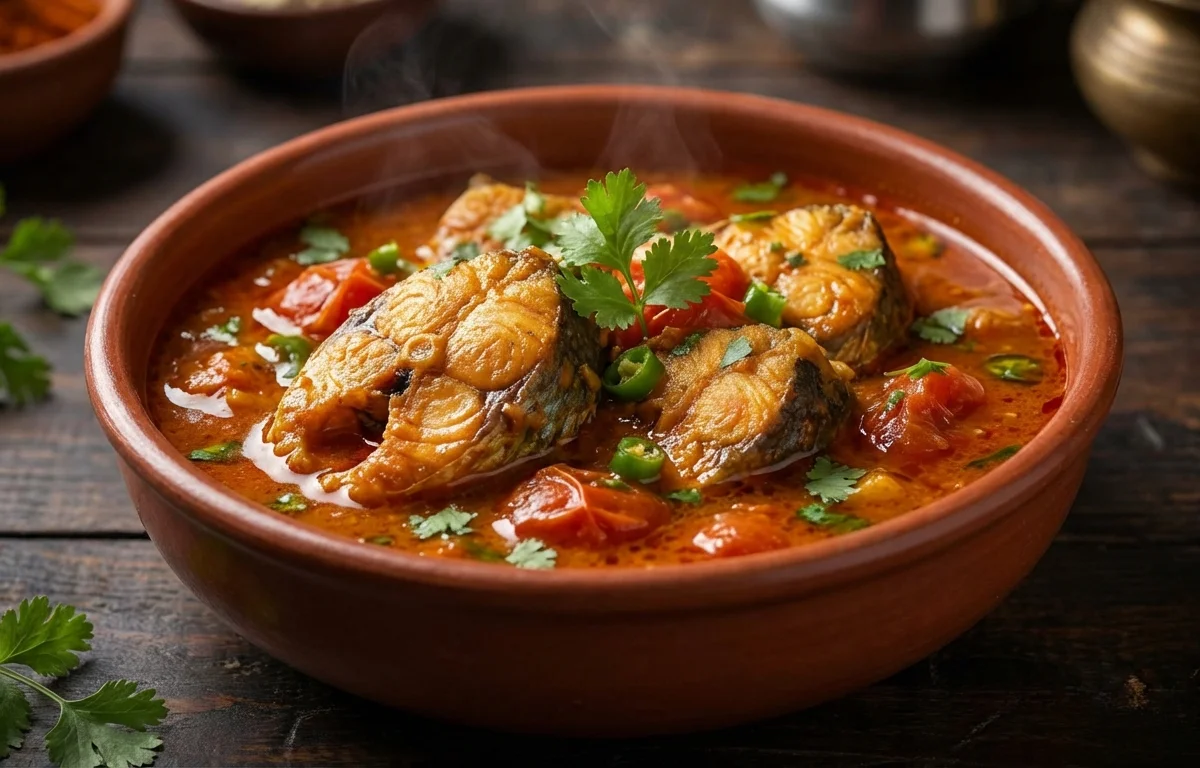
Sindhi Fish Curry
A tangy, lightly spiced fish curry with onion, tomato, and tamarind, this Sindhi favorite has a bright, comforting flavor that pairs beautifully with steamed rice. The gravy stays simple so the fish remains the star.
For 4 servings
- prep · ~10 min
Soak the tamarind and prep the fish.
1.Soak the tamarind in a little warm water for 10 minutes.2.Mash well and strain to extract the pulp.3.Wash the fish pieces gently and keep them ready.TIPUse firm fish so the pieces hold their shape in the gravy. - saute · ~8 min
Cook the onion base.
1.Heat oil in a pan over medium heat.2.Add cumin seeds and let them sizzle for a few seconds.3.Add onion and cook until light golden, 5 to 7 minutes.4.Add ginger and garlic, then cook for 1 minute. - saute · ~7 min
Build the curry masala.
1.Add tomato and green chili to the pan.2.Cook until the tomatoes turn soft and pulpy, 5 to 6 minutes.3.Add turmeric powder, red chili powder, coriander powder, and salt.4.Mix well and cook for 1 minute.TIPKeep the heat medium so the spices cook without burning. - simmer · ~5 min
Make the gravy.
Pour in the tamarind pulp and water. Stir well, bring the curry to a gentle simmer, and cook for 4 to 5 minutes so the flavors come together.
- simmer · ~10 min
Cook the fish in the curry.
Slide the fish pieces into the simmering gravy in a single layer. Cover and cook on low heat for 8 to 10 minutes, until the fish is just cooked through and flakes easily.
TIPDo not stir too much after adding the fish; gently shake the pan instead. - garnish
Finish with cilantro.
- serve
Serve hot with steamed rice.
What to keep in mind.
8 tips from the recipe — small details that make a real difference to the final dish.
- 1Choose a firm fish like surmai, cod, halibut, or basa so the pieces stay intact in the thin tamarind gravy.
- 2Cook the onions only to light golden, not deep brown, so the curry keeps its brighter Sindhi-style tang.
- 3Strain the tamarind pulp well to avoid fibers and seeds that can make the gravy gritty.
- 4Let the tomato mixture turn fully soft and pulpy before adding water; this prevents a raw, sharp masala taste.
- 5Add the fish only after the gravy is simmering steadily, so the pieces cook evenly without breaking.
- 6Once the fish goes in, avoid stirring with a spoon; lift and swirl the pan gently instead.
- 7The curry tastes best after a 10-minute rest off the heat, which lets the tamarind settle into the onion-tomato base.
- 8If reheating leftovers, warm on very low heat just until hot; boiling can overcook the fish and toughen it.
Adapt it for your goals.
Low-oil
Reduce the oil slightly and sauté the onions with a splash of water as needed; useful if you want a lighter everyday curry.
spicierSpicier
Add an extra green chili or a bit more red chili powder for a hotter, sharper curry that still keeps the tamarind tang.
prawnPrawn
Swap the fish for prawns and shorten the final simmer; a good option if you want the same tangy gravy with quicker-cooking seafood.
bonelessBoneless
Use boneless firm fish fillets for easier serving, especially if making this for children or guests.
Why this is on our healthy list.
Lean Protein from Fish
Firm white fish provides satisfying protein that makes the curry filling without needing a heavy cream- or coconut-based sauce.
Lighter Gravy Style
This curry relies on onion, tomato, tamarind, and spices for body and flavor, keeping the dish lighter than richer fried or dairy-heavy curries.
Digestive Spice Base
Ginger, garlic, cumin, and coriander bring aroma along with traditional warming spices often used to support digestion in savory dishes.
Tomato and Tamarind Brightness
Tomato and tamarind add tang and depth, helping the dish taste lively and satisfying with simple steamed rice.
Frequently asked questions
Use a firm white fish that holds together in simmering gravy, such as surmai, cod, halibut, or similar sturdy fillets or steaks.