Sindhi Khichdi
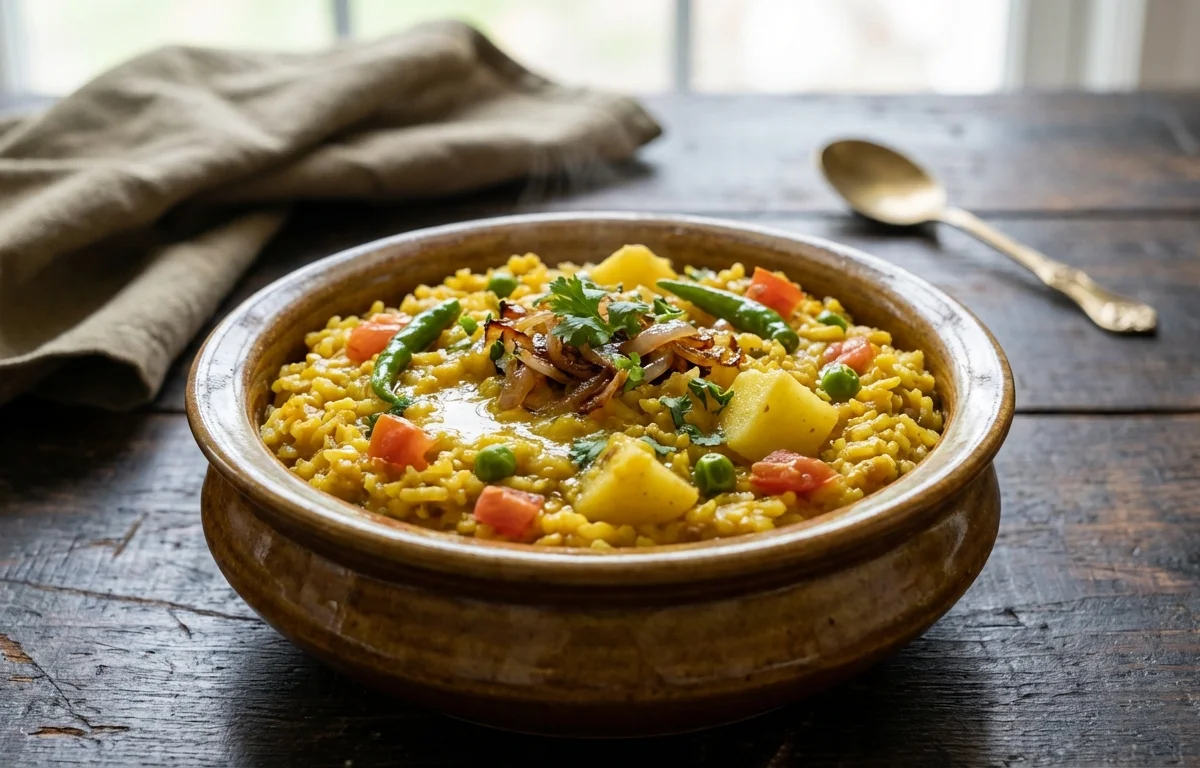
A comforting, nourishing one-pot meal of rice and moong dal cooked with aromatic vegetables and gentle spices. This Sindhi staple brings together the earthy richness of split green gram, soft rice, and the subtle sweetness of green peas and potatoes, finished with a fragrant desi ghee tadka. Simple, soulful, and ready to soothe any day.
For 4 servings
- prep · ~30 min
Wash and soak the rice; dry roast the dal.
1.Wash 1 cup basmati rice in 2-3 changes of water until water runs clear. Soak in fresh water for 30 minutes, then drain.2.Heat a pan over medium-low heat and dry roast 0.5 cup moong dal, stirring continuously, until it turns light golden and releases a nutty aroma (3-4 minutes). Set aside to cool.TIPDry roasting the dal is the signature Sindhi technique — it deepens the flavor and keeps the grains separate. - temper · ~7 min
Make the aromatic ghee tadka.
1.Heat 2 tbsp ghee in a pressure cooker over medium heat.2.Add 1 tsp cumin seeds, 6 crushed peppercorns, 3 cloves, and 1-inch cinnamon stick. Sauté for 30 seconds until fragrant.3.Add 1 thinly sliced onion and sauté until soft and translucent (4-5 minutes).4.Add 1-inch grated ginger and 2 slit green chilies. Cook for 1 minute until the raw aroma disappears.TIPKeep the heat at medium — the whole spices need gentle heat to bloom without burning. - saute · ~5 min
Cook the base with tomatoes and turmeric.
1.Add 1 chopped tomato and 1 pinch turmeric powder to the cooker.2.Sauté until the tomato softens and the mixture looks glossy, about 3-4 minutes.3.Add the roasted moong dal and 1 cubed potato. Stir to coat everything with the masala.4.Add the drained rice and 0.25 cup green peas. Sauté gently for 1 minute to warm through. - pressure cook · ~10 min
Pressure cook the khichdi.
1.Pour in 4 cups of water and add 0.5 tsp salt. Stir well.2.Close the pressure cooker lid and cook on high heat until the first whistle.3.Lower the heat and cook for exactly 2 more whistles.4.Turn off the heat and let the pressure release naturally. Do not force-open.TIPNatural pressure release is essential — it allows the rice and dal to finish cooking gently and absorb all the flavor. - assemble · ~2 min
Finish and fluff the khichdi.
1.Open the cooker once the pressure has released completely.2.Gently fluff the khichdi with a fork, taking care not to mash the rice.3.Check consistency — if too thick, stir in 2-3 tbsp hot water to loosen. - garnish
Garnish with fresh coriander and serve hot.
Transfer to a serving bowl, sprinkle generously with 2 tbsp chopped coriander leaves, and drizzle a teaspoon of raw ghee on top if you like it extra rich. Serve with papad, curd, or mango pickle on the side.
What to keep in mind.
6 tips from the recipe — small details that make a real difference to the final dish.
- 1Dry roast the moong dal until it smells nutty — this is the secret to Sindhi Khichdi's deep, earthy flavor.
- 2Soak basmati rice for 30 minutes so it cooks evenly and stays separate in the khichdi.
- 3Let the pressure release naturally — forcing it open can make the khichdi mushy and uneven.
- 4If the khichdi thickens after standing, stir in a splash of hot water to restore a porridge-like consistency.
- 5For an extra layer of richness, drizzle a teaspoon of raw ghee over the finished khichdi just before serving.
- 6Adjust water to 4.5 cups if you prefer a looser, more soupy khichdi — traditional Sindhi versions vary.
Adapt it for your goals.
Vegan
Replace ghee with coconut oil or a neutral vegetable oil for the tadka; skip dairy sides. The khichdi remains comforting and aromatic, suitable for plant-based diets.
low oilLow-oil
Reduce ghee to 1 tbsp and omit the final drizzle; dry-roast whole spices in a hot pan before adding onion. A lighter version that still delivers flavor.
high proteinHigh-protein
Increase moong dal to 1 cup and reduce rice to 1/2 cup for a lentil-heavy khichdi. Works well for anyone looking to boost protein without losing texture.
pumpkin & spinachPumpkin & spinach
Add 1/2 cup cubed pumpkin along with the potato and fold in a handful of chopped spinach after pressure cooking. Adds sweetness, color, and extra nutrients.
Why this is on our healthy list.
High in Plant Protein
Moong dal (split green gram) is a rich source of plant-based protein, supporting muscle repair and satiety.
Digestive Comfort
The combination of moong dal, ginger, and cumin is traditionally known in Ayurveda to be light on the stomach and easy to digest.
Rich in Dietary Fiber
Both basmati rice and moong dal provide a good amount of fiber from the whole grain and legumes, aiding in healthy digestion.
Packed with Micronutrients
Turmeric offers curcumin with antioxidant properties; green peas and potatoes contribute vitamin C and potassium.
Frequently asked questions
Yes, but it will take longer: cook in a heavy-bottomed pot over low heat, covered, stirring occasionally, for about 25-30 minutes once boiling, adding extra water as needed.



.webp)