Steak Fajitas
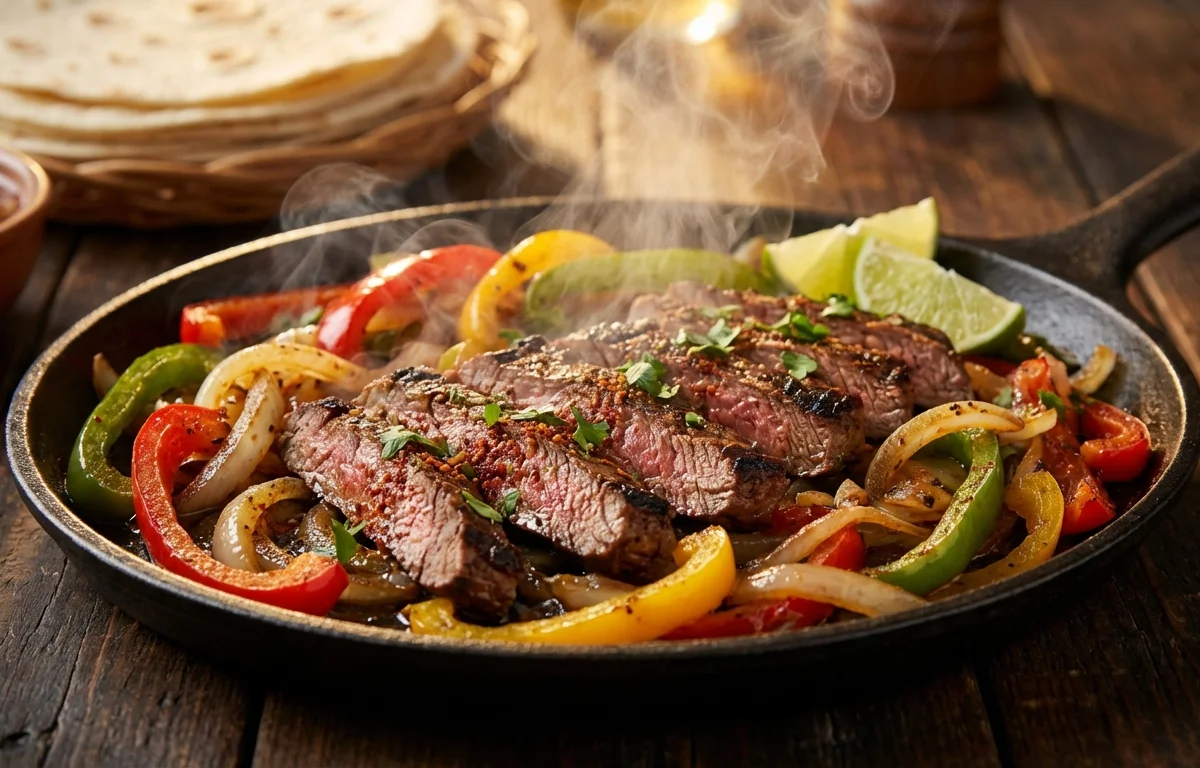
Sizzling hot strips of marinated skirt steak seared to perfection, tossed with charred bell peppers and onions. This Tex-Mex classic brings the restaurant experience straight to your kitchen — smoky, juicy, and ready to stuff into warm tortillas with all your favorite toppings.
For 4 servings
- prep · ~15 min
Marinate the steak.
1.In a bowl, whisk together lime juice, olive oil, minced garlic, cumin powder, smoked paprika, chili powder, salt, and black pepper.2.Place skirt steak in a shallow dish and pour marinade over both sides.3.Cover and rest at room temperature for 15 minutes while prepping vegetables.TIPDon't marinate longer than 30 minutes — the lime juice will start breaking down the meat too much. - prep · ~5 min
Slice the bell peppers and onion into strips.
Cut bell peppers into ½-inch strips and slice the onion into similar-sized strips. Keep them ready before heating the pan.
- grill · ~7 min
Sear the steak.
1.Heat a cast iron skillet over high heat until smoking hot.2.Remove steak from marinade, letting excess drip off.3.Place steak in the skillet and sear for 3-4 minutes on the first side without moving it.4.Flip and cook for another 2-3 minutes for medium-rare (internal temp 130-135°F).5.Transfer steak to a cutting board and rest for 5 minutes.TIPDon't crowd the pan. If your steak doesn't fit in one layer, sear it in batches. - saute · ~5 min
Cook the peppers and onions.
1.In the same skillet, add oil and heat over medium-high heat.2.Add bell peppers and onions with a pinch of salt.3.Cook until charred at the edges but still crisp-tender, about 4-5 minutes.4.Stir occasionally to prevent sticking. - prep · ~2 min
Slice the steak against the grain.
After resting, cut the steak into thin strips, slicing across the grain for maximum tenderness.
TIPAlways slice against the grain — look for the long muscle fibers and cut perpendicular to them. - assemble · ~1 min
Combine and serve.
1.Return sliced steak to the skillet with the peppers and onions.2.Toss everything together for 30 seconds over high heat.3.Serve immediately on a sizzling platter with warm tortillas, chopped cilantro, and lime wedges.
What to keep in mind.
6 tips from the recipe — small details that make a real difference to the final dish.
- 1Let the skillet get smoking hot before adding steak to ensure a deep brown crust.
- 2Rest the cooked steak for a full 5 minutes so juices redistribute and don't pool on the cutting board.
- 3Slice skirt steak against the grain into thin strips — this breaks short muscle fibers for tenderness.
- 4Don't overload the pan with vegetables; cook in a single layer for proper charring.
- 5Warm tortillas directly over a gas flame or in a dry skillet for 20 seconds per side.
- 6Marinate for only 15–30 minutes — the lime juice can turn the meat mushy if left longer.
Adapt it for your goals.
Chicken Fajitas
Replace skirt steak with 600g boneless, skinless chicken thighs. Marinate the same way and cook until internal temp reaches 165°F (about 5-6 minutes per side).
VeganVegan
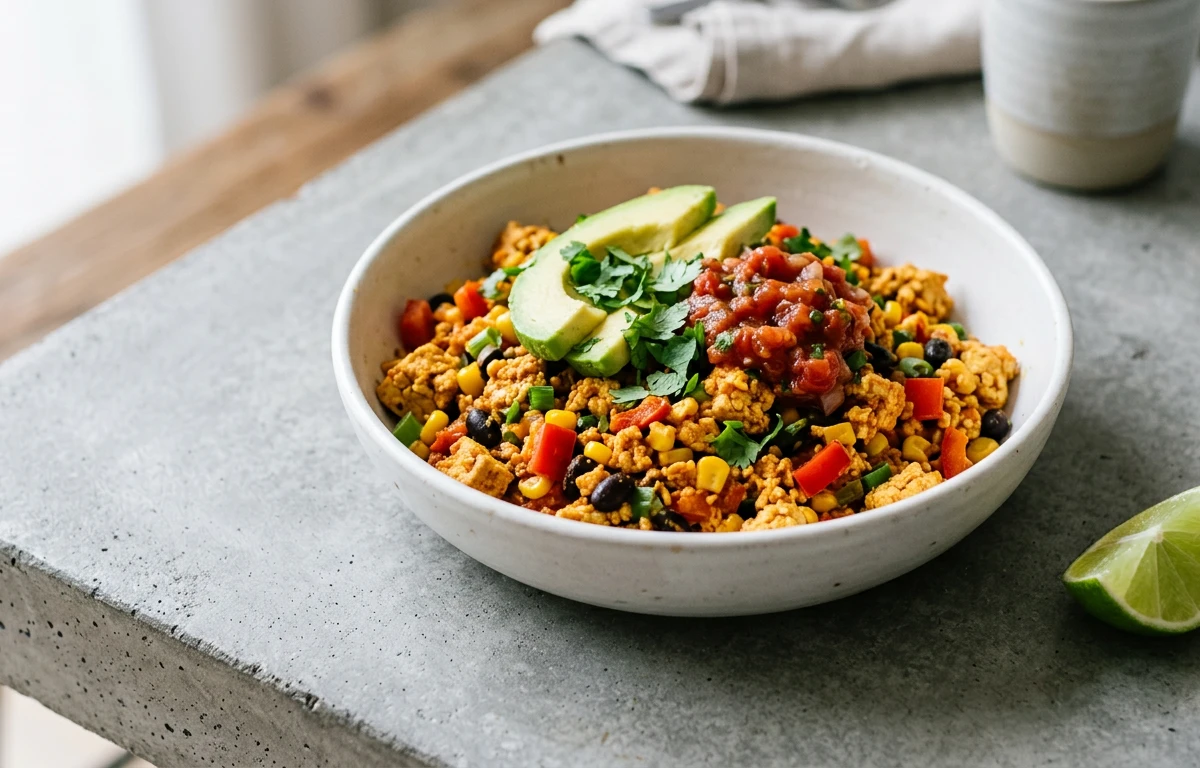
Swap steak for 400g extra-firm tofu or portobello mushrooms, pressed and sliced. Use the same marinade and sear in the hot skillet until charred.
Low Carb / KetoLow-Carb / Keto
Skip the flour tortillas and serve the fajita filling over a bed of lettuce leaves or cauliflower rice for a low-carb meal.
Why this is on our healthy list.
High-Quality Protein
Skirt steak is a rich source of complete protein, essential for muscle repair and satiety.
Vitamin C from Peppers
Bell peppers provide a generous amount of vitamin C, which supports immune function and collagen production.
Antioxidant Spices
Cumin and smoked paprika add antioxidants like curcumin and capsaicin that help reduce inflammation.
Low Added Sugar
This recipe relies on lime juice and spices for flavor without any added sugar, making it a waistline-friendly choice.
Frequently asked questions
Yes, flank steak or sirloin tip are good substitutes. Both will be tender if sliced thin against the grain and not overcooked.