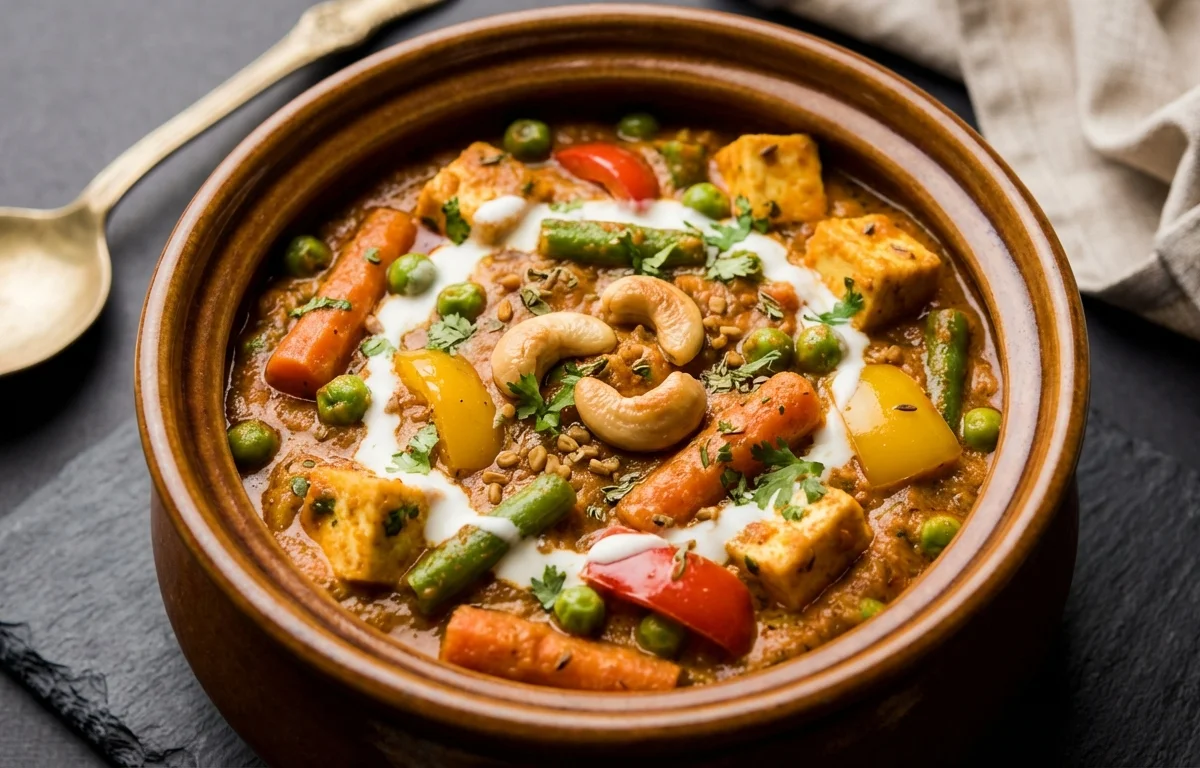
Subz Handi
A vibrant medley of seasonal vegetables simmered in a rich, creamy tomato-onion gravy. This Punjabi-style dish gets its name from the traditional clay pot it's cooked in, which imparts a beautiful earthy aroma and keeps the vegetables tender yet intact.
For 4 servings
- prep
Prepare the vegetables.
1.Peel and cube the potato. Dice the carrot. Chop beans into 1-inch pieces. Cut cauliflower into small florets. Dice the bell pepper.2.Cube the paneer and set aside. - boil · ~5 min
Parboil the root vegetables.
1.Bring a saucepan of water to a rolling boil. Add a pinch of salt.2.Add potato, carrot, cauliflower, beans, and green peas. Boil for 4 to 5 minutes until just fork-tender.3.Drain immediately and rinse under cold water to stop cooking. Set aside.TIPDon't overcook the vegetables — they will simmer further in the gravy. - fry · ~5 min
Lightly fry the paneer and bell pepper.
1.Heat 1 tablespoon oil in the handi or a heavy-bottomed pan over medium heat.2.Add the paneer cubes and saute until golden spots appear, about 2 minutes. Remove and set aside.3.In the same pan, add the diced bell pepper and saute for 1 minute until slightly softened. Remove and set aside.TIPFrying paneer seals the surface so it doesn't crumble in the gravy. - temper · ~2 min
Make the tempering.
1.In the same handi, add the remaining 1 tablespoon oil and 1 tablespoon butter over medium heat.2.Add cumin seeds and let them crackle for 30 seconds.3.Add bay leaf, cinnamon stick, crushed cardamom, and cloves. Saute until fragrant, about 30 seconds. - saute · ~14 min
Build the onion-tomato base.
1.Add chopped onions and slit green chilies to the handi. Saute until golden brown, about 6 to 7 minutes.2.Add ginger-garlic paste and saute until the raw smell disappears, about 1 minute.3.Add the tomato puree, turmeric powder, red chili powder, and coriander powder. Stir well.4.Cook until the tomatoes thicken and oil starts to separate from the mixture, about 5 to 6 minutes.TIPCook the tomatoes well — a properly cooked masala is the secret to a rich, deep-flavored gravy. - simmer · ~11 min
Simmer the gravy.
1.Lower the heat and add the whisked yogurt. Stir continuously for 1 minute to prevent curdling.2.Add ¾ cup water and the remaining pinch of salt. Stir well and bring to a gentle simmer.3.Add all the parboiled vegetables (potato, carrot, cauliflower, beans, peas). Mix gently so the vegetables are well coated.4.Cover and simmer on low heat for 8 to 10 minutes, letting the flavors meld.TIPKeep the heat low when adding yogurt — sudden high heat will cause it to split. - mix · ~2 min
Finish the dish.
1.Gently stir in the sauteed bell pepper and fried paneer cubes.2.Add fresh cream and crushed kasuri methi. Stir and simmer for 2 more minutes.3.Sprinkle garam masala on top. Turn off the heat.TIPCrush the kasuri methi between your palms before adding — it releases the aroma beautifully. - rest · ~5 min
Let the dish rest for 5 minutes.
Cover the handi and let it sit for 5 minutes off the heat. This allows the flavors to settle and deepen.
- garnish
Garnish with fresh coriander and serve hot.
Transfer to a serving bowl if needed. Garnish generously with chopped coriander leaves. Serve hot with naan, roti, or steamed rice.
What to keep in mind.
7 tips from the recipe — small details that make a real difference to the final dish.
- 1Parboil the vegetables just until fork-tender; they finish cooking in the gravy and stay intact this way.
- 2Fry the paneer until golden on a few sides to prevent it from crumbling when stirred into the gravy.
- 3Cook the onion-tomato masala until oil separates — this deepens the flavor and removes any raw taste.
- 4Whisk the yogurt until completely smooth and stir it in over low heat to avoid curdling in the gravy.
- 5Crush the kasuri methi between your palms before adding to release its signature earthy aroma.
- 6Let the dish rest for 5 minutes off the heat so the vegetables absorb the gravy and flavors marry beautifully.
- 7Use a heavy-bottomed handi or pot for even heat distribution and that slow-simmered Punjabi texture.
Adapt it for your goals.
Vegan
Replace paneer with extra-firm tofu (press and pan-fry), use coconut yogurt or cashew cream instead of dairy yogurt and cream, and swap butter for oil. This keeps the rich gravy but makes it entirely plant-based.
low oilLow-oil
Reduce oil to 1 tablespoon for sautéing and skip the butter; steam or blanch the paneer instead of frying, and use non-stick cookware. The dish stays flavorful with less fat.
high proteinHigh-protein
Add a cup of boiled chickpeas or soy chunks along with the paneer, and double the paneer to 300 g. This boosts protein content for a more filling meal.
jainJain
Omit onion and garlic; use asafoetida (hing) in the tempering, replace onion with finely chopped bottle gourd or zucchini for sweetness, and skip the ginger-garlic paste. The gravy remains aromatic and compliant.
Why this is on our healthy list.
Rich in Fiber & Vitamins
The mix of carrots, cauliflower, peas, beans, and bell pepper provides dietary fiber, vitamin C, and beta-carotene for digestive health and immunity.
High in Plant Protein
Paneer (cottage cheese) is a complete protein source, making this dish especially satiating and good for muscle repair.
Anti-Inflammatory Spices
Turmeric, cumin, and ginger-garlic offer curcumin and antioxidants that may help reduce inflammation when consumed regularly.
Calcium-Rich Paneer
Paneer is an excellent source of calcium, supporting bone health — especially important for those on vegetarian diets.
Frequently asked questions
Yes, you can use frozen mixed vegetables. Thaw and pat dry, then reduce parboiling time to 2 minutes since frozen veg are already blanched.



.webp)