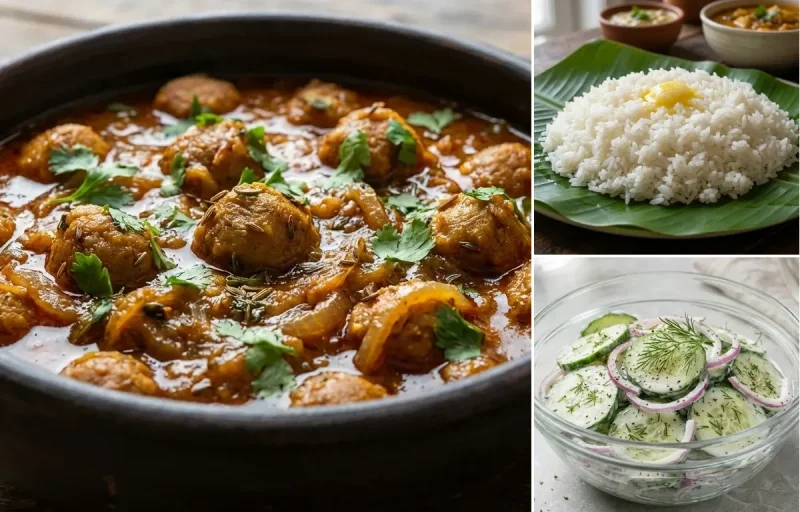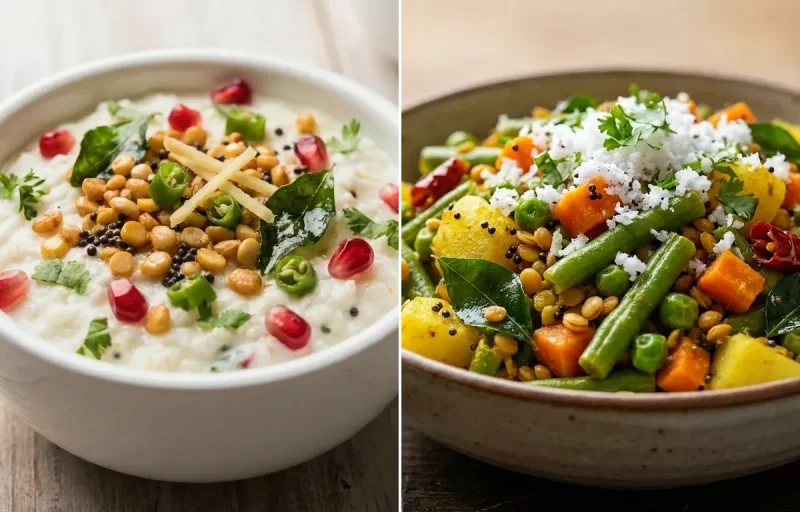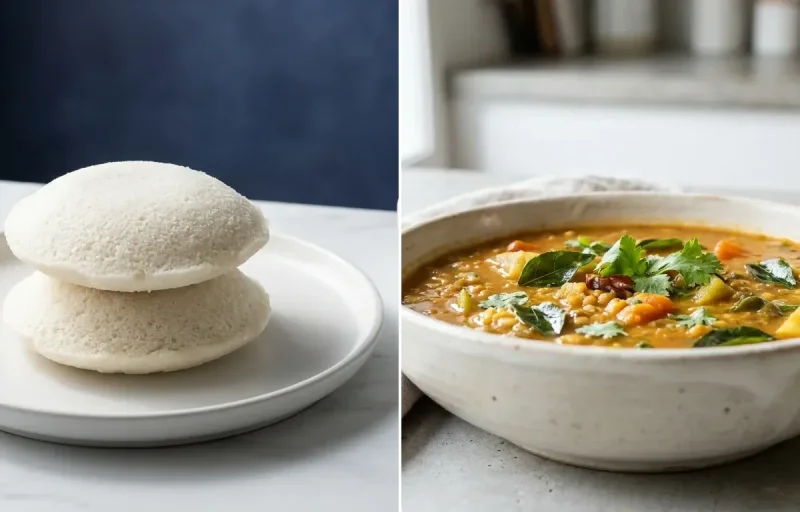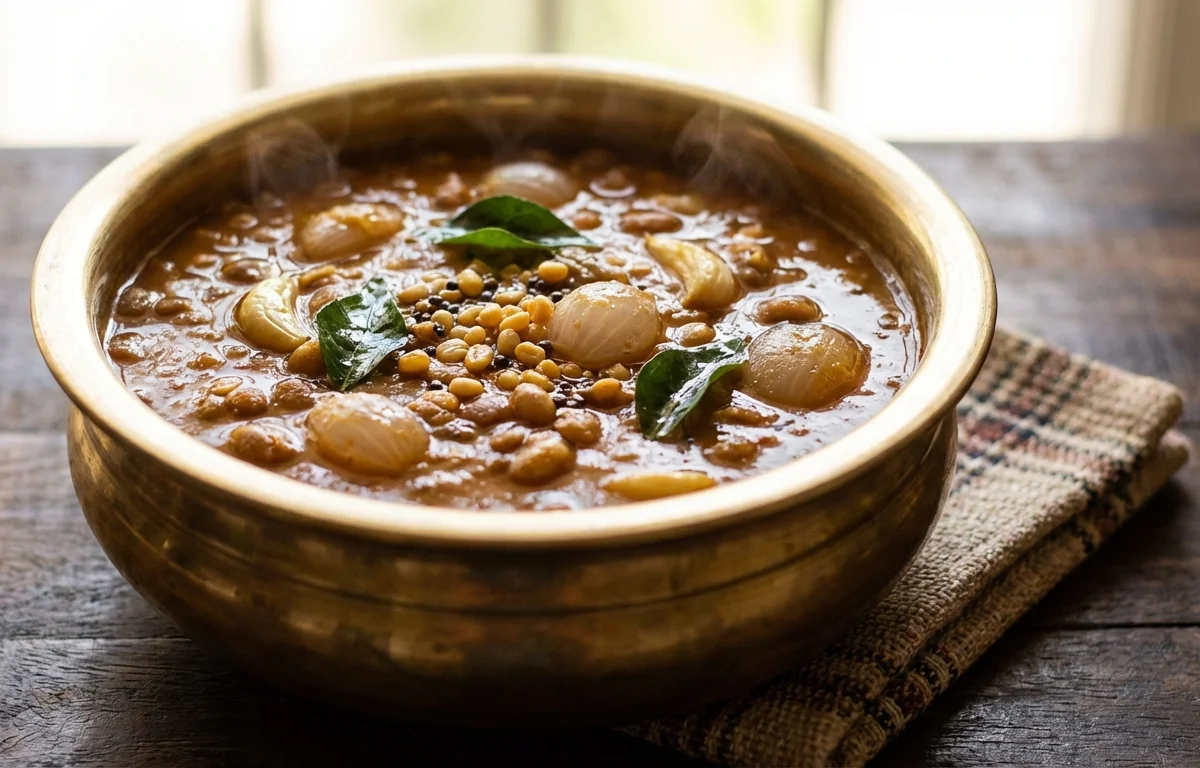
Tattapayer Kuzhambu
A rustic, tangy South Indian curry made with nutty cowpeas simmered in a spiced tamarind-coconut gravy. This comforting Chettinad-style kuzhambu is packed with earthy flavors from roasted spices and is perfect spooned over steamed rice with a drizzle of sesame oil.
For 4 servings
- pressure cook · ~20 min
Pressure cook the soaked cowpeas until soft.
Add the drained cowpeas to the pressure cooker with enough water to cover. Cook on medium heat for 3-4 whistles, then let the pressure release naturally. The peas should be tender but hold their shape. Set aside with the cooking water.
- prep · ~10 min
Soak and extract tamarind juice.
Soak the tamarind in 1 cup of warm water for 10 minutes. Squeeze well to extract the pulp, then strain and discard the fibers. Keep the thick tamarind extract aside.
- roast · ~7 min
Roast the coconut and spices for the masala paste.
1.Heat a dry pan over medium-low heat. Add the grated coconut and roast until golden, stirring constantly (2-3 min). Transfer to a plate.2.In the same pan, add coriander seeds, chana dal, black peppercorns, and cumin seeds. Roast until the dal turns golden and the spices are fragrant (2-3 min).3.Cool everything slightly. Grind the roasted coconut and spices with a splash of water into a smooth paste.TIPKeep the heat low so the coconut doesn't burn — it turns bitter fast. - temper · ~2 min
Make the tempering in a heavy pan.
1.Heat the sesame oil in the pan over medium heat until warm.2.Add mustard seeds and let them splutter completely (30 sec).3.Add cumin seeds, fenugreek seeds, dried red chili pieces, and curry leaves. Fry until the fenugreek seeds turn a shade darker and the aromas bloom (20-30 sec). - saute · ~12 min
Build the onion-tomato base.
1.Add the chopped onion and crushed garlic to the tempering. Sauté until the onion turns deep golden brown (7-8 min).2.Add the chopped tomato and turmeric powder. Cook, stirring often, until the tomato breaks down completely and the oil begins to glisten on the edges (4-5 min). - simmer · ~15 min
Simmer the kuzhambu with cowpeas and masala.
1.Add the cooked cowpeas along with their cooking liquid to the pan. Mix gently.2.Stir in the tamarind extract and the ground coconut-spice masala paste.3.Pour in the water, add the salt, and bring the mixture to a gentle boil.4.Lower the heat and let it simmer uncovered for 12-15 minutes, stirring occasionally, until the gravy thickens and the raw aroma of the spices cooks off. The kuzhambu should be slightly thick with a glossy surface. - garnish · ~5 min
Finish and serve.
Turn off the heat and garnish with fresh chopped coriander leaves. Let the kuzhambu rest for 5 minutes before serving to allow the flavors to settle.
TIPA final drizzle of raw sesame oil on top just before serving lifts the aroma.
What to keep in mind.
7 tips from the recipe — small details that make a real difference to the final dish.
- 1Soak the cowpeas overnight for even cooking and a creamy texture.
- 2Roast the coconut on low heat until just golden to avoid bitterness.
- 3Grind the masala paste smooth for a silky gravy texture.
- 4Cook the onion until deep golden brown for maximum sweetness and color.
- 5Simmer uncovered until the gravy thickens and the raw spice aroma fades.
- 6Let the kuzhambu rest 5 minutes before serving for deeper flavor melding.
- 7A final drizzle of raw sesame oil just before serving lifts the aroma.
Adapt it for your goals.
Vegan
This recipe is already vegan as written — no dairy or animal products are used, making it suitable for plant-based diets.
low oilLow-oil
Reduce the sesame oil to 1 teaspoon for tempering and skip the final drizzle; the coconut in the masala still provides richness.
high proteinHigh-protein
Add 1/4 cup of cooked soy chunks or paneer (if not vegan) along with the cowpeas to boost protein content.
jainJain
Omit the garlic and onion; use asafoetida (hing) in the tempering for a similar savory depth. Replace with extra tomatoes or ash gourd.
Why this is on our healthy list.
High in Plant Protein
Cowpeas (black-eyed peas) are a rich source of plant-based protein, supporting muscle health and sustained energy.
Good Source of Dietary Fiber
Both cowpeas and coconut provide dietary fiber, aiding digestion and promoting satiety.
Naturally Low in Fat
With only a small amount of sesame oil used, this curry is naturally low in fat while still being flavorful.
Rich in Antioxidants
Tamarind, turmeric, and curry leaves are known for their antioxidant properties that help combat oxidative stress.
Contains Essential Minerals
Fenugreek seeds and cowpeas contribute minerals like iron and magnesium, important for overall health.
Frequently asked questions
Yes, use 1.5 cups of canned, drained peas. Skip pressure cooking and add them directly to the pan in step 6. Simmer only 5-7 minutes to avoid mushiness.