Thakkali Kuzhambu
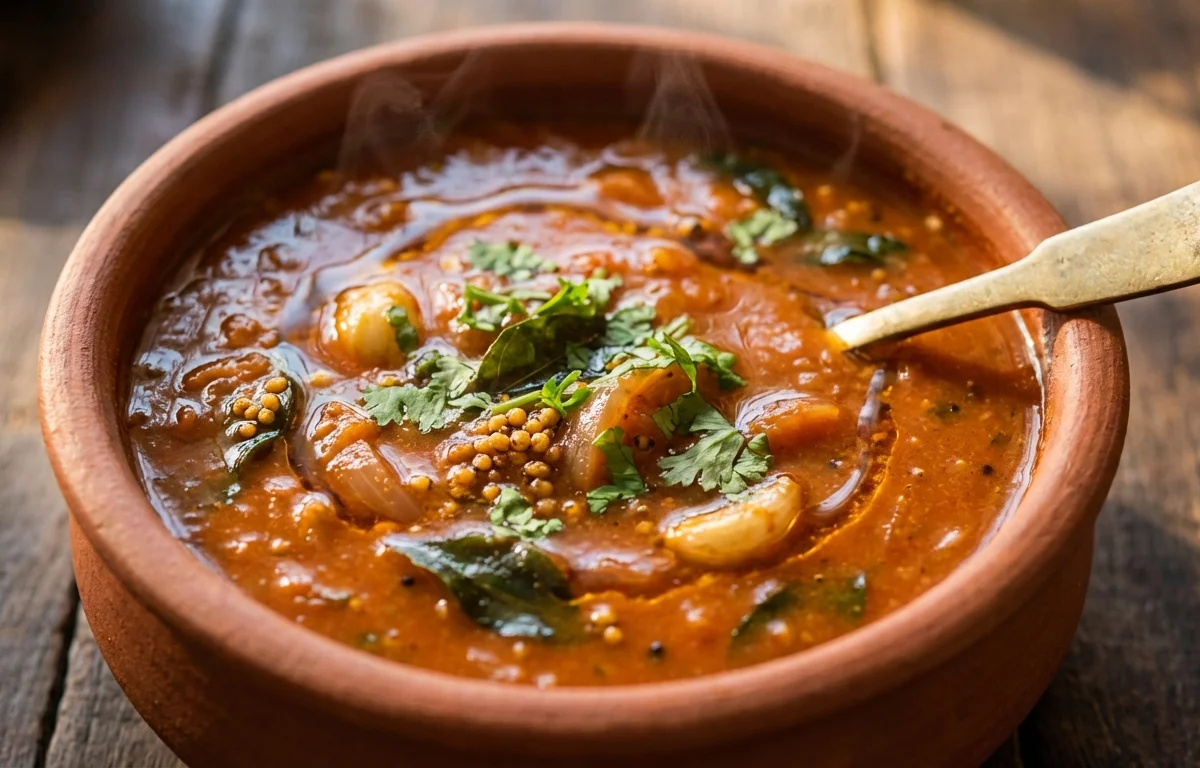
A homestyle Tamil tomato kuzhambu with a tangy, lightly spiced gravy that comes together from pantry staples. It tastes wonderful with steamed rice, idli, or dosa and gets even better after the flavors sit for a while.
For 4 servings
- prep
Prepare the tamarind water.
Mix the tamarind paste with 2 cups water and set it aside while you get the tempering ready.
- temper · ~1 min
Make the tempering.
1.Heat sesame oil in a kadai over medium heat.2.Add mustard seeds and let them splutter.3.Add fenugreek seeds and curry leaves and cook for a few seconds without letting the fenugreek turn dark.TIPKeep the heat medium here. Burnt fenugreek makes the kuzhambu bitter. - saute · ~5 min
Cook the onion, garlic, and chili.
1.Add the sliced onion and cook until soft and lightly golden.2.Add the crushed garlic and green chili.3.Cook for 2 minutes until the raw smell fades. - saute · ~8 min
Cook the tomatoes and spices.
1.Add the chopped tomato and salt and mix well.2.Cook until the tomatoes turn soft and pulpy.3.Add turmeric powder, red chili powder, and coriander powder.4.Cook for 2 minutes so the spices lose their raw taste.TIPMash the tomatoes with the spoon as they cook for a smoother gravy. - simmer · ~15 min
Simmer the kuzhambu.
1.Pour in the tamarind water and stir well.2.Add jaggery and bring the mixture to a gentle boil.3.Lower the heat and simmer until the gravy thickens slightly and the oil shows at the edges. - serve
Serve the thakkali kuzhambu hot.
Serve hot with steamed rice, idli, or dosa.
What to keep in mind.
7 tips from the recipe — small details that make a real difference to the final dish.
- 1Use ripe, slightly soft tomatoes; firmer ones give a sharper, less rounded kuzhambu.
- 2Do not let fenugreek seeds darken in the tempering, or the entire gravy can taste bitter.
- 3Cook the tomatoes down until pulpy before adding tamarind water so the gravy thickens naturally.
- 4If the kuzhambu tastes too tangy, simmer 2-3 minutes longer before adding extra jaggery.
- 5Look for a light oil ring at the edges while simmering; that is the best cue the kuzhambu is ready.
- 6This tastes even better after resting for 30 minutes, as the tamarind and spice flavours settle.
- 7Store refrigerated for up to 2 days and reheat gently; it often tastes deeper the next day.
Adapt it for your goals.
Jain
Skip onion and garlic, increase tomatoes slightly, and add a pinch more coriander powder for a simpler but still tangy kuzhambu.
low oilLow-oil
Reduce sesame oil slightly and simmer a little longer to thicken the gravy; useful if you want a lighter everyday version.
spicierSpicier
Add one extra green chili or a little more red chili powder for a sharper heat that pairs especially well with rice.
shallot styleShallot-style
Use small Indian shallots instead of onion for a sweeter, more traditional homestyle South Indian flavour.
Why this is on our healthy list.
Tomato-Rich Dish
This kuzhambu is built around tomatoes, which contribute natural acidity and beneficial plant compounds along with a light, fresh base.
Digestive Spice Support
Garlic, fenugreek, curry leaves, and tamarind are classic ingredients that add flavour while supporting easier everyday digestion.
Moderate, Plant-Based Gravy
With no cream or heavy ingredients, this is a relatively light, plant-based side that pairs well with simple staples like rice or idli.
Frequently asked questions
The usual cause is burnt fenugreek seeds or over-browned spices. Keep the tempering on medium heat and cook fenugreek only for a few seconds.