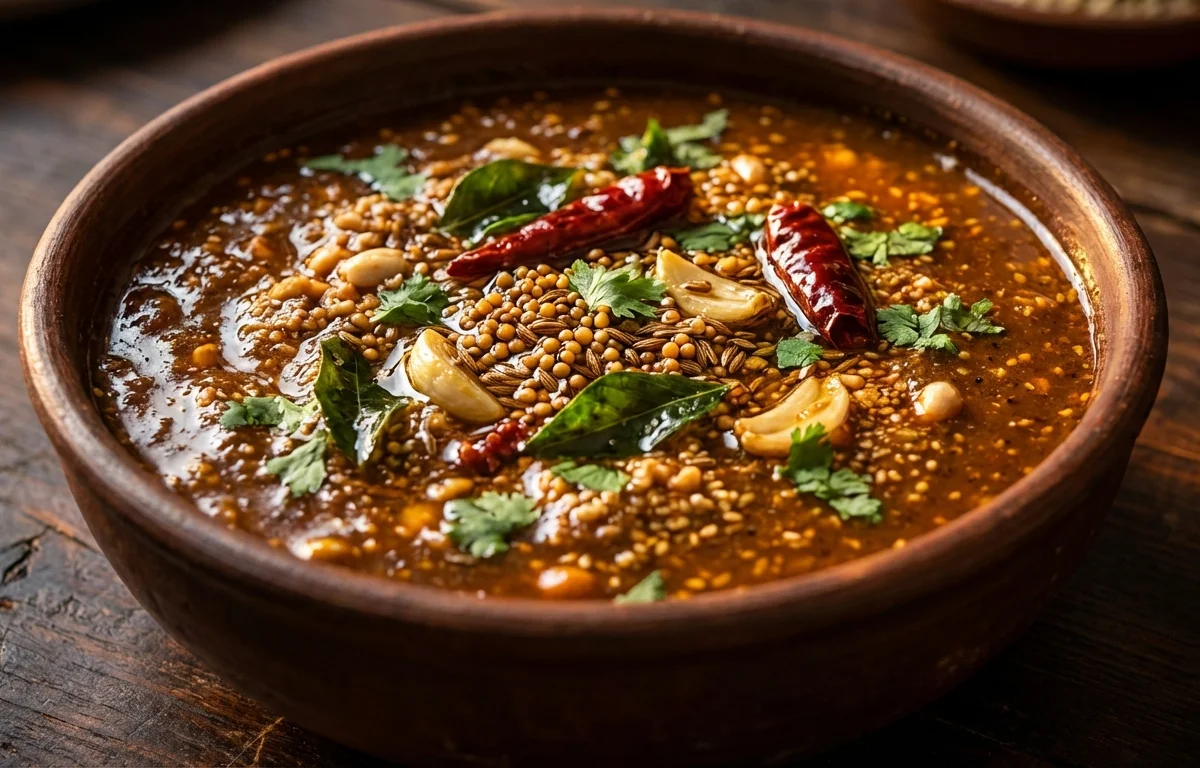
Til ka Khatta
A tangy Hyderabadi sesame curry with a nutty, lightly spiced gravy that tastes rich without being heavy. Tamarind gives it its signature sour edge, making it a lovely side for biryani, pulao, or plain rice.
For 4 servings
- prep · ~15 min
Soak the tamarind.
Soak the tamarind in a little warm water for 15 minutes. Squeeze well and strain to extract a smooth pulp.
- roast · ~5 min
Roast the sesame mixture.
1.Heat a dry pan on low heat.2.Roast the sesame seeds until fragrant and lightly golden, stirring constantly.3.Add the peanuts and grated coconut and roast for 1 to 2 minutes more.4.Take off the heat and let the mixture cool.TIPKeep the heat low so the sesame does not turn bitter. - mix · ~2 min
Grind the masala.
Blend the roasted sesame mixture with the tamarind pulp and a little water to make a smooth, pourable paste.
- temper · ~4 min
Make the tempering.
1.Heat oil in a pan over medium heat.2.Add mustard seeds and let them splutter.3.Add cumin seeds and curry leaves.4.Add the sliced onion and green chili. - saute · ~5 min
Cook the onion base.
1.Sauté the onion until soft and lightly golden.2.Add ginger-garlic paste and cook until the raw smell goes away.3.Add turmeric powder, red chili powder, coriander powder, and salt.4.Mix well for a few seconds. - simmer · ~10 min
Cook the gravy.
Add the ground sesame paste and the remaining water. Stir well and simmer on low heat until the gravy thickens slightly and the oil begins to show at the edges.
TIPStir often while simmering because sesame paste can catch at the bottom. - garnish
Garnish with coriander leaves.
- serve
Serve hot with biryani, pulao, or plain rice.
What to keep in mind.
7 tips from the recipe — small details that make a real difference to the final dish.
- 1Roast the sesame only to a light golden stage; darker seeds can make the gravy bitter.
- 2Cool the roasted sesame, peanut, and coconut mixture before grinding so the paste stays smooth, not oily.
- 3Strain the tamarind pulp well to avoid fibrous bits in the finished gravy.
- 4Add water gradually while blending; the paste should be pourable but still thick enough to coat a spoon.
- 5Stir frequently once the sesame paste goes into the pan, because this gravy catches quickly at the bottom.
- 6Simmer on low until you see a slight oil ring at the edges; that is the cue the masala is cooked through.
- 7This curry tastes even better after 30 minutes of resting, when the sesame and tamarind flavors meld.
Adapt it for your goals.
Low-oil
Use less oil for the tempering and cook the onion a little longer on lower heat; the sesame paste still gives the curry body.
spicierSpicier
Increase green chilies or red chili powder for a sharper heat that pairs especially well with biryani.
no peanutNo-peanut
Skip the peanuts and add a little extra sesame or coconut if needed; useful for peanut-free households.
with vegetablesWith-vegetables
Simmer small fried or steamed eggplant pieces in the gravy to turn it into a more substantial side dish.
Why this is on our healthy list.
Rich in Good Fats
Sesame, peanuts, and coconut provide satisfying fats that make this curry filling and give it a naturally rich texture.
Plant-Based Protein Support
Sesame seeds and peanuts contribute plant protein, adding more substance than a gravy made only with onions and spices.
Spice and Herb Benefits
Curry leaves, cumin, coriander, ginger, and garlic add aroma along with traditional ingredients often valued in everyday cooking.
Frequently asked questions
The sesame was likely roasted too dark or the masala caught at the bottom while simmering. Keep the roast light and stir often on low heat.