Tomato Gojju
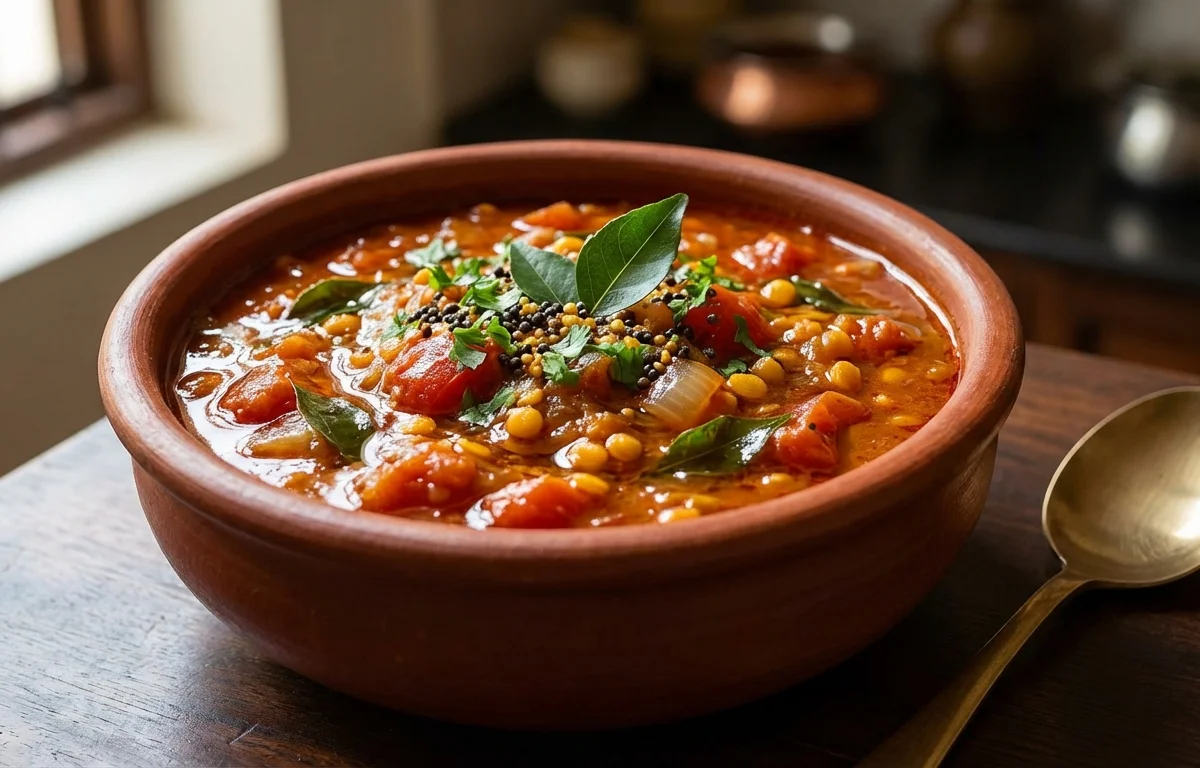
Tangy, lightly sweet tomato gojju is a comforting South Indian side with soft cooked tomatoes, a gentle spice kick, and a glossy tempering. It pairs beautifully with rice, dosa, chapati, or curd rice for an easy everyday meal.
For 4 servings
- prep
Chop the vegetables.
Chop the tomato, onion, green chili, and ginger. Keep the jaggery, tamarind paste, and tempering ingredients ready near the stove.
- temper · ~2 min
Make the tempering.
1.Heat oil in a pan over medium heat.2.Add mustard seeds and let them splutter.3.Add urad dal and chana dal; cook until lightly golden.4.Add dried red chili, curry leaves, and asafoetida; stir for a few seconds.TIPKeep the heat medium so the dals turn golden without burning. - saute · ~4 min
Cook the onion, chili, and ginger.
1.Add onion and green chili to the pan.2.Cook until the onion turns soft and lightly translucent.3.Add ginger and sauté until fragrant. - saute · ~7 min
Cook the tomatoes with the spices.
1.Add chopped tomato and mix well.2.Add turmeric powder, red chili powder, and salt.3.Cook until the tomatoes soften and start to break down.TIPMash a few tomato pieces with the spoon as they soften for a more jammy gojju. - simmer · ~7 min
Simmer the gojju.
Add jaggery, tamarind paste, and water. Mix well and simmer until the gojju thickens slightly and the oil begins to show at the edges.
- garnish
Finish with coriander leaves.
Turn off the heat and stir in the coriander leaves.
- serve
Serve the tomato gojju warm.
Serve with steamed rice, dosa, chapati, or curd rice.
What to keep in mind.
8 tips from the recipe — small details that make a real difference to the final dish.
- 1Let the mustard fully splutter before adding the dals, or the tempering will taste raw.
- 2Cook the urad dal and chana dal only to light golden; dark brown will make the gojju bitter.
- 3Use ripe, slightly soft tomatoes for the best natural sweetness and a quicker jammy texture.
- 4Mash some of the tomatoes in the pan while cooking to get the classic thick, spoon-coating consistency.
- 5Add jaggery and tamarind only after the tomatoes have softened so the acidity does not slow them from breaking down.
- 6Simmer until oil shows at the edges; that is the clearest cue that the gojju is cooked and balanced.
- 7This tastes even better after 30 minutes of rest, when the sweet, tangy, and spicy notes settle together.
- 8Store refrigerated for up to 3 days and reheat gently with a splash of water if it thickens too much.
Adapt it for your goals.
No-onion
Skip the onion for a simpler, more tomato-forward gojju that pairs especially well with curd rice and dosa.
spicierSpicier
Increase green chilies and red chili powder for a hotter version that stands up well to plain rice or soft chapati.
garlicGarlic
Add a few sliced garlic cloves with the ginger for a deeper, more robust savory note.
low oilLow-oil
Reduce the oil slightly, but keep enough for the tempering so the mustard, dals, and curry leaves still bloom properly.
Why this is on our healthy list.
Tomato-Rich Antioxidants
Tomatoes bring beneficial plant compounds and vitamin C, making this side dish a flavorful way to include more vegetables.
Digestive Spice Support
Ginger, asafoetida, curry leaves, and the lentil tempering are traditional ingredients often used to make cooked dishes feel lighter and more aromatic.
Balanced Small-Portion Condiment
Because the gojju is intensely flavored with tamarind, jaggery, and spices, a little goes a long way alongside rice, dosa, or chapati.
Frequently asked questions
Yes. The tomatoes already provide acidity, so you can skip the tamarind or use a very small squeeze of lemon at the end, though the flavor will be less traditional.