Urad Dal Tadka
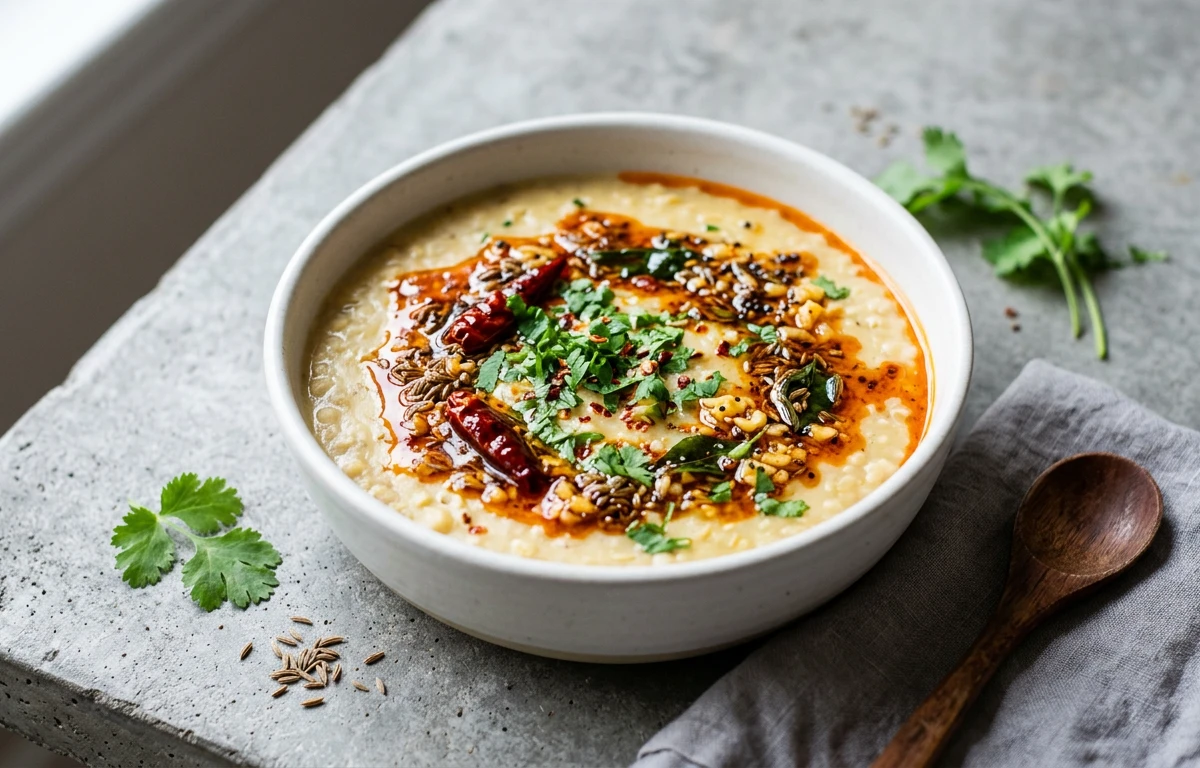
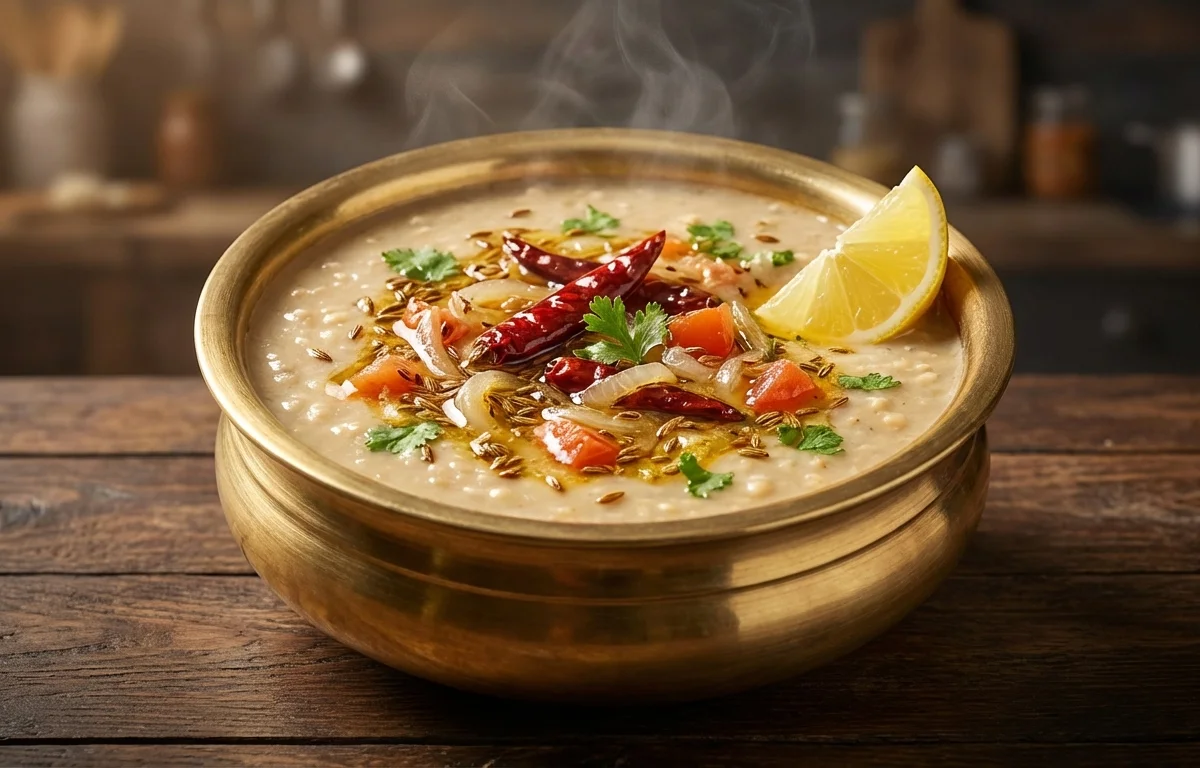
A comforting bowl of split urad dal cooked until soft and finished with a fragrant tempering of cumin, garlic, onion, and tomato. It is simple, homely, and pairs beautifully with rice or roti.
For 4 servings
- prep
Rinse and soak the urad dal.
Wash the urad dal well, then soak it in enough water for 30 minutes. Drain before cooking.
- pressure cook · ~20 min
Pressure cook the dal until soft.
1.Add soaked urad dal to a pressure cooker with water, turmeric powder, and salt.2.Close the lid and cook on medium heat for 15 to 18 minutes until the dal is soft and mashable.3.Let the pressure drop naturally, then open the cooker and lightly mash the dal for a creamy texture.TIPIf the dal looks too thick after cooking, stir in a little hot water to loosen it. - temper · ~6 min
Make the tadka.
1.Heat ghee in a small pan over medium heat.2.Add cumin seeds and let them crackle for 20 to 30 seconds.3.Add asafoetida, garlic, and green chili, then cook until the garlic smells fragrant.4.Add onion and cook until light golden, about 4 to 5 minutes.TIPKeep the heat medium so the garlic browns gently and does not turn bitter. - saute · ~5 min
Cook the tomato and spices.
1.Add tomato to the pan and cook until soft and pulpy.2.Add red chili powder and garam masala.3.Mix well and cook for 1 minute until the masala smells roasted. - simmer · ~5 min
Combine the dal with the tadka.
Pour the cooked dal into the pan with the tadka and mix well. Simmer for 4 to 5 minutes so the flavors come together.
- garnish
Garnish with cilantro.
- serve
Serve hot with rice or roti.
What to keep in mind.
7 tips from the recipe — small details that make a real difference to the final dish.
- 1Soaking the split urad for 30 minutes helps it cook evenly and turn creamy without long simmering.
- 2Cook the dal until the grains are fully mashable; urad tastes best here when it is soft, not grainy.
- 3Lightly mash only part of the cooked dal so the final texture stays creamy with some body.
- 4Let the cumin crackle fully in ghee before adding garlic; this blooms the spice and perfumes the tadka.
- 5Cook the onion to light golden, not deep brown, so the tadka stays sweet and balanced.
- 6Simmer the dal with the tadka for a few minutes after combining; pouring tadka on top and serving immediately tastes less integrated.
- 7If reheating leftovers, add a splash of hot water first because urad dal thickens noticeably as it rests.
Adapt it for your goals.
Vegan
Replace ghee with a neutral oil or mustard oil for a dairy-free version that still carries the cumin-garlic tadka well.
no onion no garlicNo-onion-no-garlic
Skip onion and garlic, increase hing slightly, and let cumin and green chili lead for a lighter, satvik-style dal.
spicierSpicier
Add an extra green chili or a little more red chili powder if you want the creamy dal to have more heat.
jainJain
Omit onion and garlic, use more hing and green chili, and keep the tomato for tang and body.
Why this is on our healthy list.
Rich in Plant Protein
Urad dal provides plant-based protein, making this simple meal more satisfying and especially good paired with rice or roti.
Good Source of Fiber
The lentils, onion, and tomato contribute fiber that supports fullness and helps make the dish hearty despite its simple ingredients.
Digestive Spice Support
Cumin, asafoetida, garlic, and ginger-free tempering ingredients are traditionally used to make lentil dishes feel more digestible.
Includes Antioxidant-Rich Ingredients
Tomato, turmeric, garlic, green chili, and cilantro add protective plant compounds along with color and flavor.
Frequently asked questions
Yes, but it may take longer to pressure cook and may not turn as evenly soft. Soaking helps the dal cook faster and become creamier.



.webp)