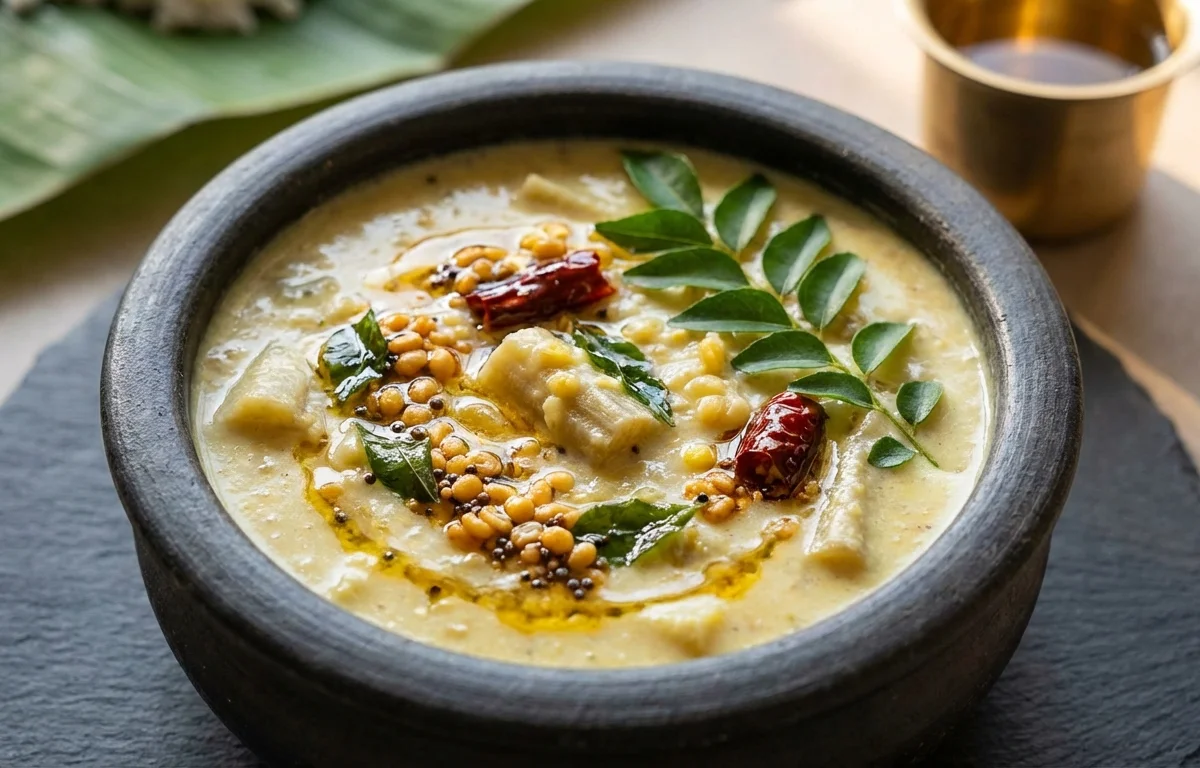
Vazhaithandu Kootu
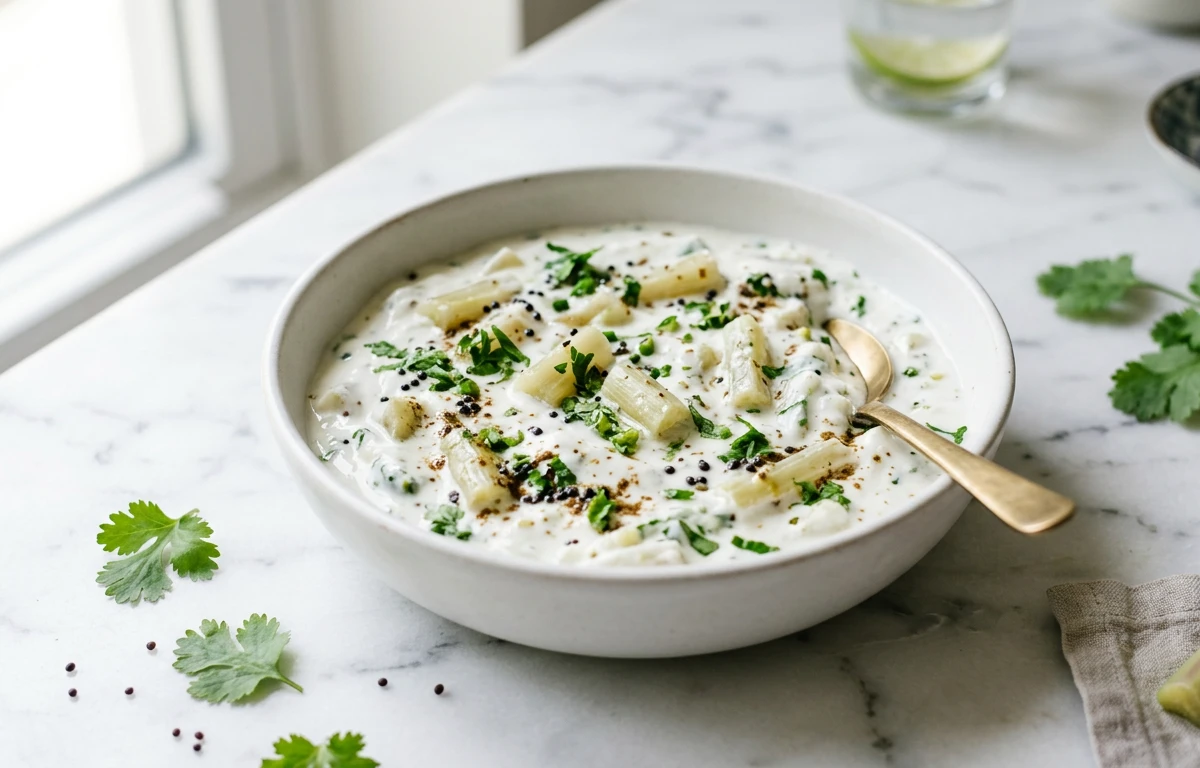
A gentle Tamil-style kootu made with tender banana stem, moong dal, coconut, and mild spices. It cooks into a comforting, lightly creamy side dish with a fresh, earthy flavor that goes beautifully with rice and a simple curry.
For 4 servings
- prep · ~10 min
Prep the banana stem.
1.Peel away the tough outer layers of the banana stem.2.Slice the inner stem into rounds and pull away any visible fibers.3.Finely chop the stem and keep it ready for cooking.TIPRemoving the fibers as you slice keeps the kootu tender and pleasant to eat. - mix · ~3 min
Grind the coconut mixture.
1.Add coconut, 0.5 tsp cumin seeds, and 1 green chili to a small blender jar.2.Add a little water from the measured water.3.Grind to a smooth, thick paste and set aside. - pressure cook · ~15 min
Cook the dal and banana stem.
1.Add moong dal, chopped banana stem, remaining green chili, turmeric powder, salt, and 2 cups water to a pressure cooker.2.Cook for 2 whistles on medium heat until the dal is soft and the banana stem is tender.3.Let the pressure release naturally, then open and mash very lightly.TIPDo not overcook after opening the cooker or the banana stem can lose its fresh texture. - simmer · ~4 min
Finish the kootu.
1.Add the ground coconut paste to the cooked mixture and stir well.2.Mix the rice flour with 1 tbsp water and add it in if you want a slightly thicker kootu.3.Simmer on low heat for 3 to 4 minutes until the raw smell fades and the kootu looks lightly creamy. - temper · ~2 min
Make the tempering.
1.Heat coconut oil in a small pan over medium heat.2.Add mustard seeds and let them splutter.3.Add urad dal, remaining 0.5 tsp cumin seeds, dried red chili, and curry leaves.4.Cook for 20 to 30 seconds until fragrant and the urad dal turns light golden.TIPKeep the heat medium so the spices bloom without burning. - assemble · ~2 min
Pour the tempering over the kootu.
Add the hot tempering to the kootu and stir gently to combine. Let it sit for 2 minutes so the flavors settle together.
- serve
Serve warm.
What to keep in mind.
7 tips from the recipe — small details that make a real difference to the final dish.
- 1Keep the chopped banana stem in water while prepping so it stays pale and doesn’t dry out.
- 2Pull off the stringy fibers from each sliced round before chopping, or the finished kootu will feel coarse.
- 3Cook the moong dal only until soft; if it turns mushy, the kootu loses its gentle texture.
- 4After adding the coconut paste, simmer only on low heat so the coconut stays sweet and doesn’t split.
- 5Use the rice flour slurry only if needed; banana stem can release water and make the kootu thinner as it sits.
- 6Pour the tempering over the hot kootu at the end and rest it briefly so the curry leaves and cumin perfume the dish.
- 7Leftovers thicken in the fridge, so loosen with a splash of hot water before reheating gently.
Adapt it for your goals.
No-onion-no-garlic
This recipe already fits a satvik-style approach, making it a good choice for simple festival or everyday meals.
low coconutLow-coconut
Reduce the coconut slightly for a lighter kootu; the moong dal will still keep it soft and comforting.
spicierSpicier
Add one extra green chili or a second dried red chili in the tempering if you want more heat without changing the basic flavor.
thicker kootuThicker-kootu
Use the rice flour slurry for a more scoopable texture that sits well beside rice and kuzhambu.
Why this is on our healthy list.
Fiber-Rich Vegetables
Banana stem is traditionally valued for its fibrous texture, making this kootu a wholesome vegetable side.
Plant Protein From Moong Dal
Moong dal adds gentle plant protein and makes the dish more filling while keeping it easygoing and light.
Moderate, Balanced Fat
A small amount of coconut and coconut oil adds richness and flavor without turning the dish overly heavy.
Frequently asked questions
After slicing into rounds, pull away the visible fibers and then finely chop the tender inner part. If many strings remain, the kootu can taste chewy.