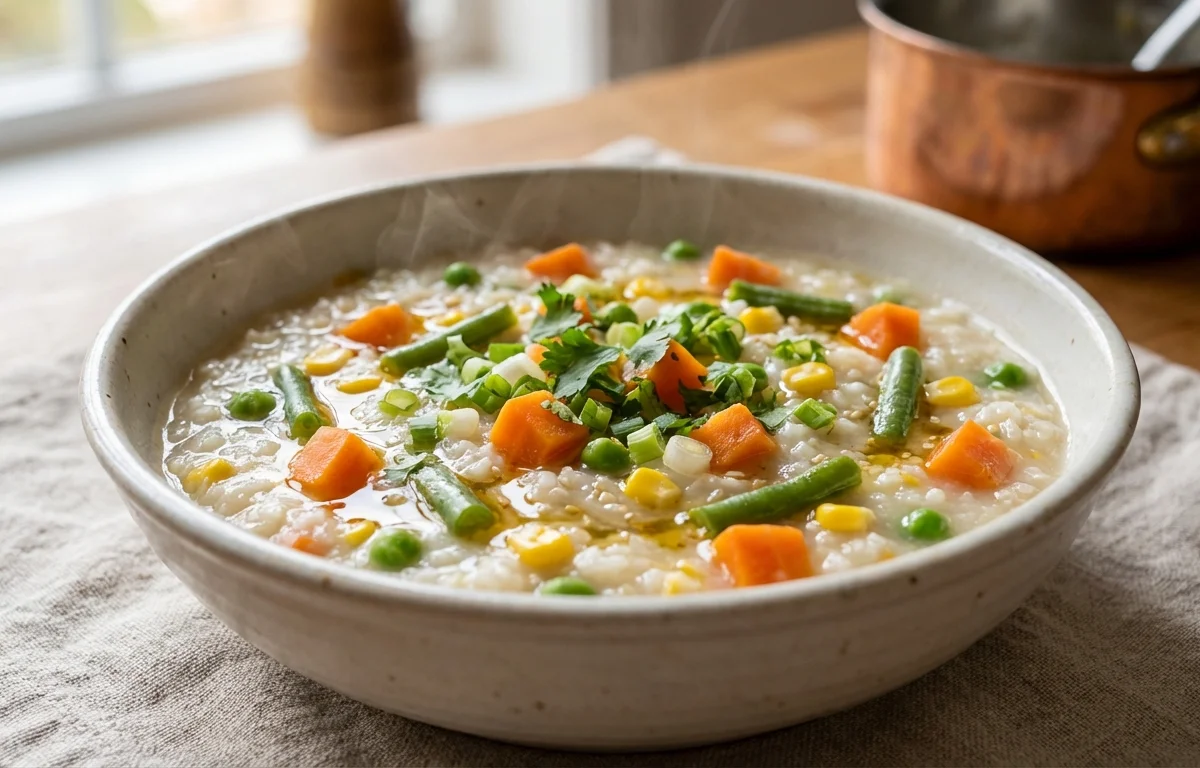
Vegetable Congee
A gentle, comforting rice porridge simmered until silky and topped with soft vegetables, ginger, and a little garlic. It is light on the stomach but still satisfying, making it great for a simple lunch or easy dinner.
For 4 servings
- prep · ~20 min
Prep the rice and vegetables.
1.Wash the rice well until the water runs mostly clear, then soak it for 20 minutes.2.Dice the carrot finely and chop the beans into small pieces.3.Chop the mushroom, ginger, garlic, and spring onion. Keep the spring onion whites and greens separate.TIPSmall, even vegetable pieces cook quickly and blend nicely into the soft porridge. - saute · ~5 min
Cook the aromatics.
1.Heat oil in a heavy pot over medium heat.2.Add the spring onion whites, ginger, and garlic.3.Cook for 1 to 2 minutes until fragrant without letting the garlic brown.4.Add the mushroom and cook until it softens and gives off its moisture.TIPKeep the heat moderate so the aromatics turn sweet and fragrant, not bitter. - boil · ~7 min
Add the rice, vegetables, and water.
1.Drain the soaked rice and add it to the pot.2.Add the carrot and beans, then stir for 30 seconds.3.Pour in the water and add the salt.4.Bring everything to a gentle boil. - simmer · ~40 min
Simmer until the congee turns creamy.
Lower the heat, cover loosely, and simmer for 35 to 40 minutes. Stir every few minutes and lightly mash some of the rice against the side of the pot so the congee becomes thick, silky, and porridge-like.
TIPAdd a little extra hot water if it thickens too much; congee should stay loose and spoonable. - mix · ~1 min
Season the congee.
Stir in the soy sauce and black pepper. Taste and adjust the texture with a splash of hot water if needed.
- garnish
Top with spring onion greens.
- serve
Serve the vegetable congee hot.
What to keep in mind.
7 tips from the recipe — small details that make a real difference to the final dish.
- 1Use a heavy-bottomed pot so the rice can simmer slowly without catching on the base.
- 2Stir more often in the last 10 minutes, when the rice starch thickens and the congee can stick.
- 3Lightly crush some rice grains against the pot wall for a silkier texture without adding extra rice.
- 4Keep the garlic pale when sautéing; browned garlic can make this mild congee taste bitter.
- 5If reheating leftovers, loosen with hot water or stock since congee thickens a lot as it cools.
- 6For the softest finish, cut the carrot, beans, and mushrooms very small so they meld into the porridge.
- 7Add the soy sauce at the end so its savory flavor stays clear and doesn't dull during the long simmer.
Adapt it for your goals.
Vegan
This recipe is already vegan as written; use a naturally brewed soy sauce for a cleaner, deeper savory note.
low oilLow-oil
Reduce the oil and sweat the ginger, garlic, and spring onion whites with a splash of water for a lighter bowl.
high proteinHigh-protein
Top with cubed tofu or stir in shelled edamame near the end for a more filling congee with extra plant protein.
gluten freeGluten-free
Swap the soy sauce for tamari or a gluten-free soy sauce to keep the same savory finish without gluten.
jainJain
Skip the ginger, garlic, and spring onion, then rely on mushrooms, black pepper, and a little extra soy sauce for depth.
Why this is on our healthy list.
Gentle and Easy to Digest
The long-simmered rice porridge texture is soft and soothing, making this dish comforting when you want something light.
Vegetable-Rich Comfort Meal
Carrot, green beans, mushrooms, and spring onion add fiber, variety, and plant nutrients to an otherwise simple rice base.
Aromatic Ingredients with Balance
Ginger and garlic bring bold flavor so the congee stays satisfying without needing much oil or heavy seasoning.
Frequently asked questions
Yes, but it will usually take longer to turn creamy. Soaking helps the grains soften faster and break down more easily.