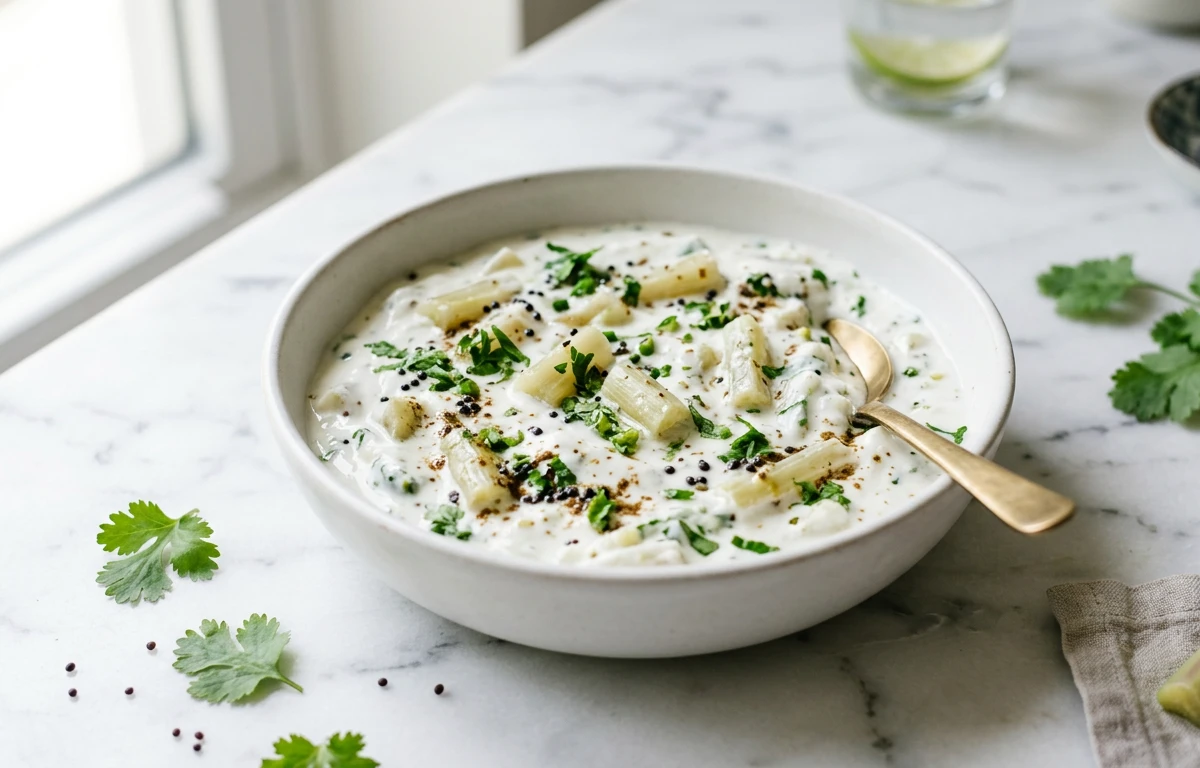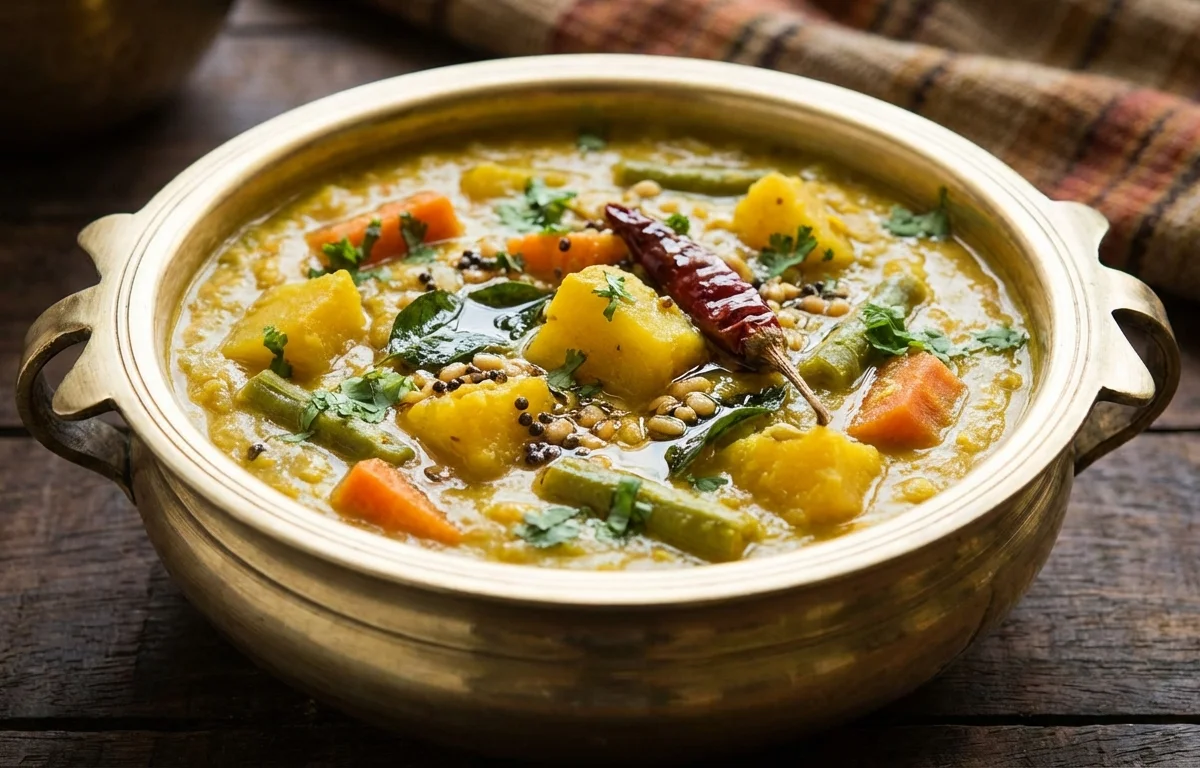
Vegetable Kootu
A comforting South Indian vegetable and lentil stew with mild spices, creamy coconut, and a gentle tempering. It is hearty enough to feel satisfying, yet light enough to sit well beside rice, rasam, or chapati.
For 4 servings
- prep · ~20 min
Prep the dal and vegetables.
1.Wash the moong dal well and soak it for 15 minutes.2.Peel and cube the ash gourd, carrot, and pumpkin into small even pieces.3.Trim and chop the beans so all the vegetables cook at the same pace.TIPCut the vegetables evenly so the kootu cooks into a soft, uniform texture. - mix · ~3 min
Grind the coconut mixture.
Blend the coconut, cumin seeds, 1 green chili, and 0.5 cup water into a smooth, slightly thick paste. Set it aside.
- pressure cook · ~15 min
Cook the dal until soft.
Add the soaked moong dal, turmeric powder, and 1 cup water to a pressure cooker. Cook for 2 whistles, then let the pressure drop naturally and mash the dal lightly.
TIPDo not overcook the dal into a puree; a little texture makes the kootu better. - boil · ~12 min
Cook the vegetables.
Place the ash gourd, carrot, beans, pumpkin, remaining green chili, salt, and 1 cup water in a pan. Cover and cook until the vegetables are tender but not mushy.
- simmer · ~7 min
Combine the kootu.
1.Add the cooked moong dal to the vegetables and mix well.2.Stir in the ground coconut paste with the remaining 1 cup water.3.Simmer gently for 5 to 7 minutes until the kootu thickens and the raw coconut smell fades.TIPKeep the heat low after adding the coconut paste so it stays creamy and does not split. - temper · ~2 min
Make the tempering.
1.Heat the coconut oil in a small pan over medium heat.2.Add mustard seeds and let them splutter.3.Add urad dal and fry until lightly golden.4.Add dried red chili and curry leaves and cook for a few seconds until fragrant. - assemble · ~1 min
Pour the tempering over the kootu.
Pour the hot tempering over the simmering kootu and mix gently. Let it bubble for 1 minute so the flavors come together.
- serve
Serve the vegetable kootu hot.
What to keep in mind.
7 tips from the recipe — small details that make a real difference to the final dish.
- 1Mash the cooked moong dal only lightly so the kootu stays creamy with some body, not pasty.
- 2Cook the vegetables just until tender; ash gourd and pumpkin should hold their shape when stirred.
- 3After adding the coconut-cumin paste, keep the flame low and avoid a hard boil to prevent splitting.
- 4Let the mustard seeds fully splutter before adding urad dal, or the tempering can taste raw.
- 5Fry the urad dal only to light golden; if it turns deep brown, it can make the tempering bitter.
- 6If the kootu thickens as it stands, loosen it with a splash of hot water before serving with rice.
- 7This kootu reheats well the next day; warm it gently and add the tempering fresh for the best aroma.
Adapt it for your goals.
Jain
Skip the carrot if preferred and use more ash gourd, beans, or pumpkin; the dish still stays mild, comforting, and coconut-forward.
no onion no garlicNo-onion-no-garlic
This recipe is already naturally free of onion and garlic, making it ideal for simple satvik-style everyday meals.
spicierSpicier
Add an extra green chili to the coconut paste or one more dried red chili in the tempering for a sharper heat.
different vegetablesDifferent-vegetables
Swap in chow chow, snake gourd, cabbage, or bottle gourd based on season; choose quick-cooking vegetables with a mild flavor.
Why this is on our healthy list.
Balanced Plant Protein
Moong dal and urad dal add plant-based protein that makes this vegetable stew more filling and satisfying.
Vegetable-Rich Comfort Dish
Ash gourd, carrot, beans, and pumpkin bring a range of vegetables into one gentle, easy-to-eat preparation.
Digestive Spice Support
Cumin, curry leaves, and turmeric contribute traditional flavor while keeping the dish light and soothing.
Moderate and Gentle
With mild spice, modest oil, and soft-cooked ingredients, this kootu works well as a comforting everyday side.
Frequently asked questions
Yes. Simmer the soaked moong dal in a pot with water and turmeric until soft, then mash it lightly before mixing into the vegetables.