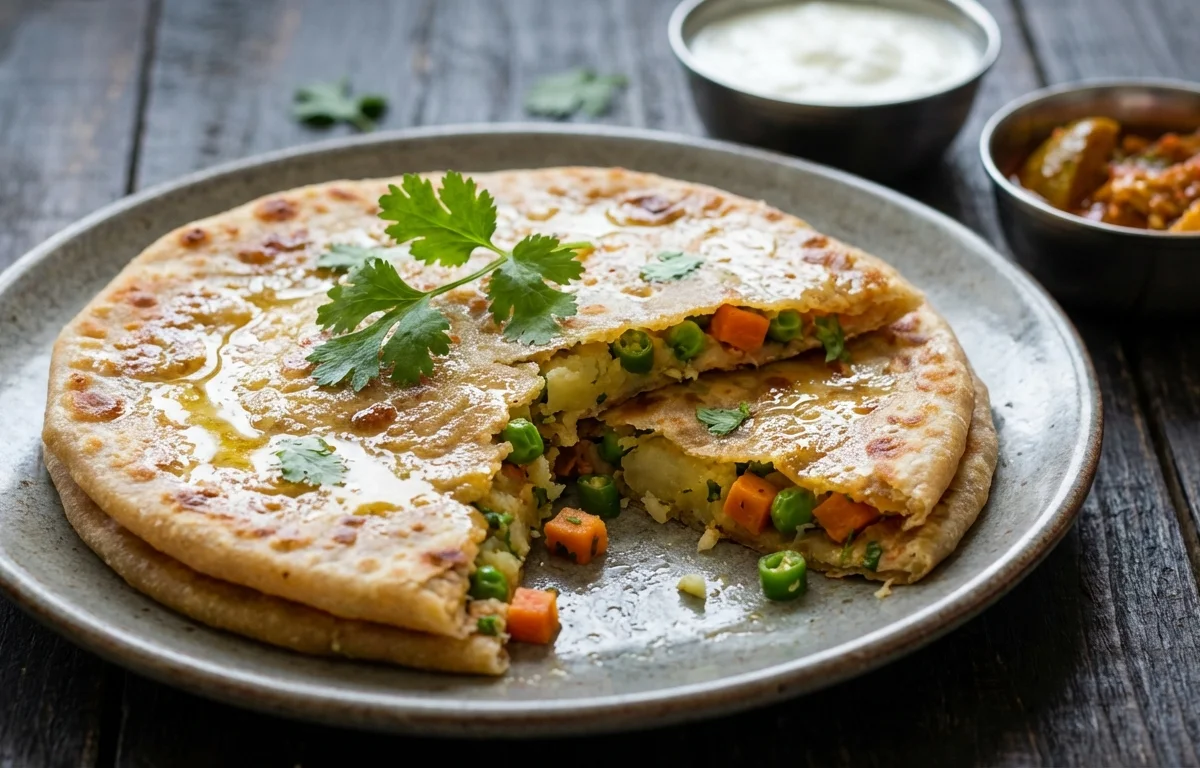
Vegetable Paratha
Whole wheat flatbreads stuffed with a lightly spiced mix of mixed vegetables and pan-cooked until golden. These parathas are hearty, family-friendly, and work well for breakfast, lunch, or a simple dinner.
For 8 servings
- boil · ~15 min
Boil the potatoes and peas.
1.Add potato and peas to a pot with enough water to cover them.2.Bring to a boil and cook until the potato is tender and the peas are soft.3.Drain well and let them cool slightly before mashing.TIPDrain the vegetables well so the stuffing stays dry and easy to roll. - knead · ~15 min
Knead the dough.
Mix whole wheat flour, half of the salt, 1 tbsp oil, and water to make a soft dough. Knead until smooth, cover, and let it rest while you make the filling.
- saute · ~10 min
Cook the vegetable filling.
1.Heat 1 tbsp oil in a pan over medium heat.2.Add cumin seeds, then add onion, green chili, and ginger and cook until the onion softens.3.Add carrot, coriander powder, red chili powder, turmeric powder, garam masala, and the remaining salt.4.Add the boiled potato and peas, mash lightly, and cook until the mixture looks fairly dry.5.Turn off the heat and mix in coriander leaves.TIPA dry filling prevents the parathas from tearing while rolling. - rest · ~5 min
Cool the filling.
Spread the filling on a plate and let it cool enough to handle. Divide it into 8 equal portions.
- prep · ~3 min
Divide the dough and stuffing.
Divide the dough into 8 equal balls. Keep them covered so they do not dry out.
- assemble · ~10 min
Stuff and roll the parathas.
1.Flatten one dough ball and roll it into a small disc.2.Place one portion of filling in the center.3.Bring the edges together and seal well.4.Dust lightly with flour and roll gently into a medium paratha.TIPRoll gently from the center outward to keep the stuffing evenly spread. - fry · ~15 min
Cook the parathas on a hot tawa.
1.Place one rolled paratha on a hot tawa and cook until small bubbles appear.2.Flip it and spread a little oil around the edges and on top.3.Flip again and cook both sides until golden brown spots appear.4.Repeat with the remaining parathas, using the remaining oil.TIPKeep the heat medium so the parathas cook through without burning. - serve
Serve the vegetable parathas hot.
What to keep in mind.
7 tips from the recipe — small details that make a real difference to the final dish.
- 1Mash the potatoes and peas only lightly so the stuffing stays textured but still easy to seal.
- 2Cook the filling until no steaminess remains; excess moisture is the main reason stuffed parathas tear.
- 3Let both dough and filling rest before rolling, which makes the dough more elastic and easier to handle.
- 4Keep the dough balls covered with a cloth so the surface does not dry out and crack while stuffing.
- 5Seal the stuffed dough firmly at the top and pinch off any thick excess before rolling for even parathas.
- 6Start roasting on a properly hot tawa, then keep the heat at medium so the center cooks before the spots get too dark.
- 7Stack cooked parathas in a covered casserole or wrapped cloth to keep them soft for serving or lunchboxes.
Adapt it for your goals.
Low-oil
Roast the parathas with just a light brushing of oil or on a dry tawa for a lighter everyday version.
no onionNo-onion
Skip the onion and increase ginger and coriander leaves for a simpler filling that still tastes bright and savory.
spicierSpicier
Add extra green chili or a little more red chili powder if you want a sharper, more robust paratha for pickle lovers.
jain styleJain-style
Omit onion, potato, and ginger; use mashed peas and grated carrot with mild spices for a root-free version.
Why this is on our healthy list.
Whole Grain Goodness
Whole wheat flour adds fiber and makes these parathas more sustaining than flatbreads made with refined flour.
Vegetable-Filled Meal
Potato, carrot, peas, onion, ginger, and coriander add variety, plant nutrients, and everyday comfort in one dish.
More Satisfying Breakfast
The combination of whole wheat and starchy vegetables makes these parathas filling and practical for longer-lasting energy.
Frequently asked questions
The filling is usually too wet or overpacked. Cook it until fairly dry, cool it completely, and roll gently from the center outward.



.webp)