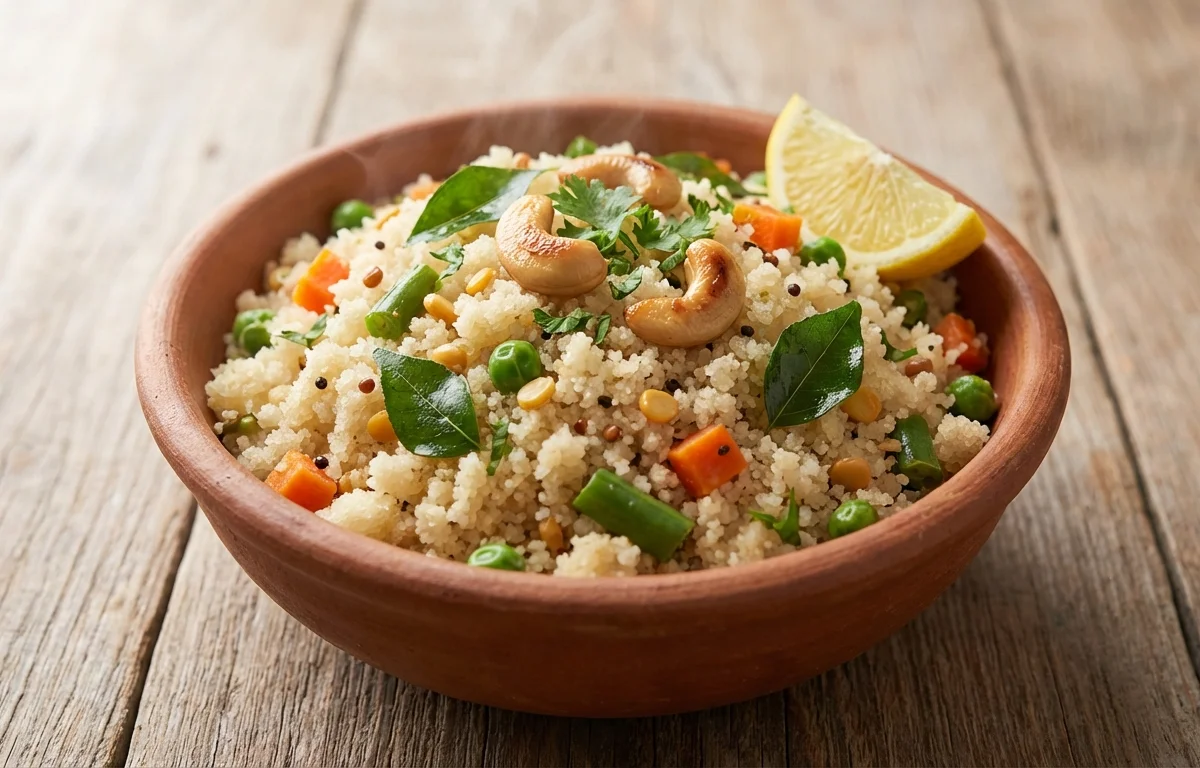
Vegetable Rava Upma
A comforting South Indian breakfast made with roasted semolina, mixed vegetables, and a simple tempering of mustard seeds, curry leaves, and green chili. Light, savory, and quick to cook, it pairs well with coconut chutney or a squeeze of lemon.
For 4 servings
- roast · ~4 min
Roast the semolina.
Heat a dry pan over low to medium heat and roast the semolina for 3 to 4 minutes, stirring often, until it smells nutty but does not brown. Transfer to a plate and set aside.
TIPKeep the heat moderate so the semolina roasts evenly and does not catch at the bottom. - temper · ~2 min
Make the tempering.
1.Heat the oil in the same pan over medium heat.2.Add mustard seeds and let them splutter.3.Add urad dal and chana dal, and cook until lightly golden.4.Add curry leaves, green chili, and ginger, and stir for a few seconds. - saute · ~5 min
Cook the onion and vegetables.
1.Add the onion and cook until soft and translucent.2.Add the carrot, beans, and peas.3.Cook for 2 to 3 minutes, stirring often, so the vegetables soften slightly.TIPCut the vegetables small so they cook quickly and blend nicely into the upma. - boil · ~4 min
Add water and bring it to a boil.
Pour in the water and add the salt. Bring it to a steady boil so the semolina cooks evenly when added.
- mix · ~3 min
Stir in the semolina.
Lower the heat and add the roasted semolina in a slow, steady stream, stirring continuously to avoid lumps. Mix until the water is absorbed and the upma starts to come together.
TIPStir constantly while adding the semolina for a smooth, fluffy texture. - simmer · ~5 min
Cook until soft and fluffy.
Cover the pan and cook on low heat for 2 to 3 minutes until the semolina is fully cooked and soft. Turn off the heat and let it sit for 2 minutes.
- garnish
Finish with cilantro and lemon juice.
Fluff the upma gently with a spoon, then mix in the cilantro and lemon juice just before serving.
- serve
Serve hot.
What to keep in mind.
7 tips from the recipe — small details that make a real difference to the final dish.
- 1Roast the rava only until aromatic; any browning can make the upma taste toasty and slightly bitter.
- 2Let the mustard seeds fully splutter before adding dals, or the tempering will taste raw.
- 3Keep the chopped carrot, beans, and onion small and even so they soften in the short cooking time.
- 4Add the roasted semolina in a thin stream into boiling water while stirring nonstop to prevent lumps.
- 5After covering, let the upma rest for 2 minutes off the heat so the grains finish swelling evenly.
- 6Mix in lemon juice only at the end to keep its fresh tang bright instead of dulling in the heat.
- 7If the upma thickens on standing, sprinkle in a little hot water and fluff gently before serving.
Adapt it for your goals.
Vegan
This recipe is already vegan; serve it with coconut chutney for a classic dairy-free South Indian breakfast.
low oilLow-oil
Reduce the oil slightly and use a good nonstick pan; the upma will still be flavorful from the tempering and lemon.
no onionNo-onion
Skip the onion for a simpler temple-style feel, and add a few more curry leaves and ginger for extra aroma.
higher proteinHigher-protein
Add more peas or a spoonful of roasted peanuts for extra bite and a more filling breakfast.
Why this is on our healthy list.
Vegetable-Focused Breakfast
Carrot, beans, peas, onion, ginger, and cilantro add plant compounds, color, and variety to a simple savory breakfast.
Light Yet Satisfying
Semolina cooks into a soft, filling dish that feels comforting without being overly heavy when made with modest oil.
Some Plant Protein and Fiber
Urad dal, chana dal, and peas contribute a little protein and fiber, making the upma more balanced than plain rava alone.
Frequently asked questions
Lumps usually form when semolina is added too quickly or without constant stirring. Add the roasted rava slowly into boiling water while stirring continuously.