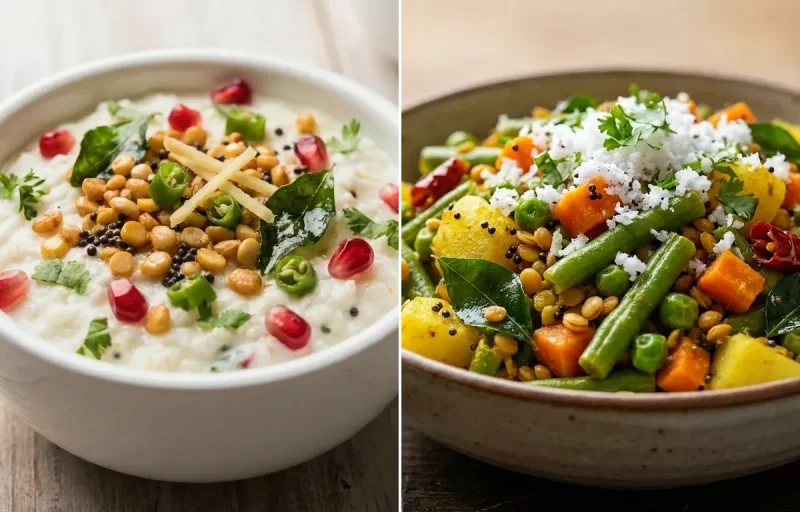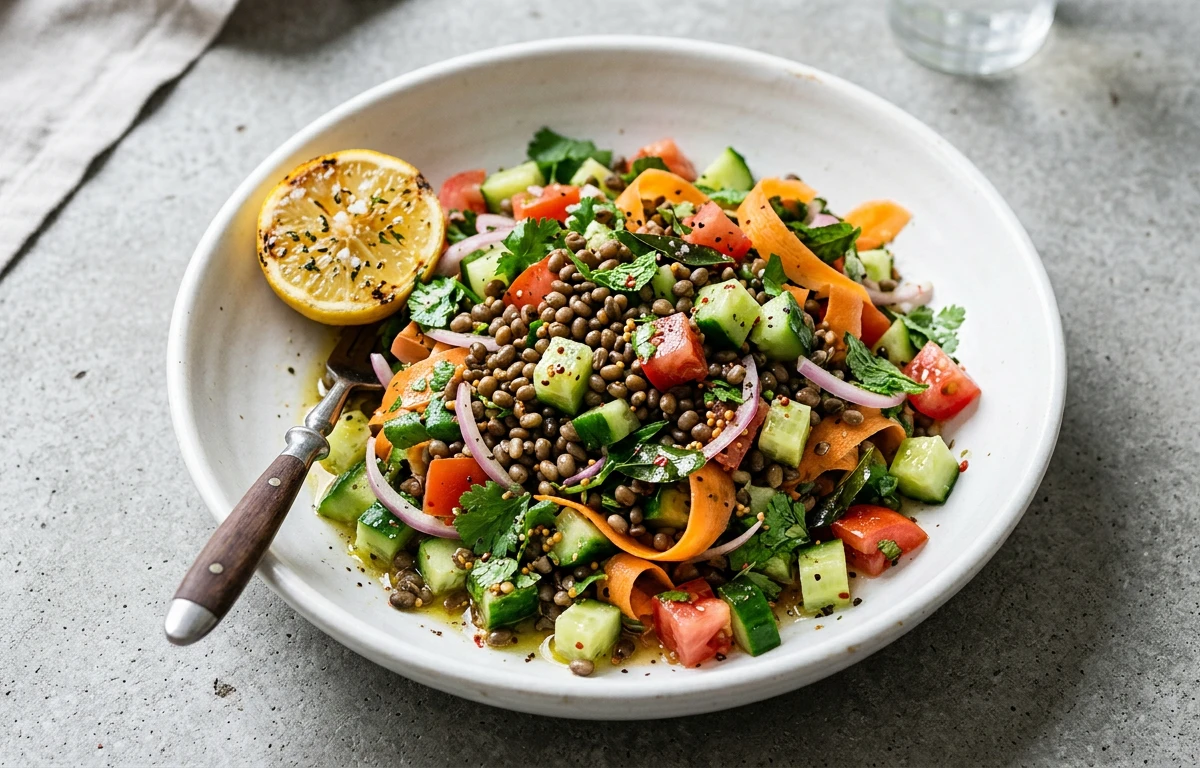
Vegetable Semiya
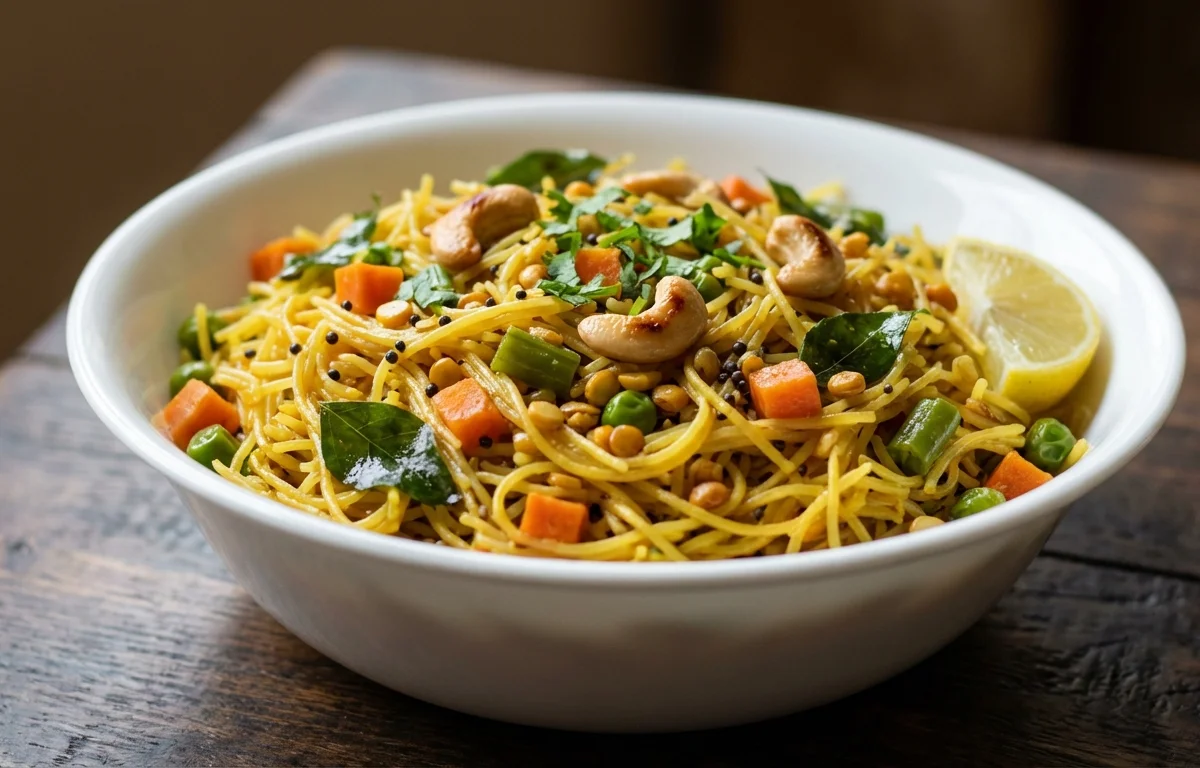
Light, savory semiya cooked with everyday vegetables, gentle spices, and a simple tempering. It makes a quick South Indian style breakfast or tiffin that feels comforting, colorful, and easy enough for busy mornings.
For 4 servings
- prep · ~10 min
Prep the vegetables and measure the semiya.
1.Chop the onion finely.2.Finely chop the carrot and beans so they cook quickly.3.Slit the green chili and chop the ginger.4.Measure the semiya and keep the water ready. - temper · ~2 min
Make the tempering.
1.Heat oil in a pan over medium heat.2.Add mustard seeds and let them splutter.3.Add urad dal and chana dal and cook until lightly golden.4.Add curry leaves, green chili, and ginger and cook for a few seconds.TIPKeep the heat medium so the dals turn golden without burning. - saute · ~5 min
Cook the onion and vegetables.
1.Add the onion and cook until soft and translucent.2.Add carrot, beans, and peas.3.Mix well and cook for 3 to 4 minutes until the vegetables are slightly tender. - boil · ~4 min
Add water and bring it to a boil.
Stir in the salt and water. Bring the mixture to a steady boil so the semiya cooks evenly.
- mix · ~1 min
Add the semiya and mix well.
Add the semiya in a slow stream while stirring to prevent clumping. Mix until the strands are evenly spread through the vegetables and water.
TIPStir as you add the semiya so it stays separate and does not form lumps. - simmer · ~5 min
Cover and cook until the semiya is tender.
Lower the heat, cover the pan, and cook until the water is absorbed and the semiya turns soft but not mushy.
- garnish · ~1 min
Finish with lemon juice and coriander leaves.
Turn off the heat and gently fluff the semiya. Add lemon juice and coriander leaves and mix once more.
- serve · ~1 min
Serve hot.
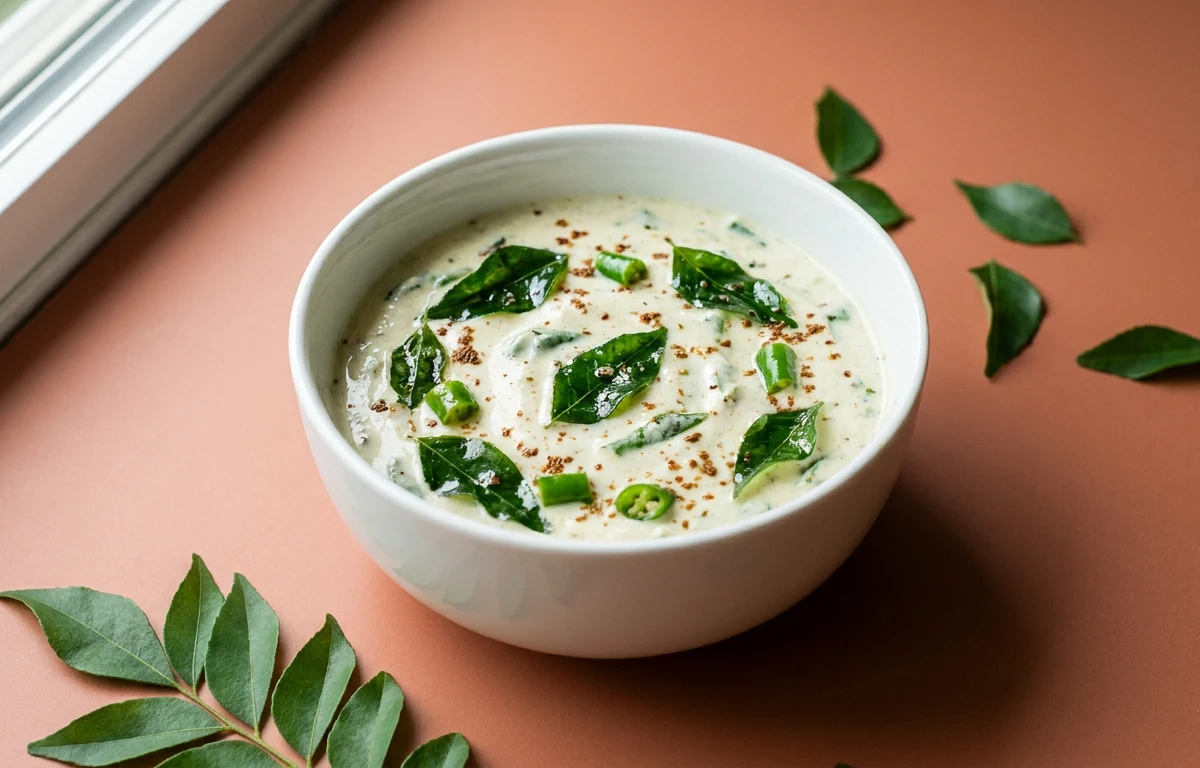
Serve the vegetable semiya hot on its own or with coconut chutney for a simple meal.
What to keep in mind.
7 tips from the recipe — small details that make a real difference to the final dish.
- 1If your roasted semiya is very thin, check it a minute early so it stays separate and not mushy.
- 2Chop carrot and beans small and evenly; large pieces stay undercooked by the time the semiya softens.
- 3Wait for the mustard seeds to fully splutter before adding dals, or the tempering will taste raw.
- 4Add semiya in a steady shower while stirring continuously to avoid clumps and uneven cooking.
- 5Once the water is absorbed, rest the covered pan for 2 minutes before fluffing for cleaner strands.
- 6Mix in lemon juice only after turning off the heat so the fresh tang stays bright, not bitter.
- 7Leftovers can be sprinkled with a little hot water and reheated covered to loosen the strands.
Adapt it for your goals.
Masala
Add a pinch of turmeric and a little sambar powder or black pepper for a warmer, more spiced breakfast version.
jainJain
Skip onion and ginger, and increase beans, carrot, and peas for a no-onion, no-root version that still feels colorful and light.
veganVegan
The recipe is naturally vegan as written; just serve with vegan sides like coconut chutney for an easy plant-based tiffin.
high proteinHigh-protein
Add more peas or stir in cooked moong sprouts at the end to make the semiya more filling without changing its South Indian character.
Why this is on our healthy list.
Vegetable-rich breakfast
Carrot, beans, peas, onion, coriander, and curry leaves add color, variety, and plant-based nutrients to a simple tiffin dish.
Light yet satisfying
Semiya cooks into a soft, easy-to-eat meal, while vegetables and lentils in the tempering give more substance than plain vermicelli.
Digestive support from spices
Ginger, green chili, curry leaves, and lemon juice bring freshness and gentle digestive warmth typical of South Indian breakfast dishes.
Frequently asked questions
Too much water, overcooking, or using very fine semiya can make it soft and sticky. Simmer only until the water is absorbed, then rest and fluff.