Vegetable Thukpa
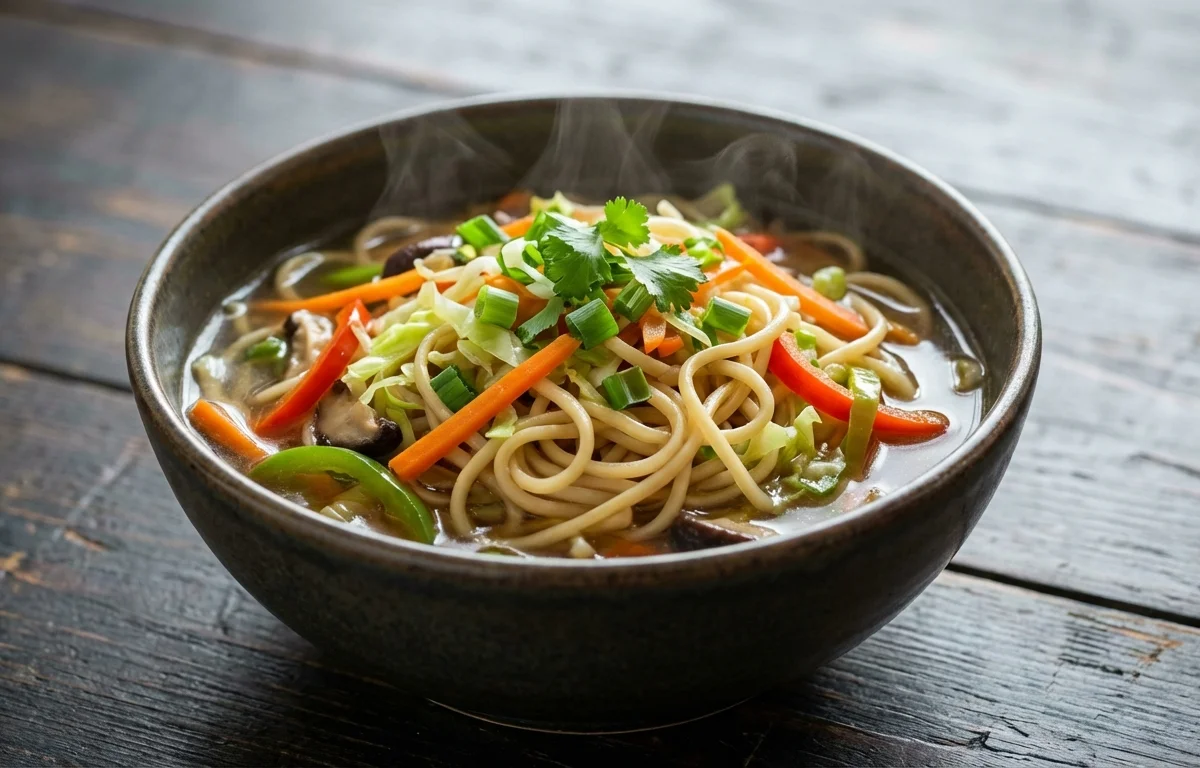
A warm bowl of noodle soup packed with crisp-tender vegetables, gentle spice, and plenty of comforting broth. This Himalayan favorite is light yet satisfying, making it perfect for chilly evenings or a simple weeknight meal.
For 4 servings
- prep · ~10 min
Prepare the vegetables and aromatics.
1.Slice the onion thinly.2.Chop the garlic and ginger finely.3.Cut the carrot, bell pepper, and beans into thin strips.4.Shred the cabbage and chop the tomato.5.Keep the cilantro and lemon juice ready for finishing. - boil · ~6 min
Boil the noodles.
Bring water to a boil in a pot, add the noodles, and cook until just tender. Drain them and set aside.
TIPDo not overcook the noodles or they will turn too soft once added back to the soup. - saute · ~4 min
Cook the aromatic base.
1.Heat oil in a deep pot over medium heat.2.Add onion and cook until lightly softened, about 3 minutes.3.Add garlic, ginger, and green chili.4.Cook for 1 minute until fragrant. - saute · ~6 min
Stir-fry the vegetables.
1.Add carrot, beans, bell pepper, and cabbage to the pot.2.Stir-fry for 3 to 4 minutes so the vegetables stay slightly crisp.3.Add chopped tomato and cook for 2 minutes until it softens.TIPKeep the heat medium-high so the vegetables cook quickly without losing their bite. - simmer · ~10 min
Build the broth.
Pour in the water for soup, then add soy sauce, salt, and black pepper. Bring to a gentle simmer and cook for 8 to 10 minutes so the flavors blend.
- boil · ~2 min
Add the noodles to the soup.
Add the boiled noodles to the simmering broth and cook for 1 to 2 minutes until heated through.
- garnish
Finish with cilantro and lemon juice.
- serve
Serve the thukpa hot.
What to keep in mind.
6 tips from the recipe — small details that make a real difference to the final dish.
- 1Rinse the boiled noodles briefly after draining if needed to stop carryover cooking before they go back into the broth.
- 2Keep the carrots, beans, and bell pepper cut thin so they turn crisp-tender in the short stir-fry time.
- 3Do not brown the garlic and ginger; just cook until fragrant so the broth stays clean and fresh-tasting.
- 4Add lemon juice only after turning off the heat to preserve its brightness and avoid a dull sour taste.
- 5If making ahead, store noodles and broth separately so the noodles do not soak up the soup and turn bloated.
- 6Taste for salt only after adding soy sauce, since the soy contributes salinity as well as depth.
Adapt it for your goals.
Vegan
This recipe is already vegan if your noodles are egg-free; choose plain wheat noodles without egg for a fully plant-based bowl.
high proteinHigh-protein
Add cubed tofu or pan-seared soy chunks to make the thukpa more filling while keeping the broth light.
jainJain
Skip onion, garlic, and ginger; increase cabbage, bell pepper, and tomato, then finish with lemon and pepper for a lighter Jain-style version.
gluten freeGluten-free
Use rice noodles and a gluten-free soy sauce or tamari for a version suited to those avoiding wheat.
Why this is on our healthy list.
Vegetable-Rich Bowl
Carrot, cabbage, beans, bell pepper, onion, and tomato add a mix of fiber, color, and plant nutrients to the soup.
Light Yet Satisfying
A broth-based noodle soup with modest oil can feel comforting and filling without being heavy.
Aromatic Digestive Support
Ginger, garlic, and chili bring warmth and sharpness that make the soup especially soothing in cool weather.
Frequently asked questions
You can, but the broth may turn starchy and the noodles can overcook. Boiling them separately keeps the soup clearer and the texture better.