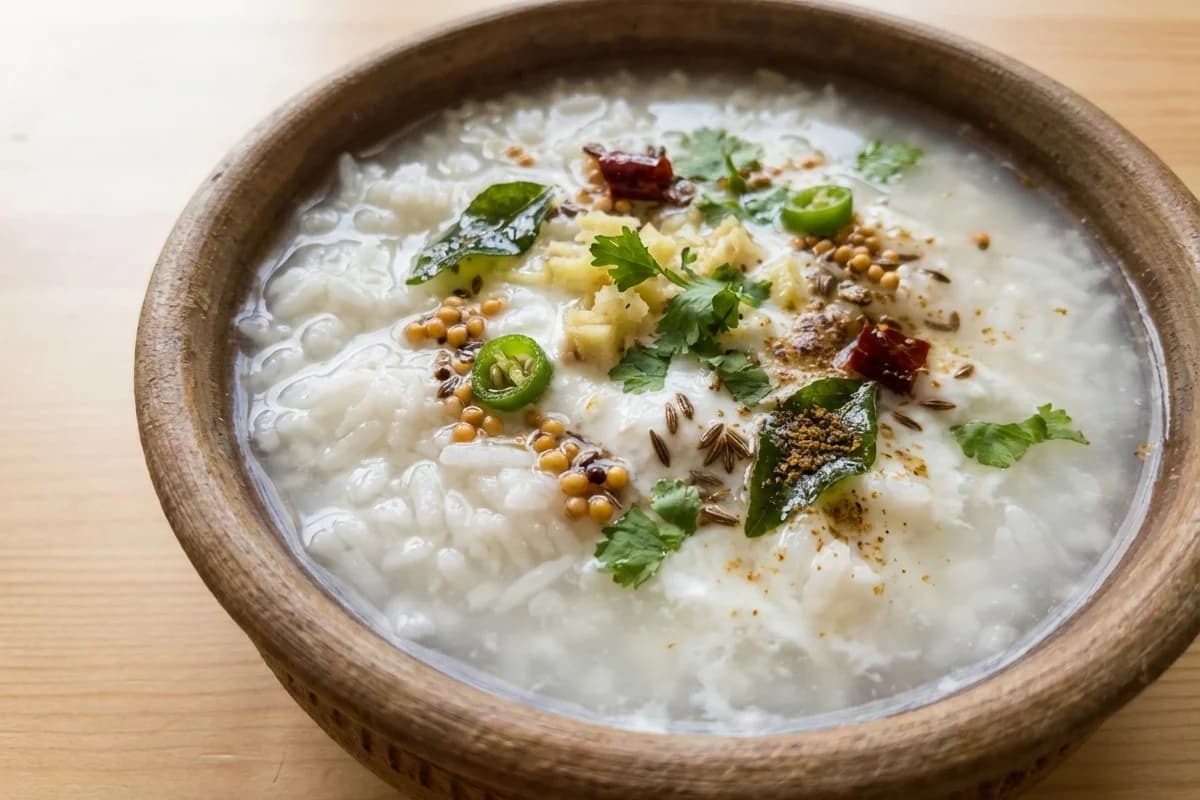
A traditional Odia fermented rice dish, perfect for hot summer days. This cooling, probiotic-rich meal is lightly spiced and incredibly refreshing, often served with roasted vegetables, fish fry, or pickles. Note: The total time does not include the 8-12 hour fermentation period.
Prep15 min
Cook20 min
Ferment480 min
Servings4
Serving size: 1 serving
337cal
8gprotein
60gcarbs
Ingredients
1.5 cup Rice (Short-grain or parboiled rice works best)
3 cup Water (For cooking the rice)
1 cup Curd (Slightly sour curd enhances the tangy flavor)
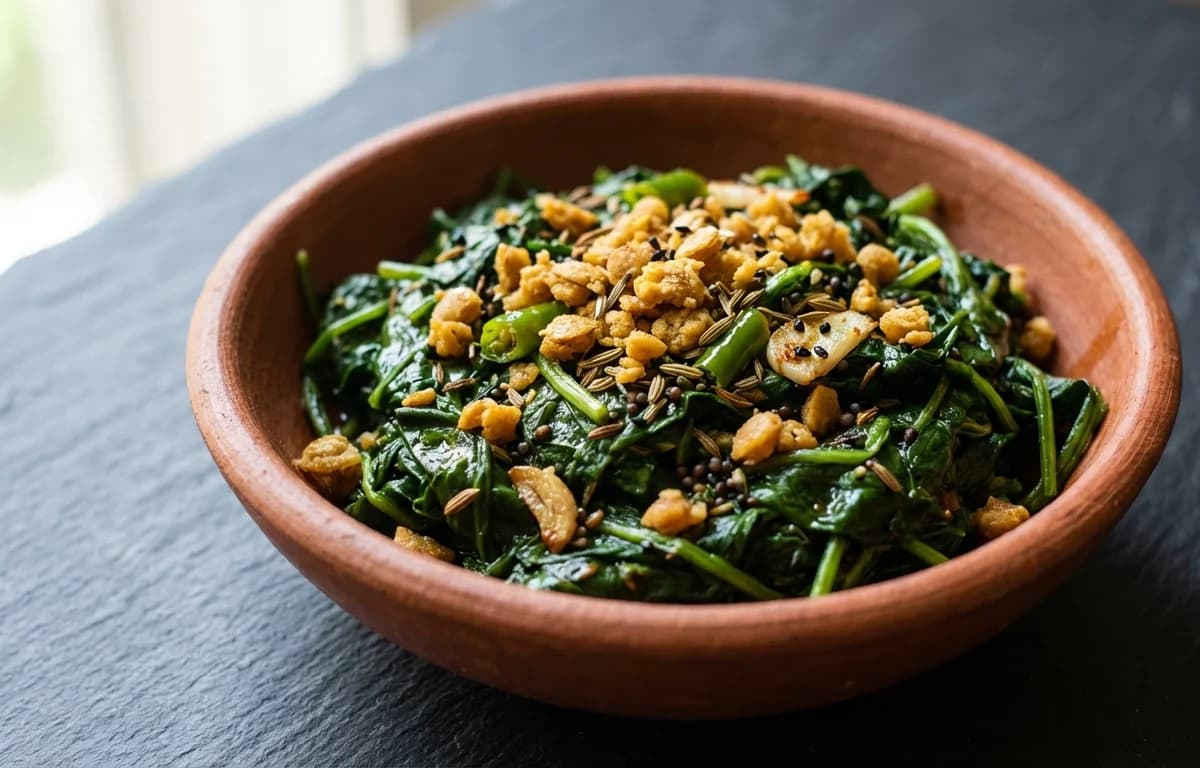
A simple and nutritious Odia stir-fry made with fresh amaranth leaves, garlic, and chilies. This quick and healthy side dish brings a rustic, earthy flavor to any meal and is ready in minutes.
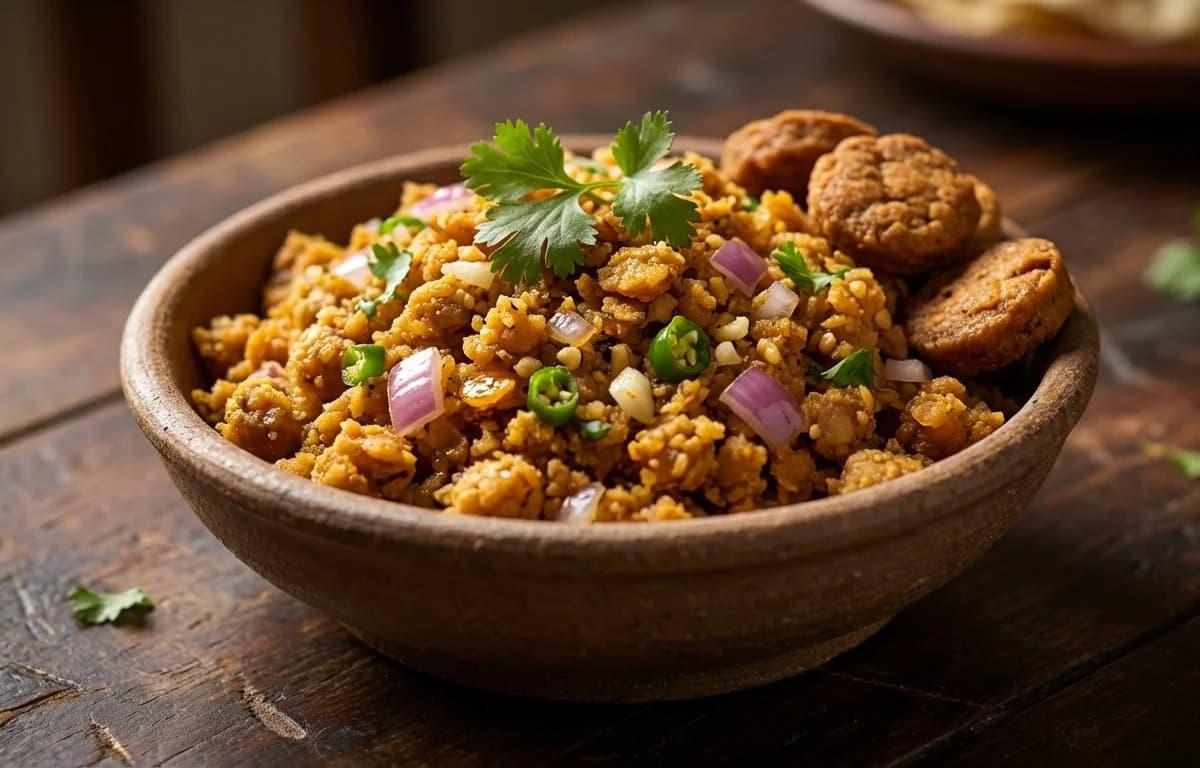
A crunchy, pungent side dish from Odisha made by crushing fried lentil dumplings with onion, garlic, and mustard oil. This rustic classic adds an incredible texture and flavor kick, perfect with Pakhala Bhat (fermented rice) or simple dal and rice.
A simple, soulful Bengali comfort food. Fluffy boiled potatoes mashed with pungent mustard oil, fiery green chilies, and crisp raw onions. It's the perfect accompaniment to plain rice and dal, ready in minutes.
Prep10 min
Cook15 min
Servings4
Serving size: 1 serving
About Pakhala, Saga Bhaja, Badi Chura and Aloo Seddho
Refreshing pakhala with iron-boosting greens and comforting mashed potatoes. So good!
This odia dish is perfect for dinner. With 910.87 calories and 31.11g of protein per serving, it's a muscle-gain option for your meal plan.
Other Cuisines to Explore
Discover authentic meals from cuisines around the world.
Cook the Rice: Wash the rice thoroughly. In a pot, combine 1.5 cups of rice with 3 cups of water. Bring to a boil, then reduce heat, cover, and simmer for 15-20 minutes or until the rice is soft but the grains remain separate. Drain any excess water and spread the rice on a large plate to cool down completely to room temperature.
2
Prepare for Fermentation: Once cooled, transfer the rice to a large bowl or a traditional earthen pot (matka). Add 4 cups of water and the curd. Using your hands or a ladle, gently mash the rice to slightly break down the grains without turning it into a paste.
3
Ferment the Rice: Cover the pot and leave it in a warm place to ferment for 8-12 hours, or overnight. The fermentation time will depend on the ambient temperature; it ferments faster in warmer climates.
4
Season the Pakhala: After fermentation, the mixture will have a slightly sour aroma. Stir it well and add salt, finely grated ginger, and chopped green chilies. Mix everything together.
5
Prepare the Tempering (Chhunka): Heat oil in a small pan over medium heat. Add the mustard seeds and allow them to splutter. Immediately add the cumin seeds, broken dried red chilies, and curry leaves. Sauté for about 30 seconds until the curry leaves turn crisp and aromatic.
6
Combine and Serve: Pour the hot tempering directly over the fermented rice mixture. Stir gently to incorporate the flavors. Garnish with roasted cumin powder and fresh coriander leaves. Serve chilled for a refreshing meal.
220cal
11gprotein
27gcarbs
8gfat
Ingredients
500 g Amaranth Leaves (One large bunch, tough stems removed)
2 tbsp Mustard Oil
5 pc Sundried Lentil Dumplings (Known as Badi, optional for crunch)
1 tsp Pancha Phutana (Odia five-spice blend)
6 clove Garlic (Finely chopped)
2 pc Green Chili (Slit lengthwise)
1 pc Onion (Medium, thinly sliced)
0.25 tsp Turmeric Powder
0.75 tsp Salt (Or to taste)
Instructions
1
Prepare the Greens
Separate the amaranth leaves (saga) from any thick, tough stems. Discard the stems.
Wash the leaves thoroughly in a large bowl of water 2-3 times to remove all dirt and grit. This step is crucial.
Drain the leaves completely using a colander and then roughly chop them.
2
Temper Spices and Sauté Aromatics
Heat mustard oil in a kadai or large pan over medium-high heat until it is fragrant and slightly smoking.
If using badi, add them to the hot oil and fry for 1-2 minutes until golden brown and crisp. Remove with a slotted spoon and set aside.
In the same oil, reduce the heat to medium, add the pancha phutana and let the seeds splutter for about 30 seconds.
Add the chopped garlic and slit green chilies. Sauté for 30-45 seconds until the raw smell of garlic disappears.
Add the sliced onions and cook for 2-3 minutes, stirring occasionally, until they become soft and translucent.
3
Cook the Saga
Add all the chopped amaranth leaves to the pan. It will look like a large volume, but it will wilt down.
500 g Potato (About 3 medium-sized, use a starchy variety like Jyoti or Russet)
1 medium Red Onion (Finely chopped)
2 pcs Green Chili (Finely chopped, adjust to taste)
2 tbsp Mustard Oil (Use a pungent, cold-pressed variety for authentic flavor)
0.75 tsp Salt (Adjust to taste)
2 tbsp Coriander Leaves (Freshly chopped)
Instructions
1
Boil and Peel Potatoes
Wash the potatoes thoroughly. Place them in a pot and add enough water to cover them completely.
Bring the water to a boil and cook for 15-20 minutes, or until a fork can be easily inserted into the center. Alternatively, pressure cook for 2-3 whistles.
Drain the hot water and let the potatoes cool just enough to handle. Peel the skin off while they are still warm.
2
Prepare Aromatics
While the potatoes are boiling, finely chop the red onion, green chilies, and fresh coriander leaves. Keep them ready in a mixing bowl.
3
Mash and Combine
Add the warm, peeled potatoes to the mixing bowl with the chopped aromatics.
Using a fork, a masher, or your hands, mash the potatoes coarsely. A slightly lumpy, rustic texture is desirable.
Add the salt and pungent mustard oil to the bowl.
4
Mix and Serve
Mix everything together thoroughly, preferably with clean hands, to ensure the oil and seasonings are evenly distributed.
Garnish with the remaining chopped coriander leaves.
Serve immediately while warm with steamed rice (bhaat) and dal for a classic Bengali comfort meal.
Sprinkle the turmeric powder and salt over the leaves.
Mix everything well to combine. Cover the pan and cook on a low-medium flame for 5-7 minutes. The leaves will release their own moisture, so no extra water is needed.
Uncover the pan, increase the heat to medium, and continue to cook for another 2-3 minutes, stirring frequently, until most of the moisture has evaporated.
4
Finish and Serve
Once the saga is cooked and the dish is dry, turn off the heat.
Lightly crush the fried badi with your hands and sprinkle them over the saga bhaja for a crunchy texture.
Give it a final mix and serve immediately while hot. It pairs perfectly with steamed rice and dal.